


The 4 trade-offs
Standard, prefab, material, networks: the right choices from the design stage
Every office fit-out joinery project rests on four technical decisions that we settle with you at the upstream stage.
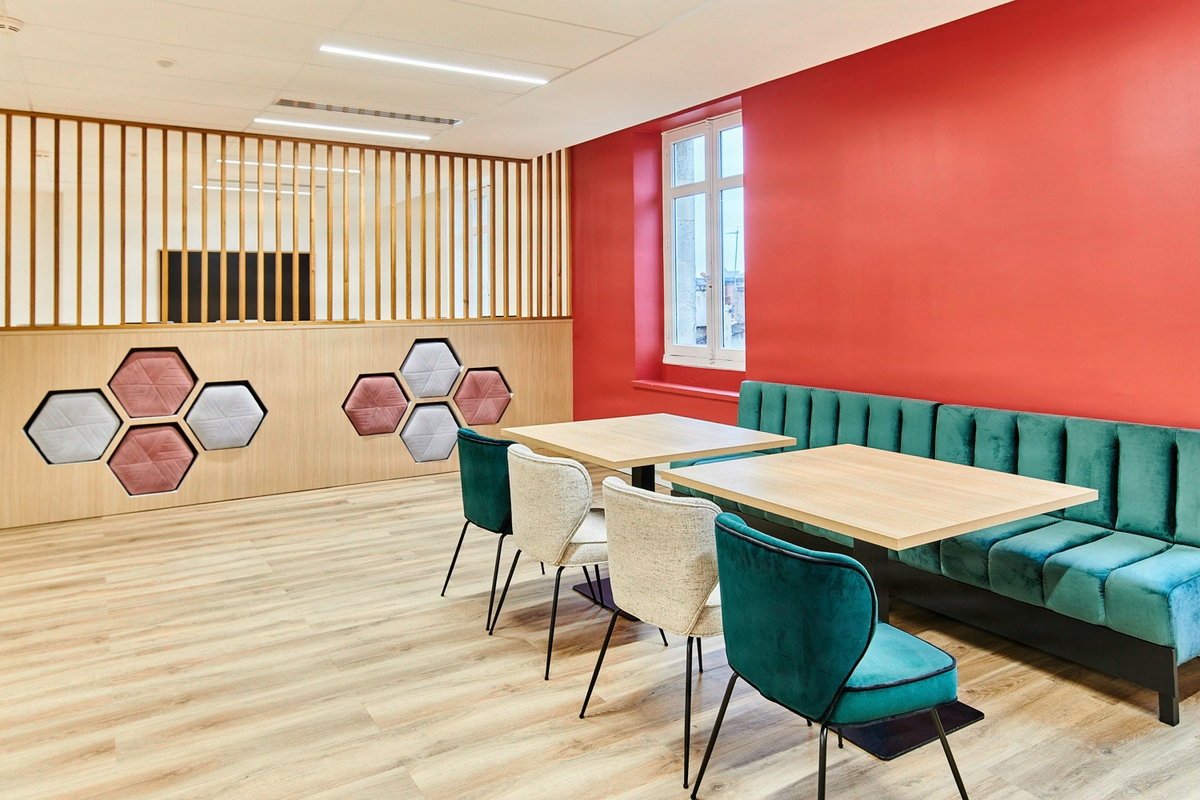
- Standard versus bespoke. Bespoke work generates a significant additional cost on the joinery line item, but markedly reduces the site adaptations billed via change orders. This is a trade-off we settle with you right from the upstream stage. On irregular grids (Haussmann-era refurbishment, floors with offset columns), it becomes essential.
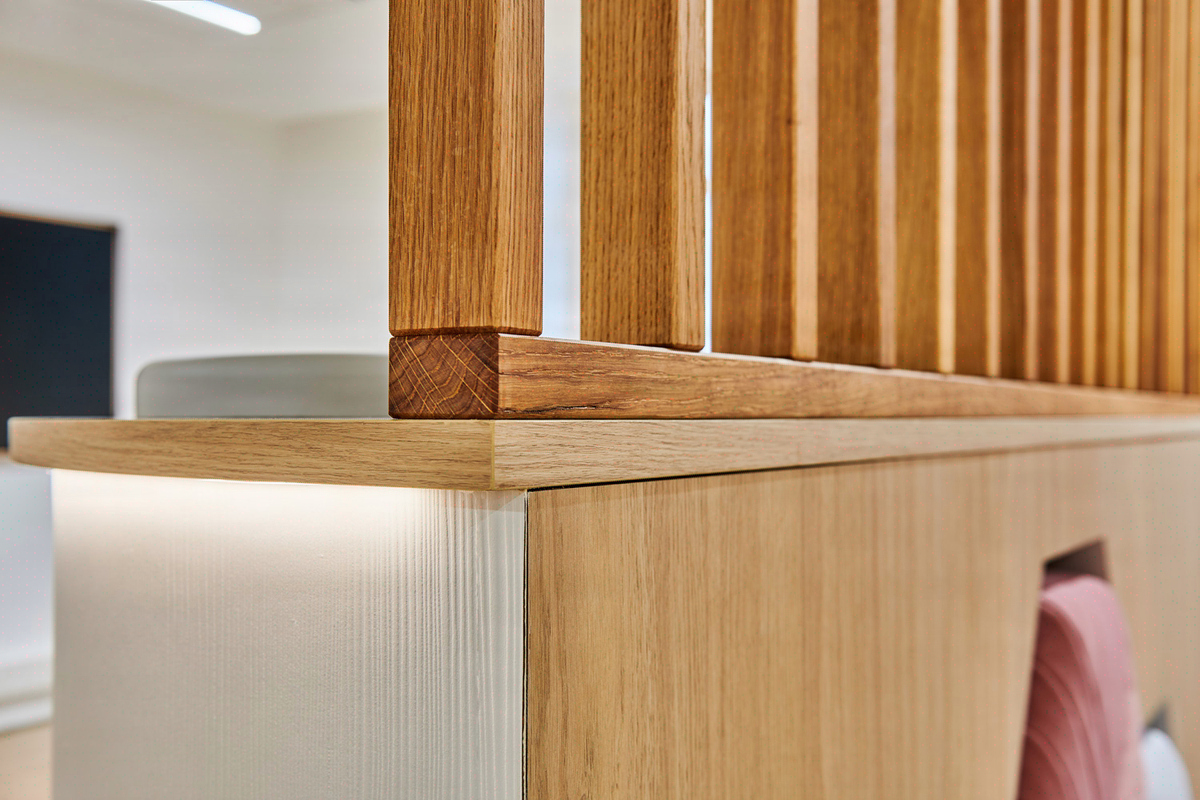
- Workshop prefabrication versus on-site installation. Workshop machining secures tolerances to ±1 mm, against 3 to 5 mm with traditional installation (DTU, interior timber joinery). Beyond 2.80 m in height, logistical layout (lift templates, crane paths) must be anticipated.
- Material and finish. HPL laminate withstands 1500 Taber abrasion cycles (ISO 4586-2), against 300 to 500 for varnished wood veneer. Veneer retains the advantage in renovation: sanding and re-varnishing are possible at 8-10 years.
- Network integration. Power, RJ45 and local ventilation run through joinery-built partitions via calibrated access panels, provided the routings are locked before fabrication.
In practical terms at Kytom, the dogma of “systematic bespoke for premium” does not hold: below 80 sqm of uniform works, bespoke degrades the joinery ROI by 12 to 18% compared with an equivalent high-end catalogue standard. The prototype budget (3 to 5 k EUR) no longer pays off. We prioritise according to three filters: site constraints, usage profile and 10-year maintenance budget.


