MedTech Sanctuary
The discreet showcase of a cardiac revolution
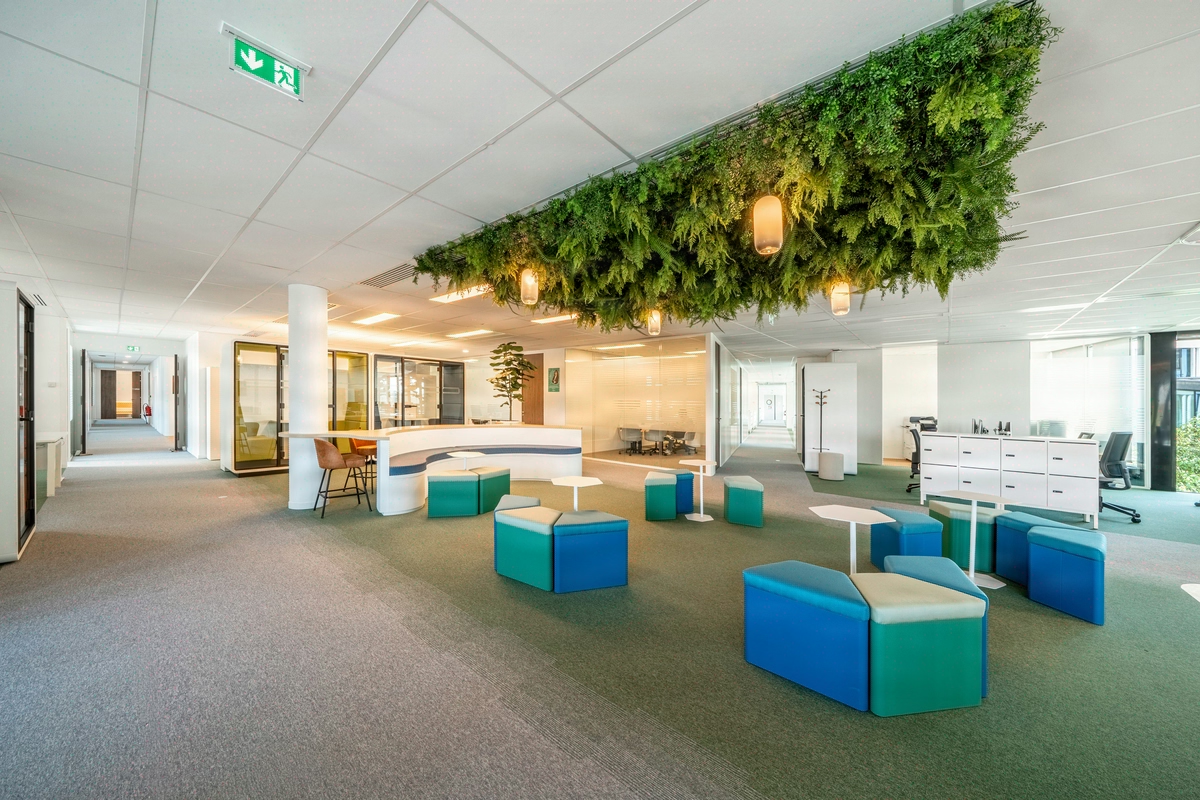
For Carmat, we orchestrated 1000m² turnkey in an occupied environment: a certified setting where tomorrow's artificial heart is being invented.
- 1 000 m²
- 5 months
- 2021
clean_tech
Concept
The discreet showcase of a medical revolution
Carmat, founded in 2008 by Prof. Alain Carpentier and Matra Défense (Airbus Group), develops the Aeson total artificial heart, CE-marked in December 2020. The fit-out of Building 1 and the window graphics of Building 2 were delivered in early 2021, alongside the industrialization phase leading to the CE marking.

Context
1,000 sqm in Bois d’Arcy, two buildings, five months of works in an occupied environment: Kytom delivered Carmat’s Aeson site in early 2021, a French medtech founded in 2008 by Prof. Alain Carpentier and Matra Défense (Airbus Group). The first total bioprosthetic artificial heart obtained its CE marking in December 2020, in the midst of its industrialisation phase.
The brief covered the fit-out of building 1 and the window graphics of building 2. The core constraint was not aesthetic but industrial: working on a site where CE-marked production, R&D and the hosting of hospital partners coexist, with no possible shutdown window.

Five months of works without interrupting CE-marked production
Refitting 1,000 sqm while the teams were finalising the industrialisation of an implantable medical device implied a simple rule: zero dust migrating towards production areas, zero unplanned power cuts, zero delay on the certification schedule. The budget was tightly calibrated (radar score 2/5), the room for customisation reduced to the essentials: the envelope served the industrial function first.
Coordination with the HVAC and electrical engineering offices required reinforced safety, each technical reservation having to be validated before drilling. No vacated floor, no extended working window: seven trades to sequence zone by zone on a cleanliness-controlled site, each intervention validated, executed and handed back to operations within 24 to 72 hours.

Two structuring decisions: zone-by-zone phasing and night-shift switch for noisy trades
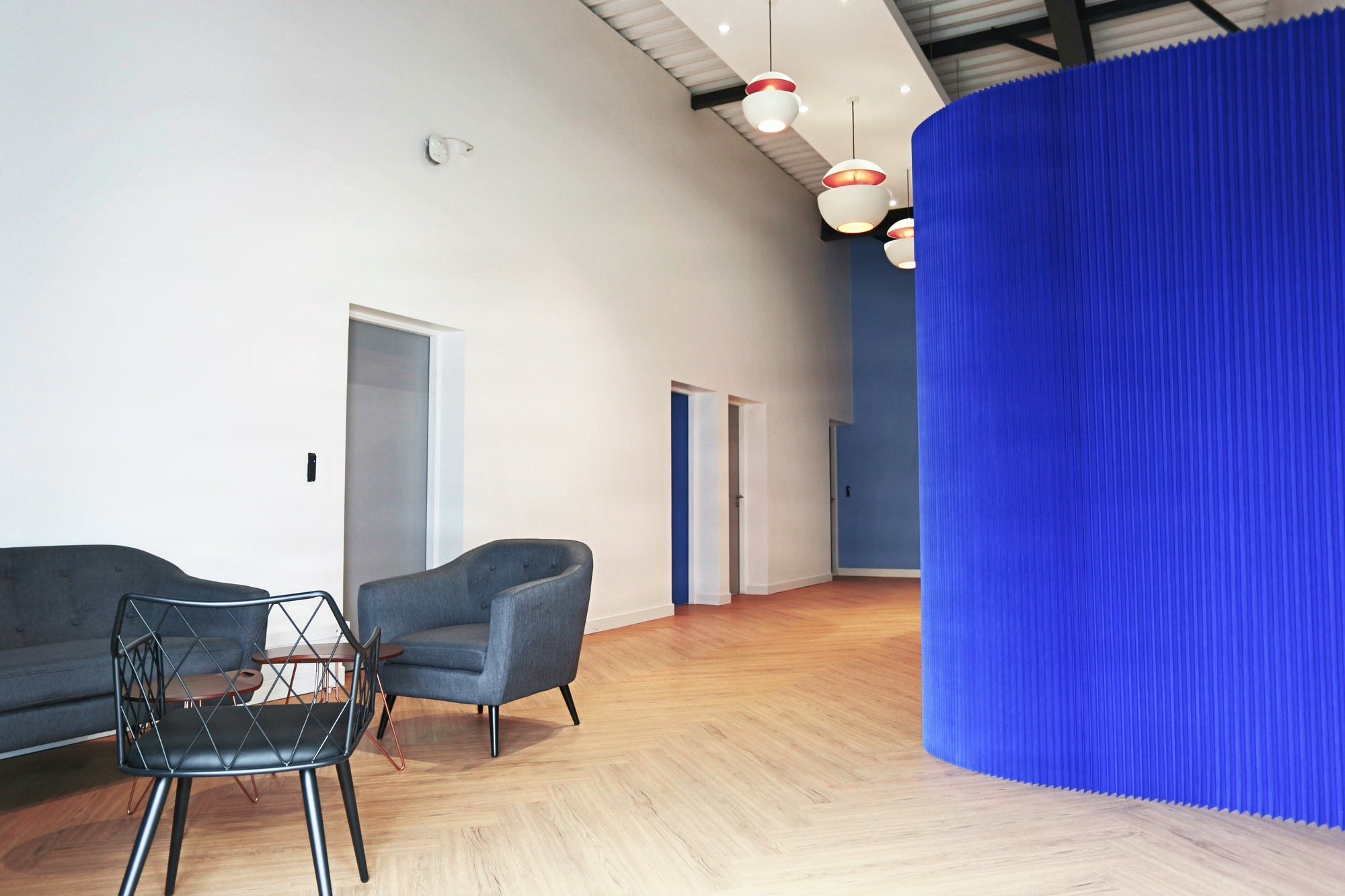
The first decision was to abandon the conventional trade-by-trade sequencing in favour of phasing by operational zone. The plan was divided into sub-perimeters calibrated on Carmat’s flow mapping (production, R&D, partner reception), each sub-perimeter running through the seven trades as a single block before being returned to operations. The partitioning was calibrated for three uses: confidential meetings with health authorities, R&D reviews, open spaces.
The second decision concerned noisy or dusty trades. Electrical rework, painting and fit-out were switched to night-time sequencing or to interventions on temporarily evacuated zones, validated by a cleanliness restoration protocol before the morning reopening to the Carmat teams. The window graphics of building 2, handled as a dedicated trade at the end of the works, unified the signage between the site’s two entities.
Turnkey design and build, with no change of pilot between phases: a single point of contact for the technical engineering offices, the office furniture and the on-site management.
1,000 sqm delivered in five months, two buildings, zero production interruption
Three auditable results. Schedule: five months of works met, delivery in early 2021, in parallel with an industrialisation phase that led to the CE marking of December 2020. Scope: 1,000 sqm transformed on building 1, full window graphics on building 2, i.e. two buildings treated as a coherent whole on a cleanliness-controlled medtech industrial site.
Operational continuity: no production disruption over the duration of the works, thanks to zone-by-zone phasing and the night-shift switch for noisy trades. The choice to put on-site management ahead of decorative signature enabled Carmat to host international investors and hospital partners in a legible environment compliant with the expectations of a CE-marked medtech, from delivery onwards.
A 2020-2021 project predating the structuring of Kytom’s CSR approach: a retrospective account, with no reuse indicators documented at the time.
1 000
sq m transformed
5
months of work
1 / 3
Implementation
REFERENCES
Related projects

Visualisations and diagrams are the property of KYTOM SAS; reproduction prohibited without written authorisation.