Signature office furniture: selecting and deploying exclusive furniture
A budget-defining item and a demanding regulatory framework
Signature furniture is only cost-effective above 50% representation areas: below that, the NF EN 1335 mid-range beats signature on 7-year TCO. Pieces from recognised manufacturers (Vitra, Knoll, Herman Miller) or bespoke creations account for 15 to 25% of a tertiary fit-out budget. Kytom, Design & Build since 2006, deploys a 5-step method calibrated over 12 weeks, with sourcing from 40+ referenced European manufacturers. The NF EN 1335 (seating) and NF EN 527 (worktops) standards govern compliance. Reference budget: 100 to 400 EUR excl. tax/m² depending on the representation/operational ratio.

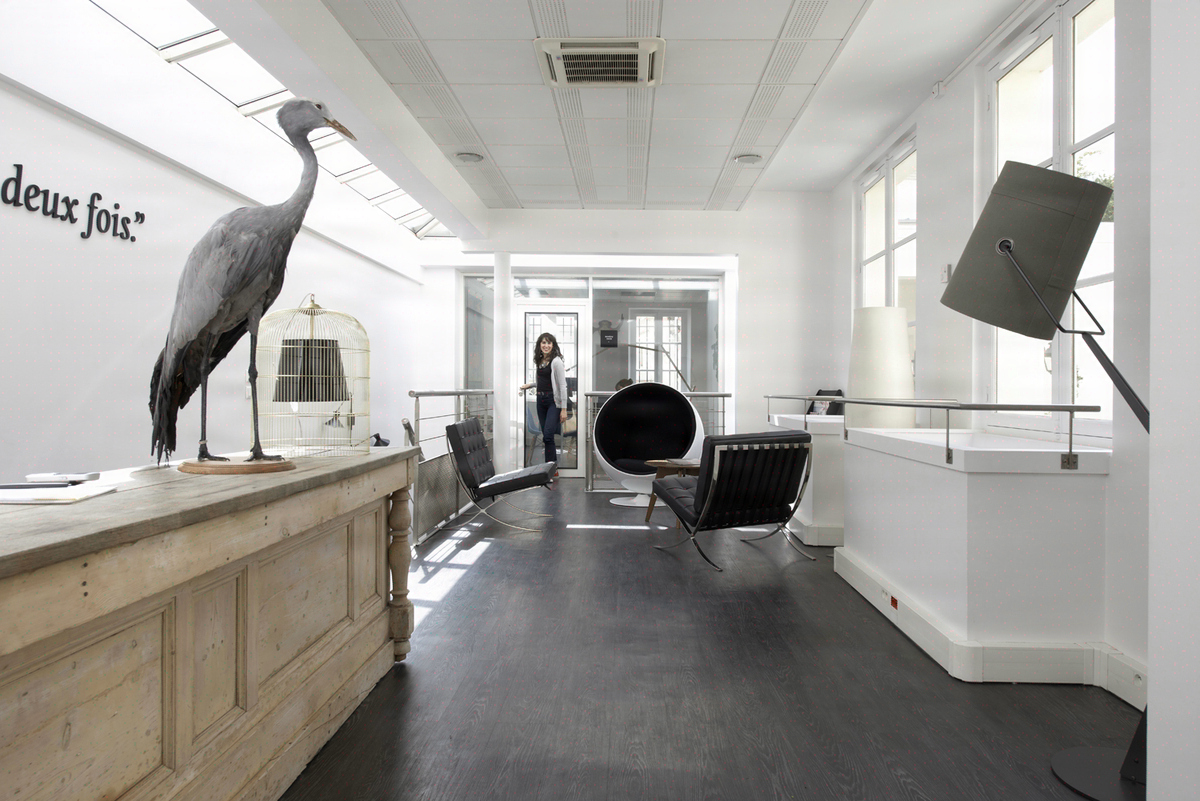
Signature furniture brings together pieces from recognised manufacturers (Vitra, Herman Miller, Knoll, Arper, Pedrali, Hay) and bespoke creations designed for a specific project. On our recent projects, this item accounts for 15 to 25% of the fit-out budget, particularly in headquarters, executive spaces and reception areas.
The stakes go beyond aesthetics: according to the Actineo Bureau et vie au travail 2023 barometer, 57% of employees consider furniture decisive in how they perceive their employer, and 31% associate the quality of their workstation with their engagement.
The regulatory framework structures the selection:
- NF EN 1335: office seating (dimensions, safety, durability).
- NF EN 527: tertiary worktops.
- NF EN 12464-1: workplace lighting, applicable to integrated offices.
- M1 classification or C-s2,d0: fire reaction in public-access buildings (ERP).
The FSC, PEFC, Greenguard certifications and the NF Environnement Ameublement label document the BREEAM In-Use and HQE Bâtiment Durable initiatives undertaken by tertiary asset managers.
Kytom’s position: the profession’s conventional wisdom over-prescribes signature. Unlike the widespread practice among our fellow space planners who apply a uniform signature ratio to all high-end floors, our reading differs: below 300 m² of tertiary floor space or for a lease shorter than 4 years, the cost/residual-value ratio becomes unfavourable. Accounting depreciation exceeds the occupancy period and savings on the secondary resale do not offset the initial extra cost. For a shared services centre or a monolithic high-density open space (> 12 m²/usable workstation), mid-range furniture compliant with NF EN 1335 and a 5-year warranty offers a better TCO ratio. Signature becomes worthwhile from 50% of representation, reception or management areas onwards, or when the employer brand is an explicit HR lever.
Frequently asked questions
At what threshold does signature furniture become cost-effective?
Signature furniture becomes cost-effective above 50% representation areas (reception, management, committee rooms, VIP spaces). Below that, mid-range furniture compliant with NF EN 1335 wins on 7-year TCO. Two contraindications: a lease shorter than 4 years, since depreciation exceeds occupancy, or a floor of less than 300 m². The ratio tips favourably as soon as the employer brand weighs on your HR indicators or the headquarters welcomes regular visitors.


