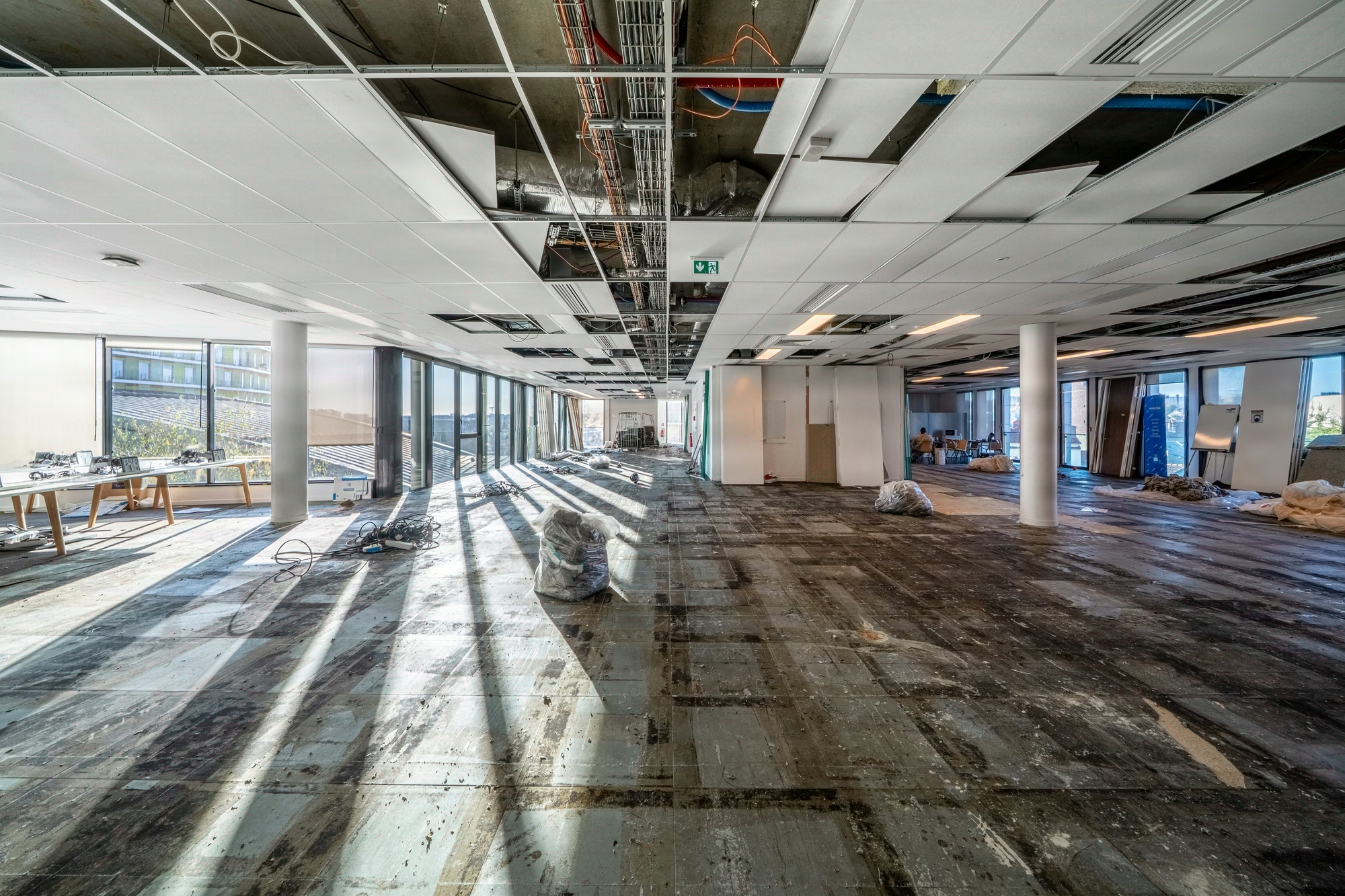
Obsolete commercial asset: diagnose, arbitrate, revalue
Four dimensions of obsolescence to objectify before any arbitration
A commercial asset rated F or G suffers a marked discount at resale, on the order of 400 to 1,500 EUR/sqm evaporated before the first negotiation even begins. The tertiary decree (OPERAT platform, Legifrance) mandates -40% consumption by 2030, -50% by 2040, -60% by 2050. The commercial sector accounts for 17% of France’s final energy consumption (ADEME, Key Energy Figures 2023). Since 2006, Kytom has diagnosed obsolescence across four axes (technical, energy, functional, rental), arbitrated between renovation, conversion or disposal via a proprietary CAPEX/IRR matrix, then managed revaluation on buildings from 500 to 15,000 sqm.

Contrary to the professional orthodoxy that places energy performance at the top of the arbitration, Kytom’s portfolio experience shows that functional obsolescence (grid, clear height, orientation) kills rental value faster than a poor EPC: an F-rated EPC can be corrected with CAPEX, a rigid 5.40 m load-bearing grid cannot. The obsolescence of a commercial building is therefore measured across four cumulative dimensions, each of which can be objectified by quantified indicators.
- Technical: ageing HVAC, absence of BMS, degraded waterproofing, lifts not compliant with NF EN 81-20.
- Energy: EPC E, F or G, consumption above 250 kWh/sqm/year, absence of automated control while the BACS decree (CSTB) targets buildings equipped with HVAC installations exceeding 290 kW.
- Functional: structural grid below 1.35 m, ceiling height below 2.50 m, single-aspect floor plates unsuited to flex office.
- Rental: vacancy exceeding 9 months, discount of 12 to 18% relative to comparables within 3 km.
INSEE (SUMER Survey and Working Conditions 2023) records a regular teleworking rate above 30% in office functions, which disqualifies floor plates designed for full on-site presence. The Cerema (French commercial building stock, status report 2022) confirms that 62% of French offices were built before 2000. Kytom applies a weighted 40/30/20/10 scoring grid (internal methodology calibrated on) that prioritises these four dimensions and steers the arbitration scenario from the end of the audit, instead of starting from a preconceived works scenario. On this internal panel, heavy renovation proved 35 to 45% more costly than demolition-reconstruction when the load-bearing grid is rigid (spans < 5.40 m) and the clear height < 2.50 m. When the 4-axis diagnosis is not justified. Below 1,500 sqm of net usable floor area and for an asset already rated C or better on the EPC, the full 4-dimension audit becomes oversized: a targeted technical diagnosis (HVAC + envelope) is sufficient, at a study cost divided by 3. Likewise, on a recent asset (< 10 years) in a tight rental zone with vacancy < 6 months, the disposal/retention arbitration takes precedence over the obsolescence audit, which would bring no decision-making value to the committee.
Frequently asked questions
What are the four axes of obsolescence of a commercial building?
Kytom objectifies obsolescence across four dimensions. Technical: HVAC, BMS, waterproofing, NF EN 81-20 lifts. Energy: EPC, consumption in kWh/sqm/year, compliance with the BACS decree above 290 kW. Functional: structural grid, clear height, single-aspect floor plates unsuited to flex office. Rental: vacancy rate and discount relative to comparables within 3 km. The weighted 40/30/20/10 grid prioritises these axes from the end of the audit.


