


The framework
Four tensions arbitrate usage satisfaction
Employee experience hinges on four contradictory trade-offs that every workplace project must explicitly resolve. Across 18 sites we tracked at six months, full-flex floor plates without identity zoning show a satisfaction level 12 to 18 points lower than mixed floor plates combining assigned zones and shared zones: maximum flexibility is not the universal answer.
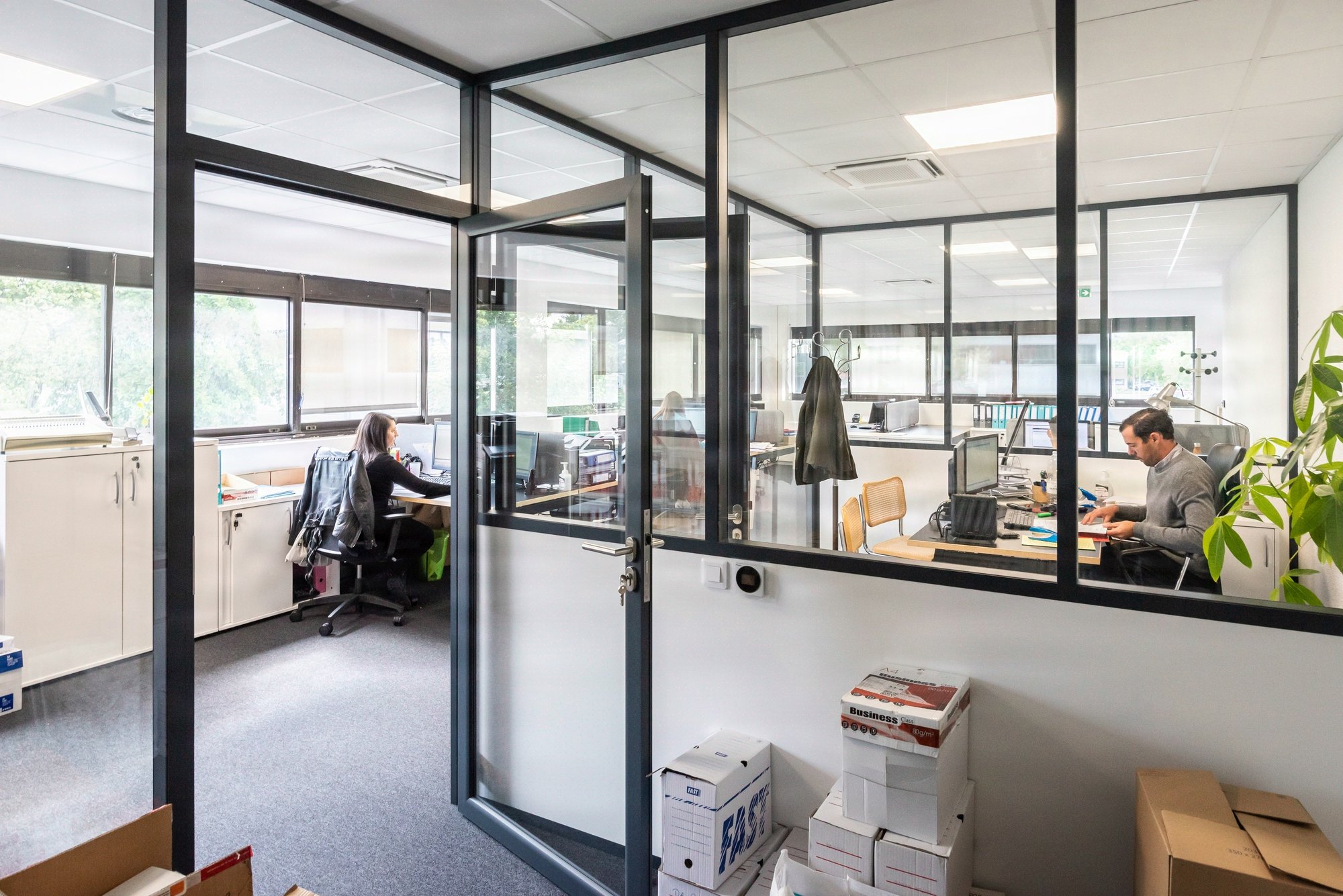
- Concentration versus collaboration. Engineering roles devote a large majority of their time to focus tasks, unlike commercial functions, which are more oriented towards collective exchanges. We segment sales and collaboration zones with dynamic clusters and light ambience, and engineering and concentration zones with acoustic partitions, keeping a signal-to-noise gap below 5 dB to meet the BREEAM Pol 8 criterion.
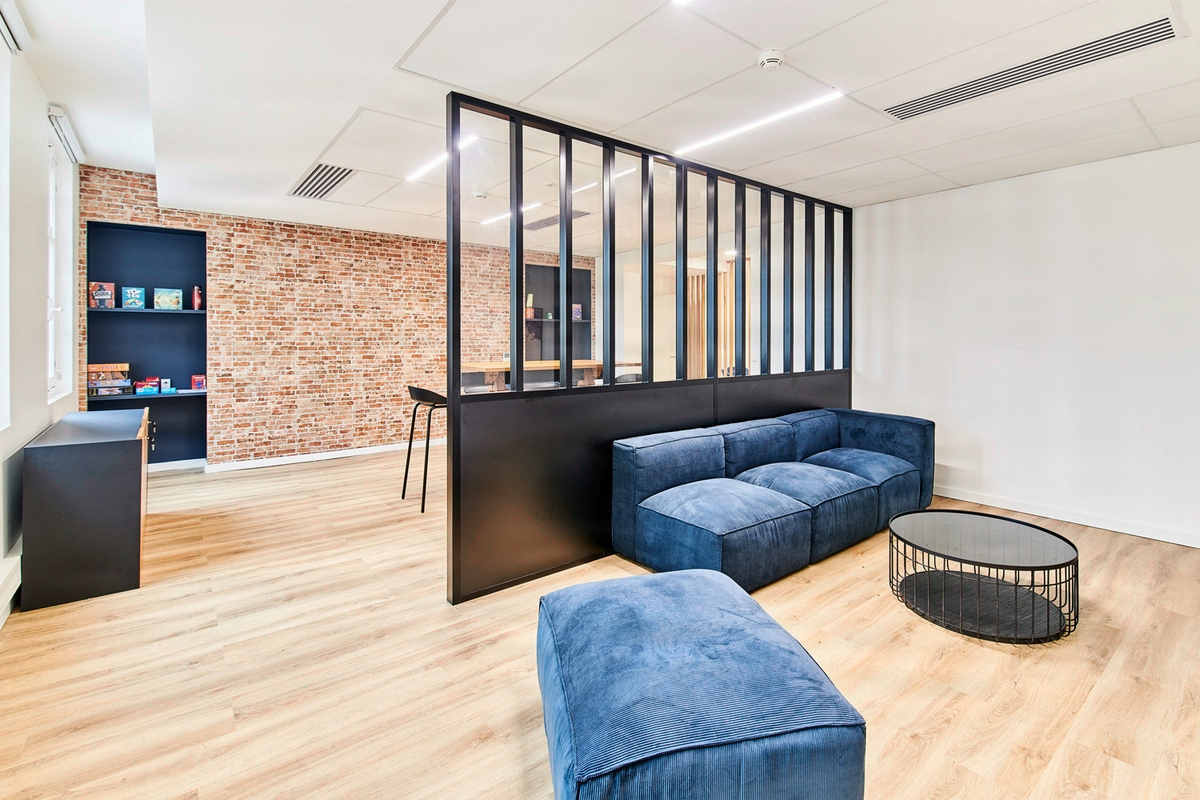
- Flexibility versus identity. Modular spaces reduce reconfiguration costs, but the lack of territorial appropriation can weaken employees’ sense of belonging in the months following delivery.
- Density versus comfort. The regulatory thresholds in force in France set a minimum of 10 m² per employee in an individual office, 11 m² in a shared office and 15 m² in an open space. Below 12 m², excessive density noticeably degrades occupants’ acoustic and thermal comfort.
- Standardisation versus business-specific requirements. Pooling fit-out standards reduces the cost per m², but ignores laboratories, workshops and technical floor plates.
These four trade-offs largely determine the final usage satisfaction, which our field feedback systematically measures after move-in.


