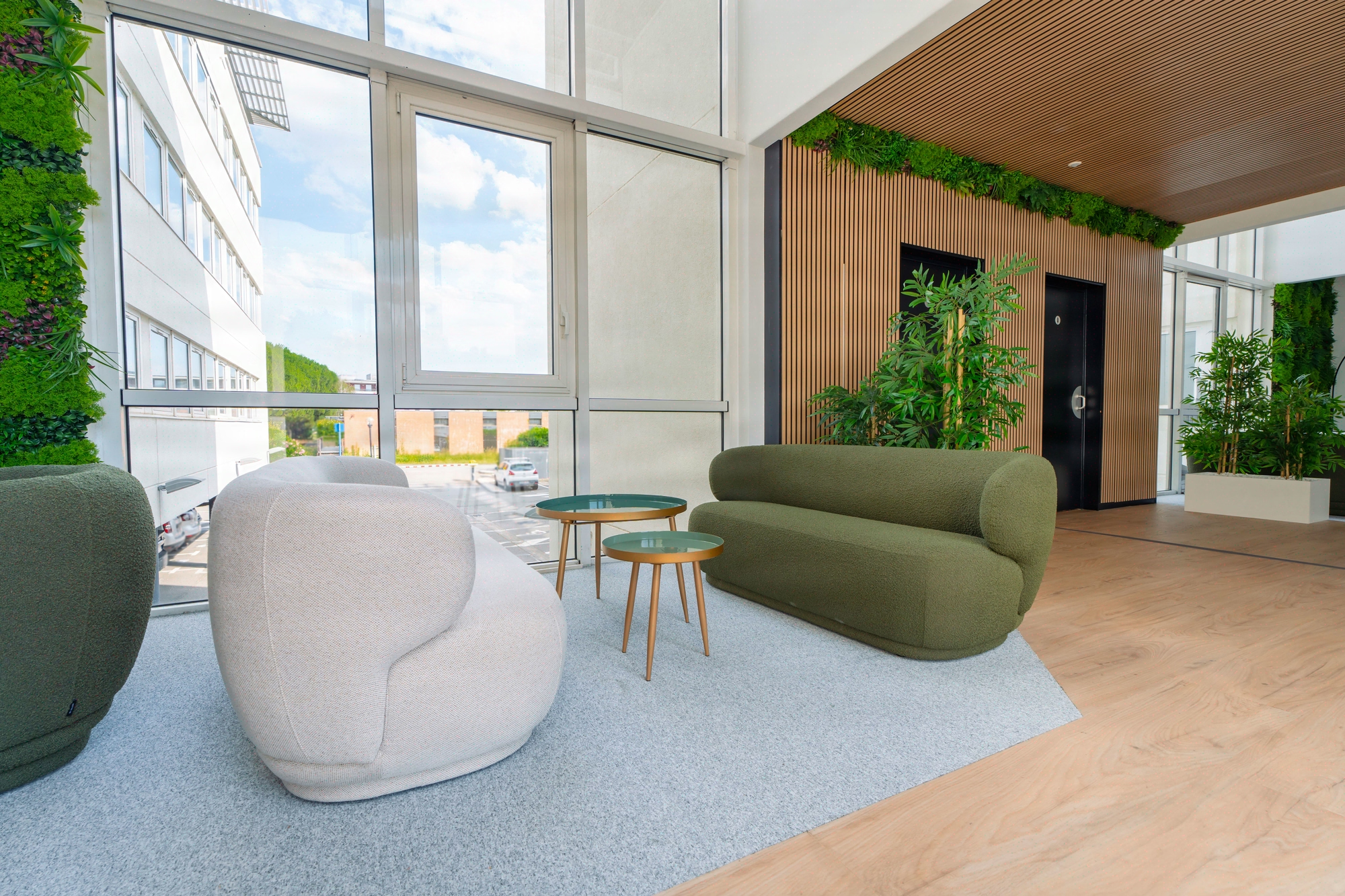
Eco-design of offices: designing low carbon from the very first sketch
35% reused furniture and 50% bio-based materials without structural extra cost: eco-design is not a green add-on, it is a budget-framing method. The LCA according to the NF EN 15978 standard, applied from the first sketch, significantly reduces the carbon footprint compared with a conventional project and helps contain the final extra cost when the approach is framed in phase 1. Kytom, founded in 2006, deploys this method in 5 phases over 12 weeks, mobilising 10 agencies in France and Spain to pool reuse sources across an average surface area of 850 m² per project. The benefits are measured in kg CO2/m², in asset value (BREEAM, HQE) and in employee satisfaction, all enforceable for CSRD reporting.
The building sector accounts for 23% of national emissions (ADEME, Chiffres-clés du bâtiment, 2023 edition), and interior fit-out represents a significant share of the operational carbon accumulated over the lifespan of spaces (Cerema, Bâtiment et carbone, 2023). Three levers converge: regulatory compliance (OPERAT commercial sector decree), real estate value enhancement (BREEAM, HQE) and employer brand.
3 areas of expertise under "Eco-design of offices: designing low carbon from the very first sketch"
-
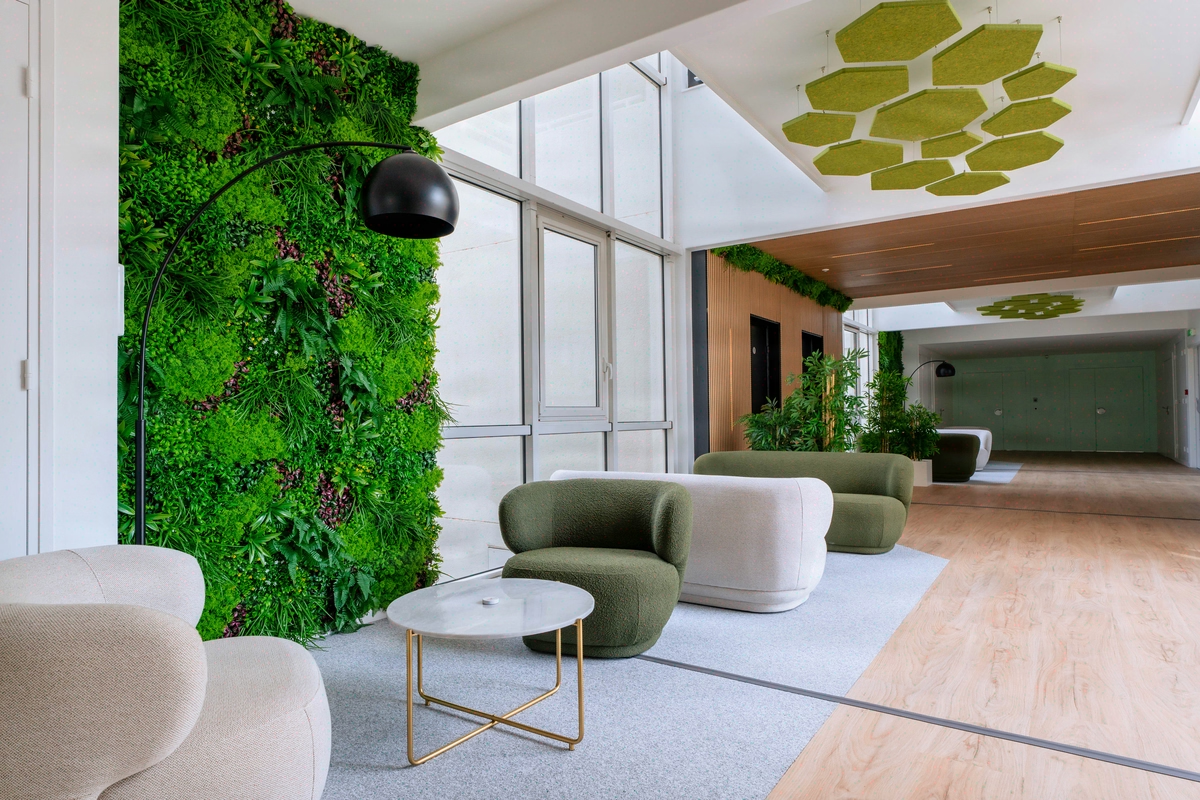
Office fit-out carbon footprint: our 6 sustainability indicators
For a 850 sq m office fit-out, the furniture-partitions-finishes category accounts for up to 15% of the building’s carbon footprint, yet it still falls outside the main…
-
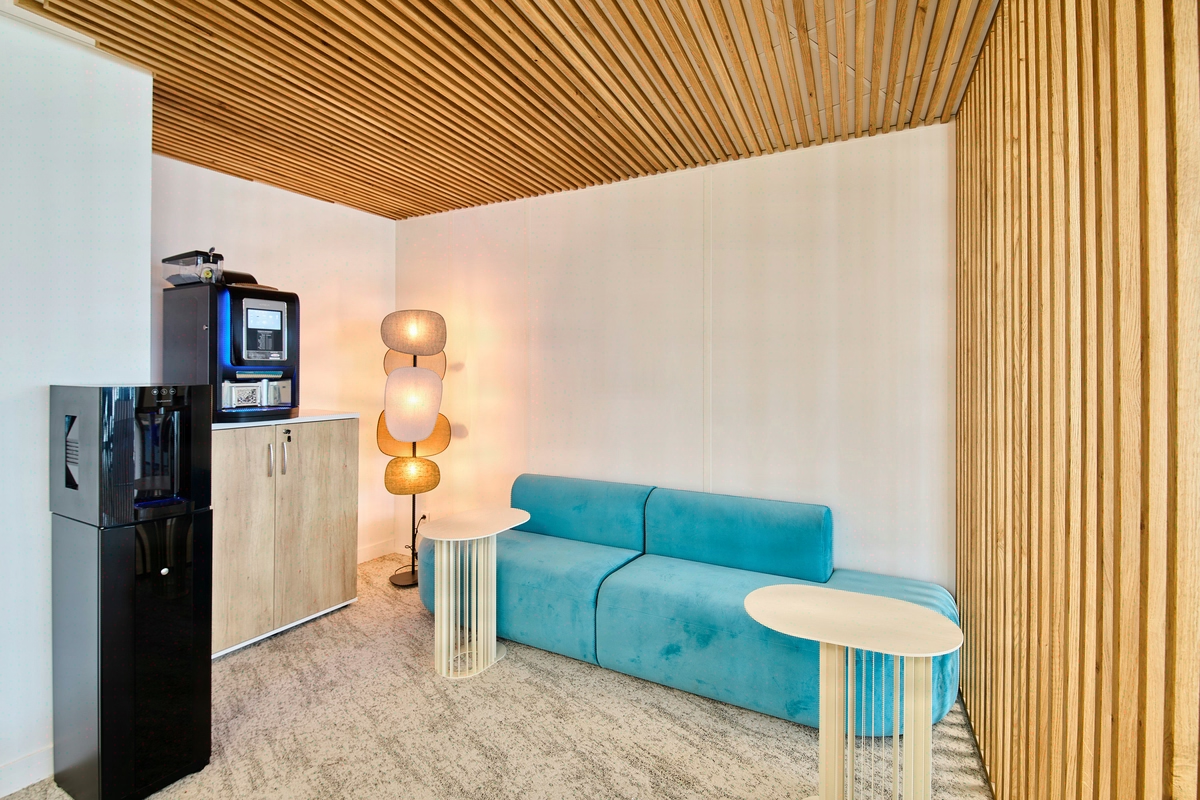
Office furniture reuse and circular economy: the Kytom method
75% of office furniture goes to waste streams even though 50 to 80% remains functional. This gap is not a sourcing problem, it is a project method problem. Reusing office…
-
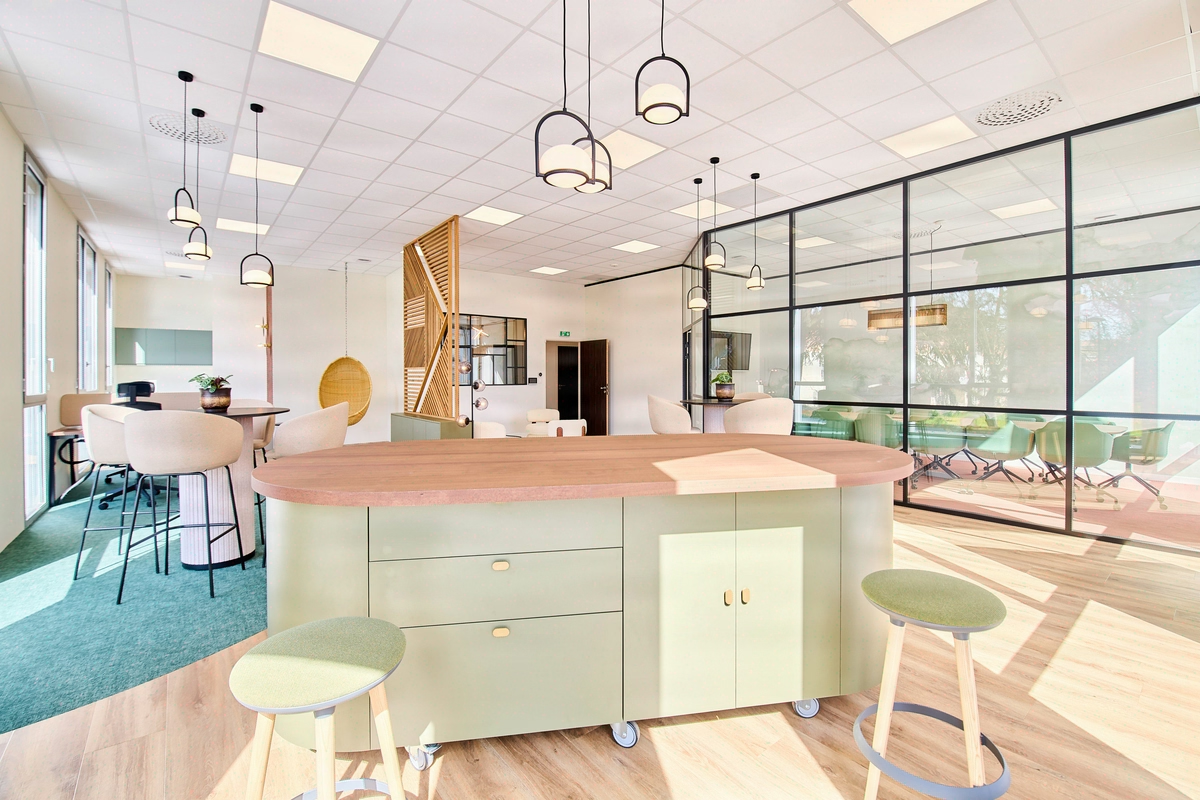
Sustainable materials for offices: the guide to choosing right
Material trade-offs are a major driver of the carbon footprint of an office fit-out, based on the Environmental Product Declarations published in the INIES database. Yet…


Contrary to industry doxa, eco-design is not primarily an RE2020 matter. RE2020 targets new construction: for 80% of Kytom’s commercial projects (renovation, lease fit-out), the true enforceable framework is the OPERAT + CSRD + Article 29 LEC triptych, not RE2020. This is a distinction that changes the documentary scope and material trade-offs.
The OPERAT commercial sector decree requires -40% energy consumption by 2030 and -60% by 2050 on buildings over 1,000 m² (ADEME, OPERAT platform, 2023 data). Interior fit-out, long excluded from the calculation, now falls within the scope via CSRD and Article 29 LEC obligations. Three texts structure the measurement:
- NF EN 15978: life cycle assessment across 5 phases (production, transport, implementation, operation, end of life).
- RE2020: carbon thresholds for new construction, adapted into the BBCA Rénovation label for existing buildings.
- AFNOR NF X35-102: usable surface area and quality of use, articulated with the Labour Code (R4211 to R4217).
The FDES (Environmental and Health Declaration Sheets) hosted on the INIES database remain the only reference enforceable for CSRD reporting. Across our internal Kytom 2023-2024 portfolio, 22 leases out of 28 now include ESG clauses, an observation consistent with feedback from real estate brokers.
When regulated eco-design is not the right angle. For a fit-out of under 300 m² outside an OPERAT commercial lease, without a CSRD commitment or a certification objective, the documentary processing cost (NF EN 15978 LCA, verified FDES) exceeds the marginal carbon benefit in 7 out of 10 observed cases: a simplified bio-based material framing, without enforceable reporting, is sufficient. The full approach is only justified from 500 m² upwards, or in the presence of a BREEAM- or HQE-certifiable asset.
What is the real extra cost of an eco-designed project vs a conventional one?
Under 3% of the overall budget when the approach is framed from phase 1. Furniture reuse significantly lightens the supplies line and offsets the occasional extra costs of bio-based materials. Beyond phase 1, the extra cost rises to 8-12% because material trade-offs become constrained.
Does eco-design slow down the schedule?
No, on a three-month schedule with sourcing anticipated from the programming stage.


