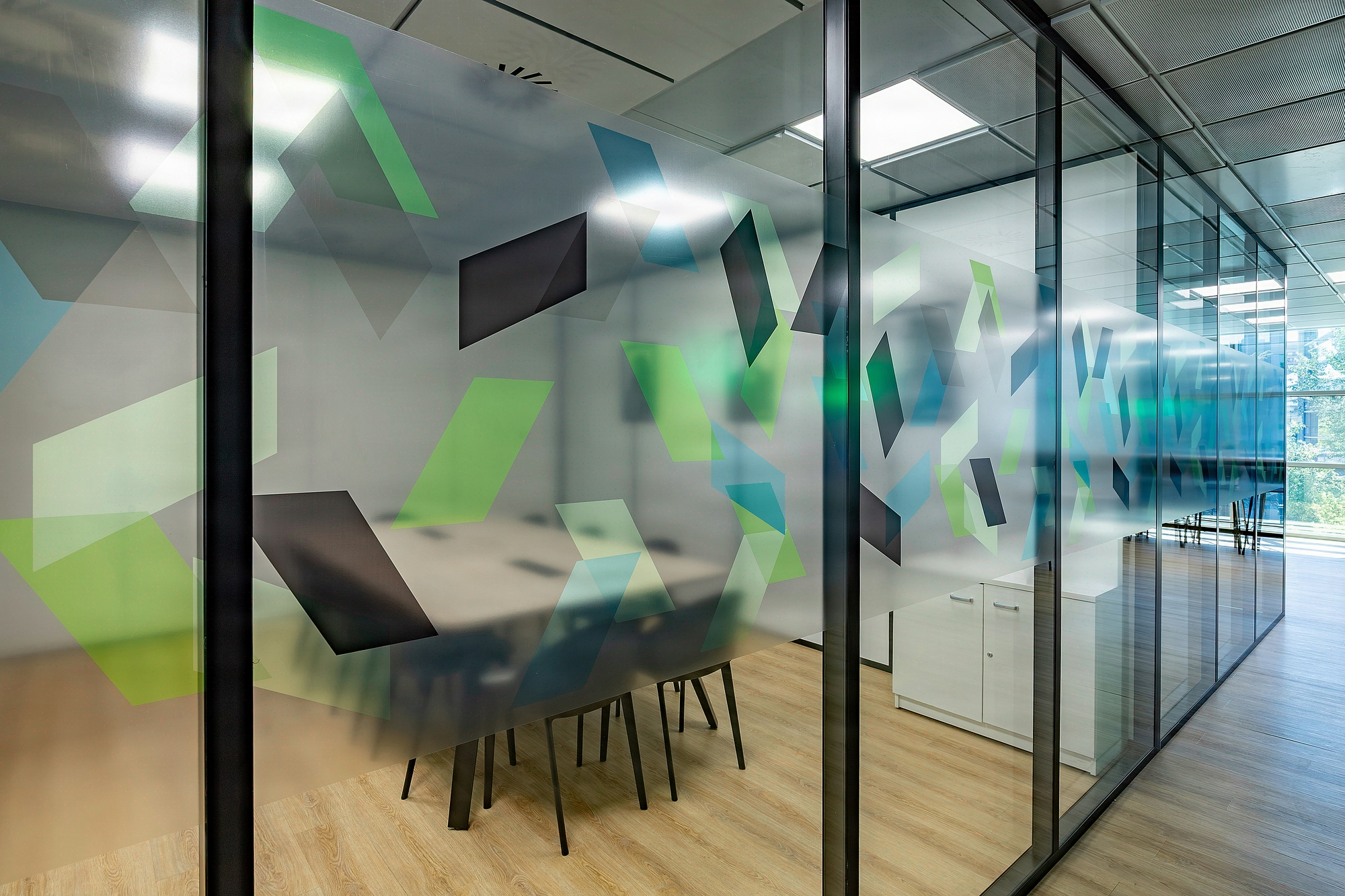
Window film and blackout films: privacy and visual identity
5 film families cover a light transmission from 5 to 90%, consistent with a lighting installation maintenance factor between 0.55 and 0.90.
A multilayer solar film at 90-140 EUR excl. VAT/m2 is only justified beyond 4 hours of direct sunlight per day: below that, a frosted film at 25-40 EUR excl. VAT/m2 coupled with a DALI blind delivers a better thermal ROI over the term of a 3-6-9 lease. Window film blacks out glazed partitions for 25 to 80 EUR excl. VAT/m2 installed, with a light transmission of 50 to 90% preserving the solar gain required by the Eco Energie Tertiaire scheme, which mandates a reduction in final energy consumption of at least 50% by 2040 compared with 2010. Premium films last 7 to 10 years indoors, meet the impact-resistance marking under NF EN 12600 and integrate into DALI/KNX BMS scenarios for the variable-opacity versions. For the architect and the thermal engineer, window film is not a decorative finish: it is a component of the interior envelope that modifies the solar factor g of the glazing + film pairing, governs compliance with the BACS decree and impacts the sizing of the BMS. Article R4224-5 also sets out the obligation to mark full-height partitions. Kytom frames each project with a dimensional survey, a calculation of the residual solar factor and a film selection calibrated to the substrate (acoustic laminated, low-emissivity double glazing, tempered glass).
The choice of film governs the solar factor g, the light transmission LT and the visual rendering. Solar protections are classified on four reference criteria: glare control, exterior view, natural light and visual contact, a grid applied to adhesive films in an evaluation framework.
| Film family | Light transmission | Solar factor g | Indicative price excl. VAT/m2 installed |
|---|---|---|---|
| Uniform frosted | 70 to 80% | 0.60 to 0.70 | 25 to 40 EUR |
| Frosted with cut patterns | 60 to 80% | 0.55 to 0.70 | 40 to 60 EUR |
| Four-color print 1440 dpi | 30 to 70% | 0.45 to 0.65 | 60 to 80 EUR |
| One-way micro-perforated | 40 to 60% | 0.40 to 0.55 | 70 to 110 EUR |
| Multilayer solar | 5 to 50% | 0.25 to 0.45 | 90 to 140 EUR |
The price ranges are indicative, observed across our portfolio of recent commercial projects, excluding particular market conditions. The g and LT values come from manufacturer technical sheets verified internally.
Our reading differs from the industry orthodoxy on one specific point. The dominant sales pitch pushes multilayer solar film by default on every commercial project. In practice, solar film only pays for itself if the facade accumulates more than 4 hours of direct sunlight per day (south, south-west, west without obstruction). On a north facade or a floor plate with low exposure, the 30 to 50% premium of multilayer film pushes the energy ROI beyond 12 years, hence beyond a 3-6-9 lease. In that case, Kytom recommends a standard frosted film at 25-40 EUR excl. VAT/m2, supplemented if necessary by a DALI-controlled interior blind.
On an exposed facade, however, the calculation of the residual solar factor of the glazing + film pairing governs compliance with the BACS decree (decree 2020-887, order of 7 April 2017 as amended) and the sizing of the BMS. Multilayer solar films incorporate up to 7 metallized layers to reject 60 to 80% of the incident solar energy.

For the architect and the thermal engineer: 4 auditable steps integrated into the joinery package and the BMS
The Kytom design office, founded in 2006, structures each window film project into four auditable phases, articulated with the joinery package and the BMS. The challenge for the thermal engineer is to lock down the residual solar factor g before validating the RE2020 calculation or the BACS sizing. The challenge for the architect is to preserve chromatic coherence and the impact-resistance marking without inflating the cost of the glazing package.
- Glazing and solar diagnosis: dimensional survey of the partitions, identification of the substrate type (33.2 acoustic laminated, Low-E double glazing, 8 mm tempered), measurement of the orientation and calculation of the target solar factor according to the standard reference framework applicable to interior blinds and solar protections. This step is the condition for the validity of the thermal calculation: a film applied to low-emissivity coated double glazing can create a thermal expansion differential and a risk of thermal breakage.
- Film selection: arbitration between the five families, validation of the fire reaction (B-s1,d0 classification, the minimum required in public-access buildings), verification of compatibility with coated glazing.
- Graphic design: patterns developed in vector software, integration of the brand guidelines, proof in 5 to 7 working days, contrast control for the impact-resistance marking with two bands positioned at 1.10 m and 1.60 m.
- Installation during off-hours: 2 to 3 installers in the evening or at weekends, 30 to 50 m2 handled per day and per team, complete drying in 24 to 72 hours depending on humidity.
Variable-opacity films (PDLC) integrate as an option into the DALI or KNX protocol of the floor plate to switch transparent/opaque on a time-based scenario.
When this method does not apply. For areas below 30 m2 (an isolated individual office partition), the graphic design and proof phase inflates the unit cost beyond 120 EUR excl. VAT/m2: the engineering/installation ratio becomes unfavorable. In that case, Kytom recommends a standard catalog frosted film, without customization, installed within 48 hours.
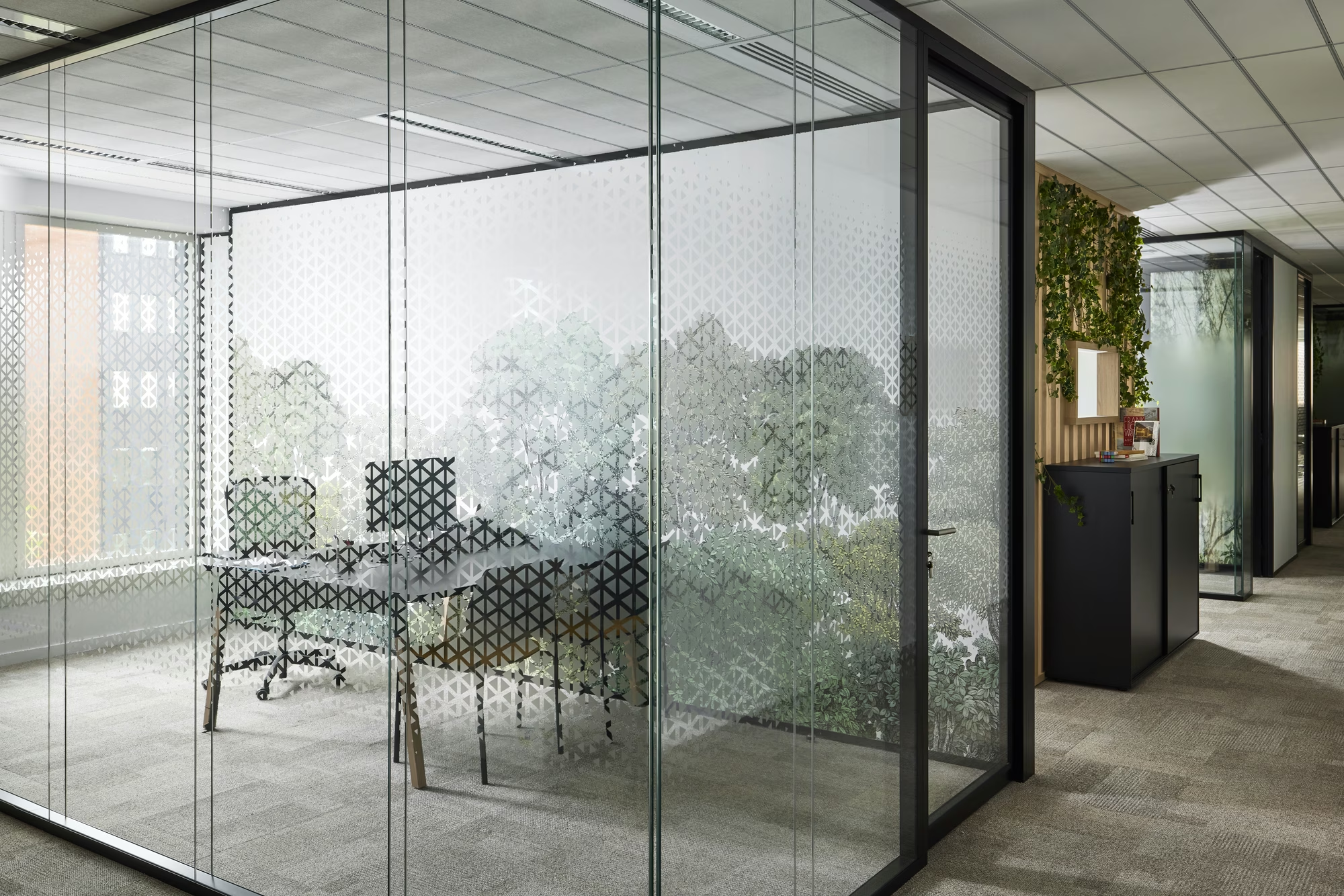
For the asset manager: ROI x5 vs screen-printed glass and 3-6-9 lease reversibility
Across the references delivered since 2006, window film generates three measurable returns, documented by Office Managers and construction economists. The asset manager reading is as follows: window film is a reversible OPEX, not a CAPEX capitalized on the glass.
- Immediate confidentiality: on the commercial sites equipped by Kytom, Office Managers consistently report a significant reduction in complaints related to sightlines in meeting rooms within the weeks following installation. This trend aligns with recent sector findings on quality of working life and the visual privacy dimension.
- ROI x5 to x6 vs factory frosted glass: 35 to 60 EUR excl. VAT/m2 for adhesive frosting, versus 180 to 350 EUR excl. VAT/m2 for a replacement with kiln-fired screen-printed glass. The gap is justified over 9-year commercial lease cycles.
- Contractual reversibility: residue-free removal on premium films applied to clean, flat glazing, compliant with the make-good clauses of commercial leases. For the CFO, window film will not burden the end-of-lease reinstatement provision, unlike kiln-fired screen-printed glass which still has to be dismantled.
A Paris-based consulting firm renewed 420 m2 of branded window film over 2 nights, on a budget below 18,000 EUR excl. VAT, with no business interruption (Kytom project 2023, reference available under NDA).
Frequently asked questions
Which window film should you choose for a south-facing facade exposed more than 4 hours per day?
On a south, south-west or west facade accumulating more than 4 hours of direct sunlight per day, the multilayer solar film (90-140 EUR excl. VAT/m2 installed) pays for itself in 5 to 8 years through reduced cooling load. Below 2 hours of exposure (north, shaded floor plate), Kytom recommends a standard frosted film at 25-40 EUR excl. VAT/m2 coupled with a DALI blind: thermal ROI below 12 years, compatible with a 3-6-9 lease.


