


Solar factor g between 0.10 and 0.30 depending on orientation: the trade-offs to settle when selecting the right protection
Visual comfort in tertiary offices relies on an illuminance of 300 to 500 lux per NF EN 12464-1, with glare control (UGR<=19) and management of screen reflections. Solar protections are graded across 5 levels (0 to 4) on two criteria: reduction of solar gains and glare control. Across our recent portfolio, here are the performances we measure:
| Solution | g factor | Class (0 to 4) | Gain reduction |
|---|---|---|---|
| Exterior ZIP blind | <=0.15 | 4 | 75 to 85% |
| Fixed oriented brise-soleil | 0.15 to 0.25 | 3 | 60 to 75% |
| Interior aluminium venetian | 0.35 to 0.50 | 1 to 2 | 30 to 50% |
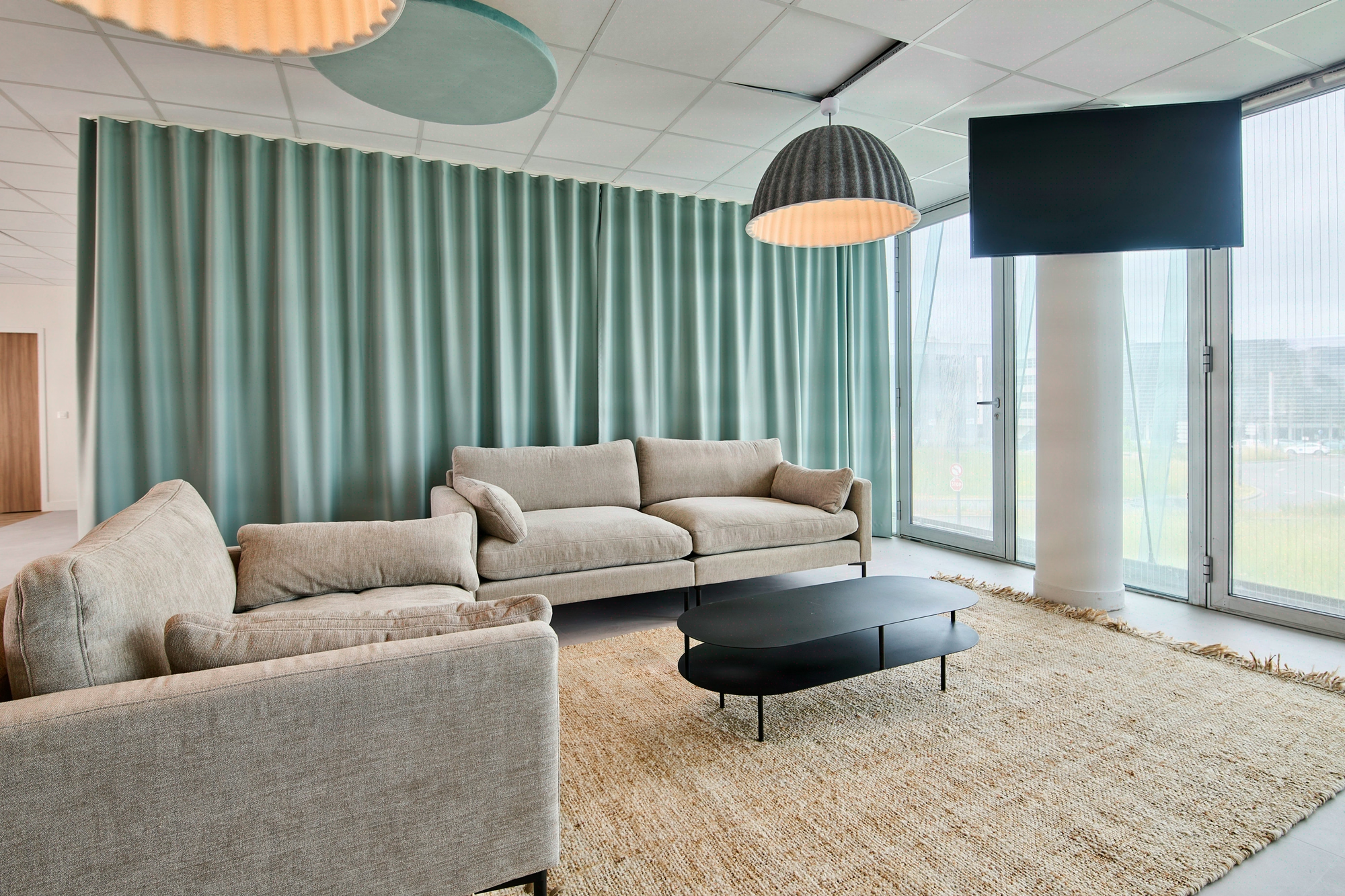
| Acoustic technical curtain | 0.40 to 0.60 | – | 25 to 40% |
In practice at Kytom, interior shading is no longer justified by default on south or west facades. An interior venetian (g 0.40) lets through 2.5 times more gains than an exterior ZIP (g 0.15): the heat has already entered the double glazing before being reflected. The regulatory framework imposes a 40% reduction in energy consumption by 2030 relative to the reference year, i.e. a base 100 brought down to 60; our field experience confirms that exterior protection has become essential on the south and west. North facades generally make do with interior anti-glare blinds, appreciably less costly per m² than exterior devices.


