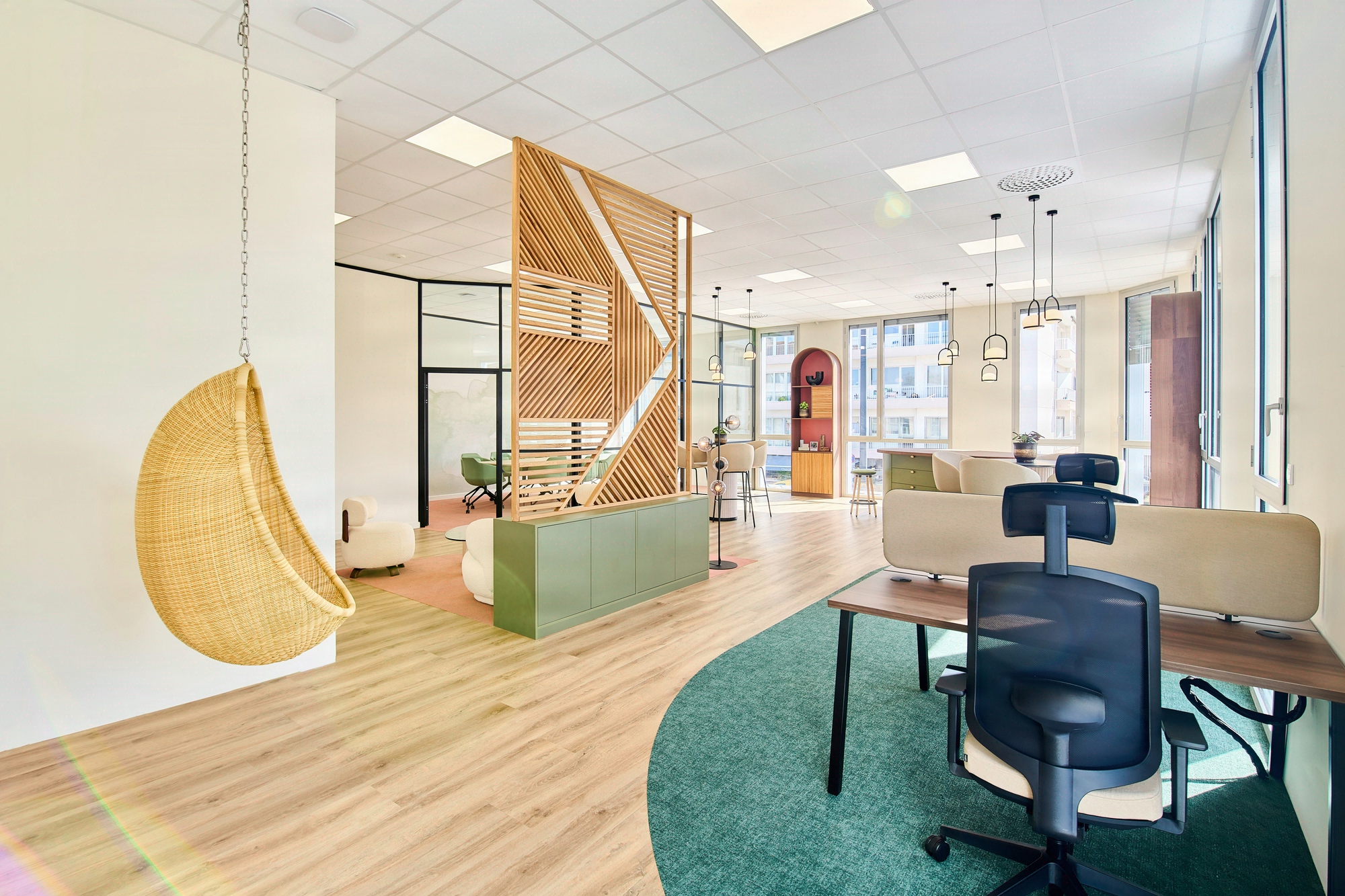
Biophilic design
Applicable regulatory framework: article R4222 of the code in force on air quality in the workplace, complemented by the LEED v4.1 BD+C standards, whose reference standard for energy performance is ASHRAE 90.1-2016, assessed on cost and GHG emissions. The assessment of indoor air quality is required for ERP regulations as well as for the HQE and BREEAM standards, the latter allowing up to 10% of exemplary initiatives not covered by the standard to be recognised (OID, 2024).
Biophilic design is not a decorative finish: it is an HR asset whose ROI pays back within 18 to 30 months on an additional cost of 80 to 250 EUR/m², through -8 to 14% absenteeism and +6 to 15% cognitive productivity (study by the University of Exeter conducted by Cooper in 2014 among 7,600 employees). Kytom has been deploying this approach since 2006 across an average floor area of 850 m² (on our office projects delivered in recent years), drawing on the 14 Terrapin Bright Green patterns and the WELL, BREEAM In-Use and HQE standards. NF EN 12464-1 sets the minimum illuminance for workstations, and the Labour Code R4222 governs ventilation: biophilic design turns these obligations into a lever for asset value (+3 to 7% headline rent on certified assets, observed on our buildings delivered in recent years).
Biophilic design responds to a data-driven reality. According to ADEME (Indoor air quality, 2022, p.4), French workers spend nearly 90% of their time indoors, including 35 to 45 hours per week at the office (DARES, Working conditions survey 2019). INSEE (Tableaux de l’économie française 2024, occupational health sheet) notes a 22% increase in sick leave linked to psychosocial risks between 2014 and 2022, an area in which indoor environmental quality becomes a strategic HR lever.
The regulatory framework is converging:
- Labour Code: articles R4222-1 et seq. set thresholds for ventilation, illuminance and thermal comfort.
- NF EN 12464-1 (2021): 300 lux minimum on 80% of workstations in a standard office.
- WELL Building Standard v2 (IWBI): Mind, Light and Materials credits reward vegetation and visual access to the landscape.
- BREEAM In-Use v6 (BRE Global): Hea 05 criterion on visual quality and outdoor views.
- HQE Bâtiment Durable (Certivéa, 2022 standard): target 13 on the health quality of spaces.
Our reading differs from the certifiers’ usual message on one point: the race for WELL Gold labels is not the end goal. Across 22 Kytom post-delivery projects, absenteeism gains are equivalent between WELL Silver and WELL Gold, but the additional cost of a Gold audit (15 to 25 EUR/m² extra) is only justified for assets intended for resale or for institutional ESG investors. For an owner-occupier in long-term operation, aiming for Silver is more economically rational. Real estate departments find a triple benefit here: compliance, attractiveness and asset value, with an observed rental premium of 3 to 7% on certified assets (observed on our buildings delivered with our real estate broker partners).
What is the real additional cost of a biophilic project compared to a standard office fit-out?
The additional cost of a biophilic project is between 80 and 250 EUR/m² compared to a standard office fit-out, depending on the level of plant integration and the materials chosen. The return on investment pays back within 18 to 30 months thanks to an 8 to 14% reduction in absenteeism. WELL certification strengthens the employer-brand argument, especially on assets intended for resale.


Planning a fit-out project?
Get a complimentary audit of your spaces: an expert eye, concrete recommendations, no commitment.