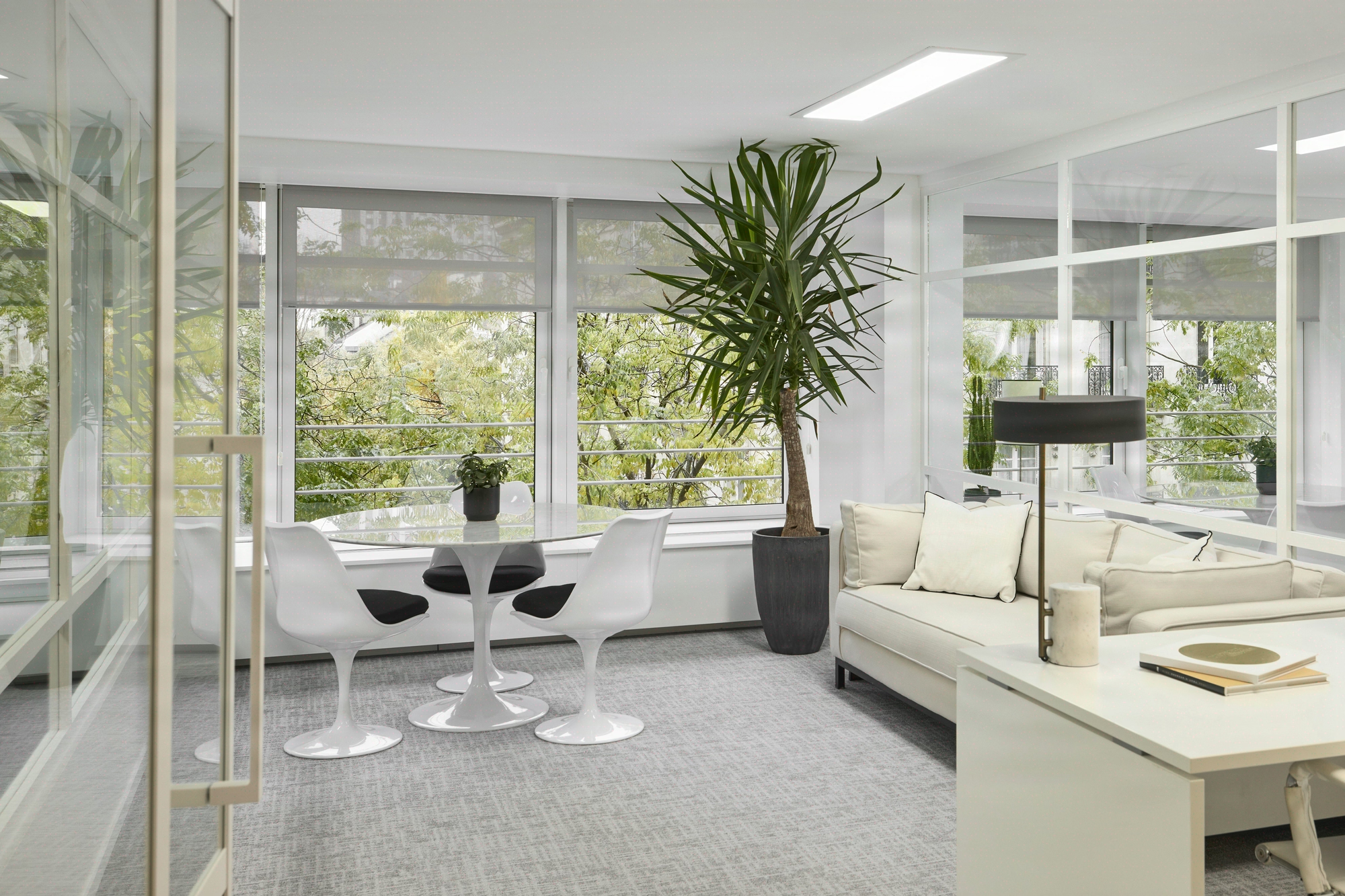
Delegate the works, keep control of the budget
Four simultaneous challenges for the executive: a service economy where the work environment drives performance, the regulatory requirements of article R4214 and the lighting standards applicable to indoor workplaces.
On our recent office projects, design and build keeps the budget variance tightly controlled against the signed quote, whereas a separate-trades arrangement mechanically exposes you to interface change orders. For an SME/mid-cap executive, the decision is therefore not aesthetic but financial: who bears the coordination risk, the client or the single contractor? Kytom manages office fit-out in design and build mode: a single contract covers studies, works and furniture, with an average lead time of 12 weeks. The executive devotes around 8 to 10 hours across 4 key milestones. The 10 offices in France and Spain secure local execution, on 200 to 5000 m², with heightened type W public-access building vigilance from 200 total headcount and office lighting compliant with the applicable normative illuminance levels.

The SME/mid-cap executive faces four interlocking challenges. Services account for the majority of French added value, which places the work environment at the heart of performance. Office real estate ranks as the second largest expense item after payroll in the majority of service SMEs. On the talent side, office space benchmarks stand at a minimum of 10 m² per employee in individual offices, 11 m² in shared offices and 15 m² in open space, and a quality environment is associated with lower turnover, in a market where hybrid working concerns a majority of executives.
Four trade-offs structure the decision:
- On-site renovation vs relocation: operational consequences and co-activity.
- Densification vs flex office: target ratio of 8 to 12 m² per workstation in open space, 12 to 18 m² in enclosed offices, with standardised illuminance requirements.
- Collaboration / concentration mix: dynamic zones in clusters and engineering zones below 35 dB(A), an indicative threshold for high-performance levels in an enclosed office.
- Compliance: Labour Code (articles R4214 et seq.), accessibility (2005 law), RGAA for the associated digital media.
Our reading differs from the profession’s dominant discourse on one specific point: flex office is not a saving, it is a cost transfer. Conventional wisdom sells a ratio of 0.7 workstations per employee as an immediate rent gain. In practice, on our recent portfolio, a notable share of executives had to reinvest 150 to 300 EUR/m² in acoustic booths and concentration zones within 24 months, equivalent to several months of rent saved. flex office becomes relevant above a measured real mobility rate of 60%, recorded by presence sensors over 4 weeks, not below. The complexity of these trade-offs justifies a single partner across the entire scope, from programming to handover, with consolidated legal responsibility as a general contractor within the meaning of the Civil Code (articles 1787 et seq.).
For the CFO and the executive: the hidden cost of separate trades and the ROI of the single contract
Let us reframe the subject from the financial angle that interests the management committee. A 1500 m² fit-out project at 1200 EUR/m² represents a 1.8 M EUR commitment. On this basis, the CFO weighs three scenarios.
- Separate trades (architect + 8 to 12 companies): architect fees 8 to 12%, OPC 3 to 5%, contingency provisions of 8 to 15% commonly applied to this arrangement. The CFO bears the interface risk between trades, that is, the change orders linked to HVAC/electrical/partition connections.
- Conventional general contractor: firm overall price, but studies outsourced upstream with separate fees and trade-by-trade negotiation of variants.
- Kytom design and build: single contract for studies + works + furniture, with a final budget variance kept tightly controlled against the signed quote.
The Kytom method comes down to five milestones over 12 weeks, legible for a management committee:
- Strategic brief: 2 to 3 workshops frame uses, target headcount and the overall budget, between 600 and 1800 EUR/m², a professional range we calibrate on each typology of project (surface, level of finish, sector), excluding premium headquarters and excluding corporate restaurants.
- Programming and space planning: 2D plans and 3D visuals, binding pricing within 3 to 4 weeks.
- Single contract: signature covering studies, all-trades works and furniture, which eliminates coordination between 8 to 12 separate providers.
- On-site execution: a dedicated project manager runs the site, a weekly 30-minute review and target-cost financial reporting.
- Turnkey delivery: handover, then a documented snagging-clearance process tracked through to close-out.
| Phase | Typical duration | Binding deliverable |
|---|---|---|
| Brief | 1 to 2 wks | Usage specification |
| Studies | 3 to 4 wks | 3D plans and pricing |
| Works | 8 to 10 wks | Site delivered |
| Snagging | 30 days | Handover report |
The site managers of the 10 offices secure the deadlines. The Qualibat certifications (notably 5311 for office renovation) and DTU compliance cover execution across all trades.
When design and build is not the right answer. Below 150 m² or for a simple decorative refresh without HVAC or partitions, the single contract introduces a disproportionate management cost: a standalone furniture lot or a direct painter remains more economical. Above 5000 m² with strong heritage constraints (listed building, heavy restructuring), a conventional arrangement of architect plus a separate general contractor may better manage the technical complexity. Finally, if the executive wishes to put each trade out to separate competitive tenders for internal governance reasons, design and build loses its main advantage: contractual consolidation.
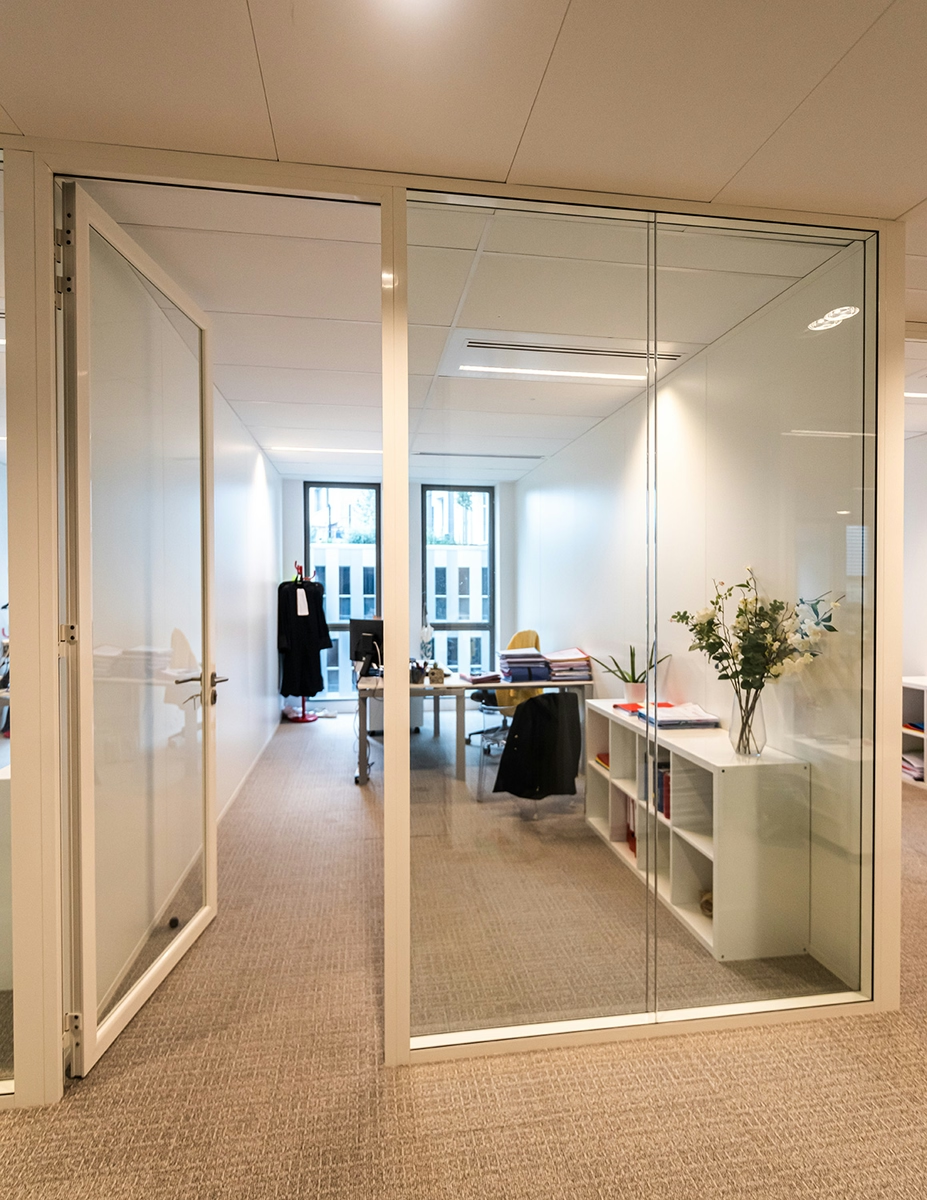
Three measured benefits: a controlled budget variance, far less management time, and stronger employee satisfaction
Field feedback highlights three areas of gain for the executive.
- Financial axis: the single contract eliminates change orders linked to interfaces between trades and stabilises the budget, with a final variance kept under 3% compared with the initial quote on our recent portfolio.
- Management time axis: a single point of contact sharply reduces the time devoted to the project by the management committee, in the order of 16 to 24 cumulative hours in design and build against 80 to 120 hours in separate trades on the basis of 8 to 12 providers.
- Operational performance axis: post-delivery surveys report a clear improvement in employee satisfaction over the six months that follow handover. The building environmental quality frameworks structure their assessment around 7 themes (air, water, nourishment, light, fitness, comfort, mind) of the WELL Building Standard, broken down into Silver, Gold and Platinum levels.
Asset value follows: across French regional markets, market rents for renovated offices position themselves 10 to 15% above comparable untreated assets, to be validated on each transaction.
Frequently asked questions
What is the average budget variance on a Kytom design and build project?
On our recent portfolio, the variance against the signed quote stays under 3%. A separate-trades arrangement exposes you to interface change orders that we typically see in the 8 to 15% range.
How much time must an executive devote to the project?
16 to 24 cumulative hours across 4 milestones (brief, 3D validation, signature, handover), versus 80 to 120 hours in separate trades with 8 to 12 providers.
What budget per m² should be planned for an office fit-out?
Between 600 and 1800 EUR/m² depending on the level of services, excluding premium headquarters and excluding corporate restaurants. This professional range is calibrated to each typology of project. The binding pricing is delivered within 3 to 4 weeks after the brief.
Which standards govern office fit-out in France?
The regulatory framework imposes precise requirements: ventilation, lighting and sanitary facilities, illuminance of 500 lux at the workstation, a high-performance acoustic level of 35 dB(A) in an enclosed office, accessibility compliant with the 2005 law, and all-trades execution according to the DTU in force.
Is design and build relevant for all projects?
No. Below 150 m² or for a decorative refresh without HVAC or partitions, a direct trade lot is more economical. Above 5000 m² with strong heritage constraints or a listed building, an arrangement of architect plus a separate general contractor may better manage the complexity. The Kytom target is 200 to 5000 m² in office renovation.
Does flex office really reduce costs?
Conditionally. On our recent portfolio, a notable share of executives reinvested 150 to 300 EUR/m² in acoustic booths within 24 months, that is several months of rent saved. flex office delivers on its promise above a 60% real mobility rate, measured by presence sensors over 4 weeks, not below.


