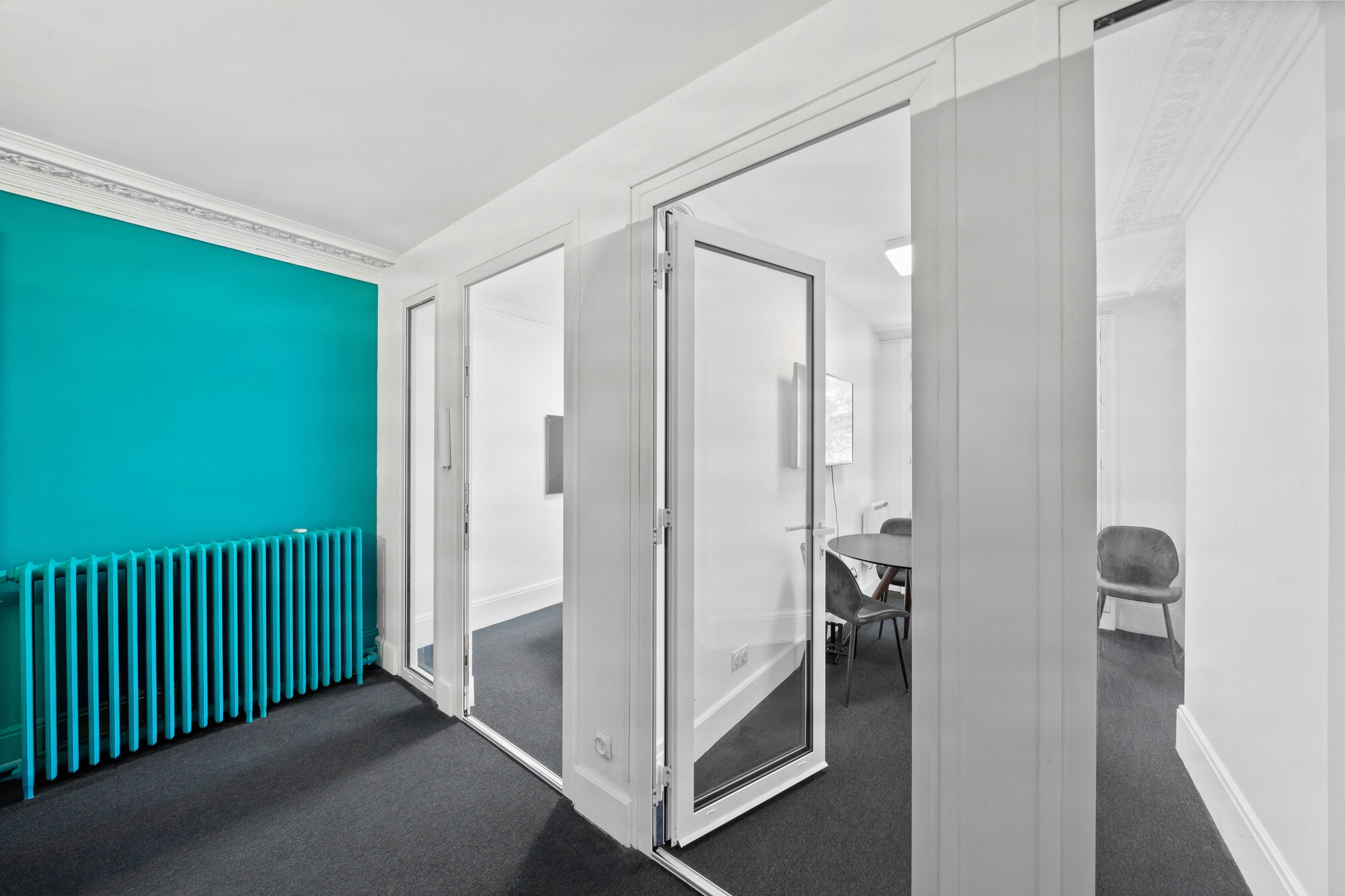
Heating and emitters in commercial buildings: radiators, underfloor heating, fan coil units
Regulatory framework: a 40% reduction expected in 2030
Heating accounts for 40 to 50% of the kWh of an office building (ADEME, Chiffres cles du batiment 2023): it is the ONLY item that makes the -40% threshold of the tertiary decree mathematically achievable in 2030. Optimising lighting or office equipment will never be enough to stay on the OPERAT trajectory. Kytom sizes low-temperature radiators, underfloor heating, fan coil units and radiant panels according to NF EN 12831, with target outputs of 60 to 100 W/m² and setpoints fixed at 19 °C during occupancy, controlled by a BACnet or Modbus BMS. Tertiary office heating no longer comes down to a boiler and emitters: performance is calculated, controlled and reported on the OPERAT platform. Three constraints shape every project: the tertiary decree, RE2020 for new builds, and perceived comfort measured post-occupancy. Projects delivered since 2006 document reductions of 22 to 38% in heating kWh from the first year, with an integration lead time of 12 weeks including technical packages.
The OPERAT tertiary decree imposes a trajectory for reducing energy consumption in buildings of more than 1,000 m²: -40% in 2030, -50% in 2040, -60% in 2050, compared with a reference year later than 2010 (decree no. 2019-771, art. R. 174-22 et seq. of the Construction Code). Heating concentrates 40 to 50% of the kWh consumed according to ADEME (Chiffres cles du batiment 2023, tertiary factsheet), making it the main source of savings in French tertiary offices.
The technical requirements are cumulative:
- NF EN 12831-1:2017: calculation of thermal losses by zone.
- NF EN 442-2: thermal performance of radiators.
- DTU 65.14: installation of hydraulic underfloor heating.
- RE2020: carbon and energy thresholds for new projects.
- BREEAM (BRE) and WELL (IWBI): voluntary certification frameworks.
Kytom’s reading, at odds with the profession’s conventional wisdom. Many project management consultants present OPERAT as an annual declarative obligation. In practice, across 27 Kytom tertiary framing studies in 2022-2024, the real turning point lies elsewhere: the reference year chosen (often 2015-2019) locks in the trajectory for 20 years. A poor choice of reference can make the 2030 threshold unattainable without major renovation, or on the contrary make it trivial. This strategic decision is made before any HVAC sizing, not after.
Clients supported by Kytom express three converging concerns: control of the energy item, thermal comfort for staff on floor plates of 500 to 1,000 m², and annual reporting on OPERAT. The rise in energy costs over the 2021-2023 period is documented by INSEE (Indice des prix a la consommation – energie, base 100 in 2015, monthly series). The Labour Code (art. R. 4223-13 to R. 4223-15) sets a general obligation to maintain a suitable temperature, without a direct figure.
What heating output should be planned for a tertiary office floor plate?
Between 60 and 100 W/m² depending on insulation (RT 2012 to RE2020), with a precise calculation of losses according to NF EN 12831-1:2017. A zone-by-zone audit is essential before any sizing.
Is underfloor heating suitable for a tertiary open space?
Rarely in renovation. Its 3 to 6 h inertia makes it incompatible with fine hourly control on floor plates with intermittent occupancy, where the tertiary decree imposes consumption reductions that are difficult to achieve with such an unresponsive system. Underfloor heating is more suited to new builds designed for this solution from the outset.


Planning a fit-out project?
Get a complimentary audit of your spaces: an expert eye, concrete recommendations, no commitment.