Cybersecurity & Heritage
When IT security embraces Haussmann 300 m² office fit-out for Deverywhere in Paris
For Deverywhare, we transformed 300m² in Paris into a technology HQ where 20 experts orchestrate cybersecurity, between listed mouldings and cutting-edge network infrastructure.
- 300 m²
- 2 months
- 2011
haussmannien_contemporain
Concept
IT security settles into its Parisian quarters
Creation of modern offices for a technology start-up in IT security

Situation
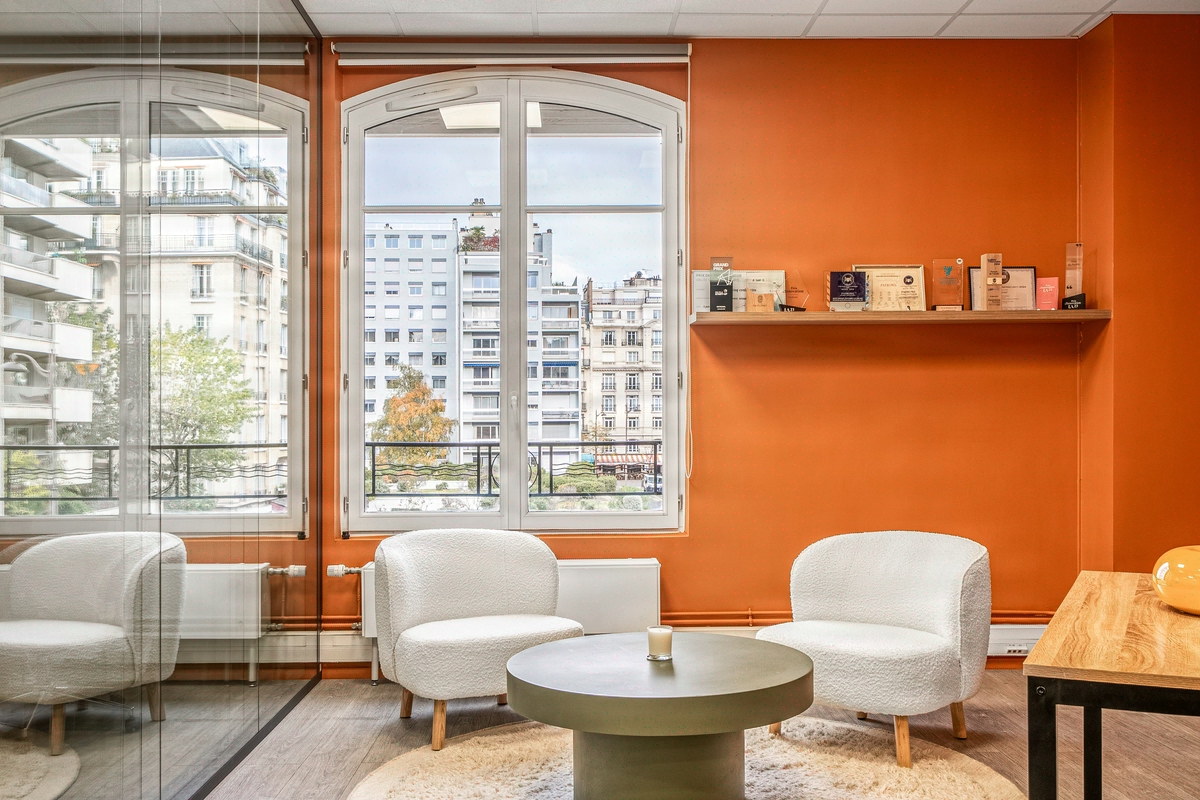
In 2011, Deverywhare, a French cybersecurity software vendor, entrusted Kytom with the fit-out of its Paris headquarters: 300 sqm in a heritage Haussmann building, to install 20 engineers in two months. Ceilings at 3.80 m, preserved mouldings, original herringbone parquet, protected joinery. The landlord delivers a bare floor plate, without code-compliant electrics.
The brief comes down to one structuring constraint: route a redundant Category 6A cabling system, seven technical packages and 20 IT workstations through a protected building, without touching the heritage features, in eight weeks, on a fundraising start-up budget. The enterprise CIOs received as clients enter through the original Haussmann lobby before the technical briefing.

Heritage building, eight-week schedule, start-up budget
Three constraints overlap at the framing stage. The heritage building restricts any work on original mouldings, parquet and joinery: no through-drilling, no removal. The schedule sets eight weeks between site survey and the teams’ arrival, with no catch-up window. The budget, sized on a seed round, rules out any change order and demands a constant technical trade-off between restoration and new intervention.
Add to this the full electrical upgrade to code of a floor plate delivered bare by the landlord, plus the routing of a redundant Category 6A IT cabling system.
The real difficulty lies elsewhere than in the heritage-versus-function choice: seven trades must be coordinated in parallel, on a protected site, with a schedule that tolerates no slippage of more than three days on the critical path.

Two structuring decisions: perimeter technical false ceilings and self-supporting partitions
Two technical choices shaped everything else. First choice: rather than drilling the mouldings to route cables and ventilation, Kytom created technical false ceilings around the perimeter of the rooms, set back 60 cm from the cornices, leaving the central mouldings entirely visible. All the Category 6A cabling and the LED relamping run through this demountable perimeter casing.
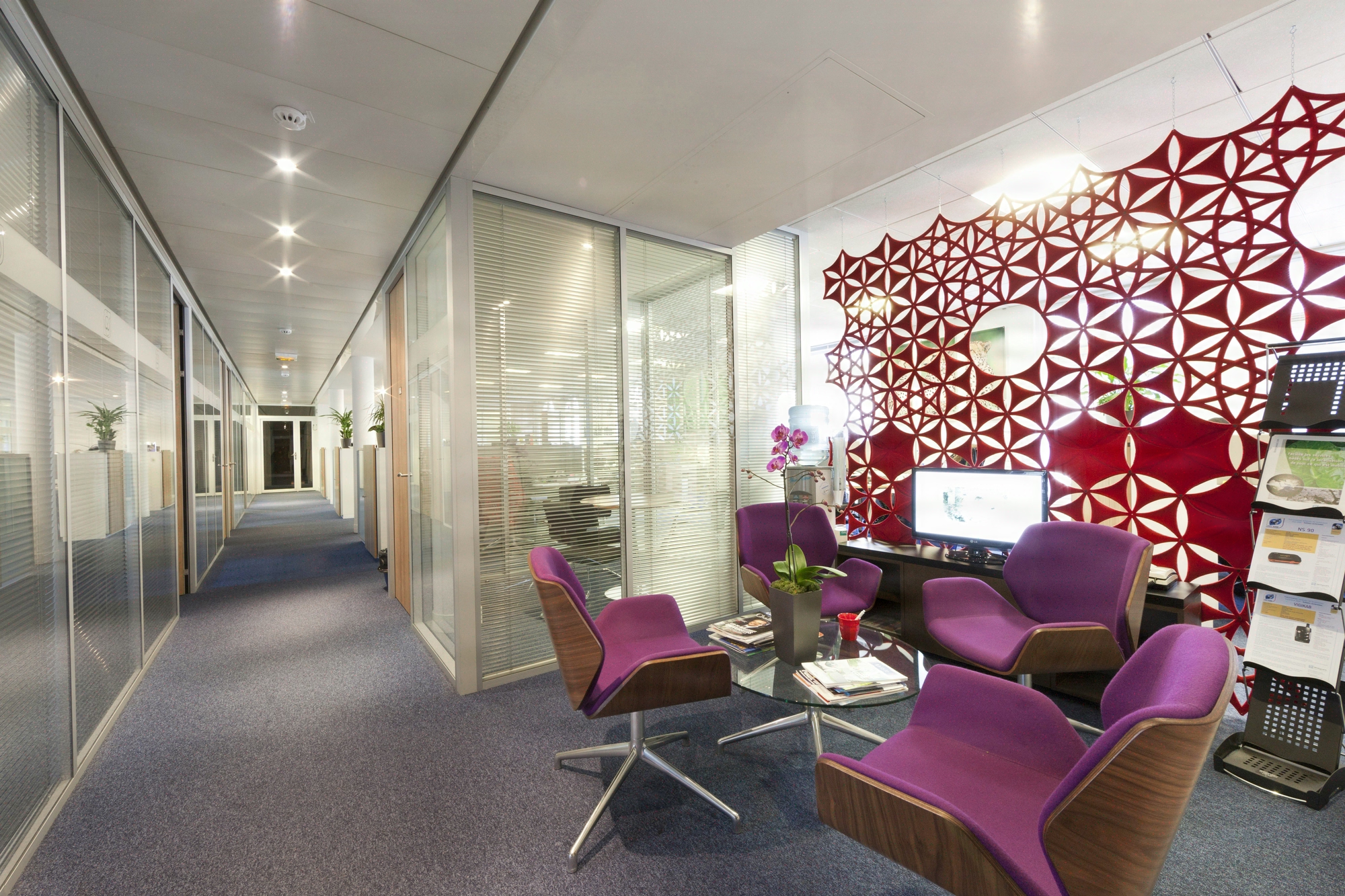
Second choice: self-supporting demountable partitions, set without any fixing to the original walls, to delineate the open space, confidential meeting rooms and client area without touching the structure. Reversibility becomes total: a future move leaves no trace.
Once these two decisions were locked in, the sequence unfolds: heritage audit, restoration of the herringbone parquet, targeted strip-out, then coordinated execution of the seven packages (electrics, cabling, oversized patch racks to absorb headcount growth, partitions, zoned LED relamping, painting, bespoke joinery to hold 15 sqm per workstation). Weekly on-site management, in turnkey design and build mode.

300 sqm delivered in two months, 20 workstations installed, 90% repairable materials
The 300 sqm were delivered within the contractual eight weeks, 20 workstations operational on the teams’ arrival, with no budget change order. The bet on perimeter false ceilings and self-supporting partitions pays off on three fronts.
Technical: the IT layer (Category 6A cabling, oversized racks, LED relamping) was installed without removing a single heritage feature, which avoided the ABF (heritage architect) procedure and saved three to four weeks on the theoretical schedule. Economic: full reversibility means a future move generates no lease reinstatement cost.
Circular: 90% of the installed components are repairable, 90% recyclable, 95% of the furniture reusable on a move, 30% recycled content across all supplies. For a project delivered in 2011, predating the formalisation of circular-economy indicators at Kytom, these levels stem directly from the initial decision: fixing nothing to the protected structure forces the choice of demountable components, and therefore repairable and reusable ones.
300
sq m transformed
2
months of work
20
workstations
Discover
More photos of the project


1 / 12
Implementation
Sustainability
REFERENCES
Related projects

Visualisations and diagrams are the property of KYTOM SAS; reproduction prohibited without written authorisation.