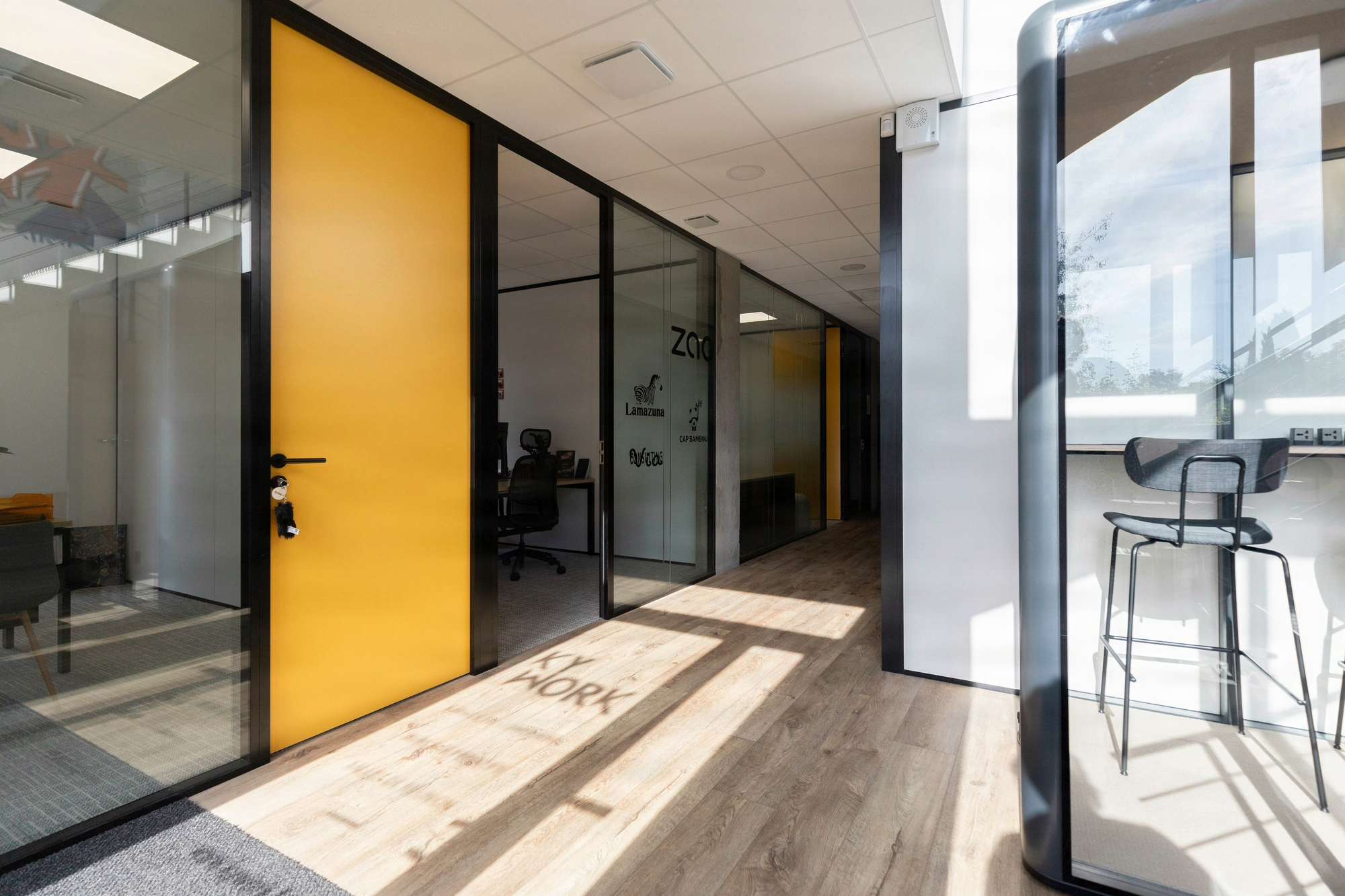
Commercial doors: fire-rated, acoustic, security, wood and glazed
Over-specifying a fire door beyond the regulatory requirement (EI 60 where NF EN 1634-1 and Labour Code R4216 require EI 30) increases the budget by 20 to 25% with no insurance benefit. This is the most common drift observed on commercial door programmes, ahead of workmanship defects. During our audits of existing door portfolios, defects are frequent: missing seals, out-of-service door closers, expired CSTB test report, or missing identification plate. The network of 11 Kytom agencies, founded in 2006, specifies and installs EI 30 to EI 90 fire door assemblies compliant with NF EN 1634-1, 32 to 45 dB acoustic doors to NF S 31-080, and reinforced RC2 to RC4 models to EN 1627. This page details the just-necessary specification method and the explicit conditions in which the approach is not relevant.
8 areas of expertise under "Commercial doors: fire-rated, acoustic, security, wood and glazed"
-
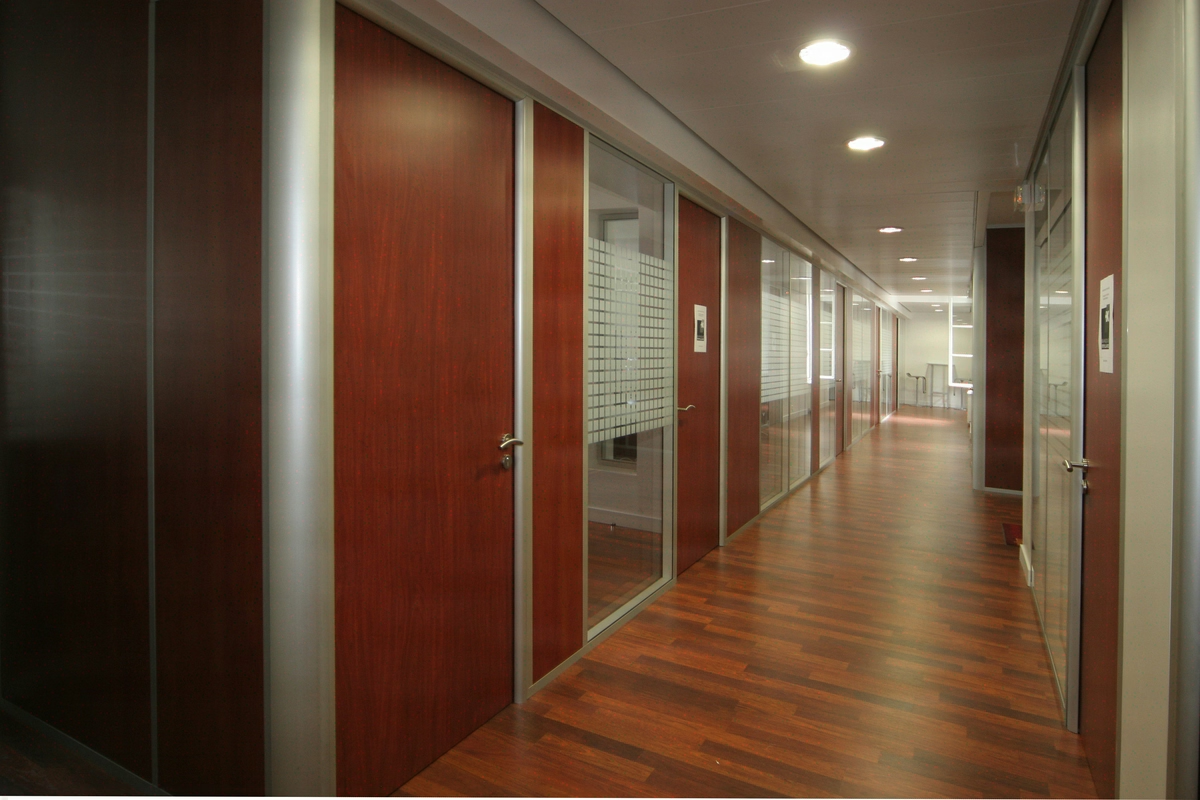
Door accessories: handles, hardware, door closers
In a head office, a standard-range handle wears out quickly under the strain of daily traffic: it is a false economy that ends up costing far more over the life cycle. Door…
-
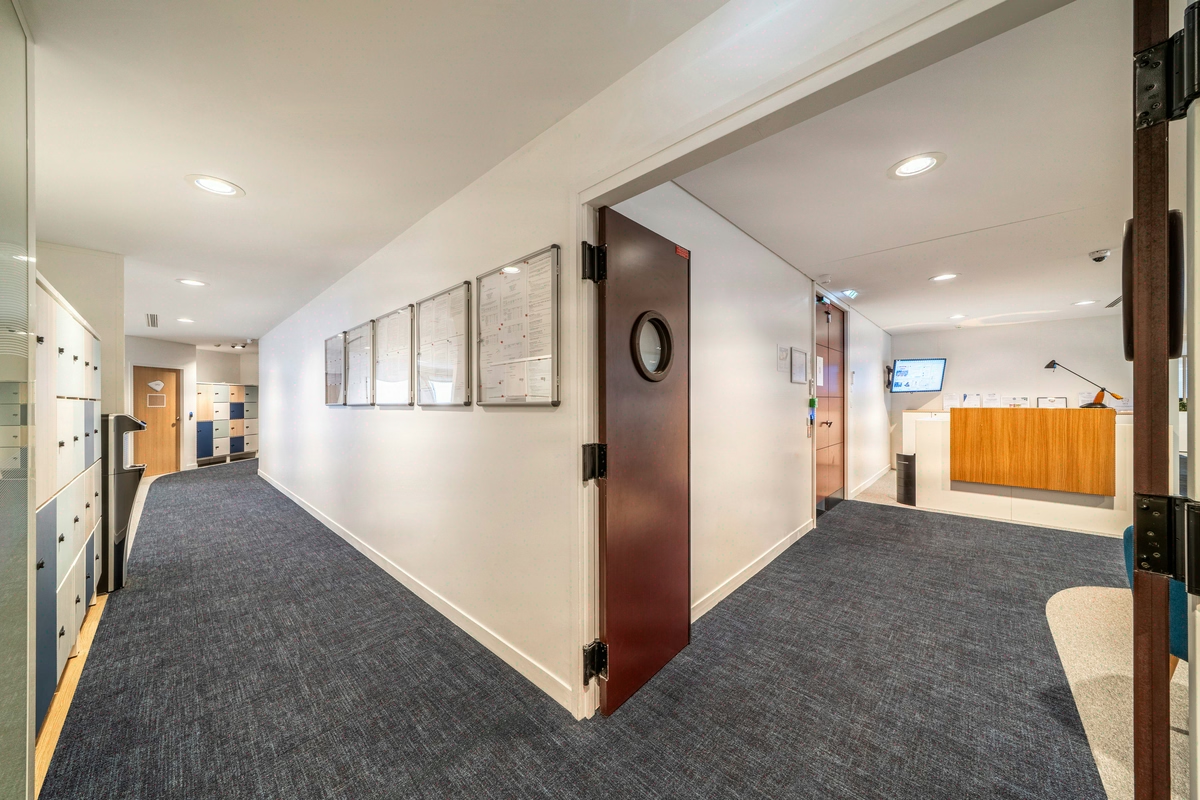
Tertiary fire doors: installation, EI rating, CE marking
An EI 60 door on an EI 30 wall means zero minutes of real resistance: NF EN 1634-1 rates the door, but the door + partition + junction assembly defines the effective…
-
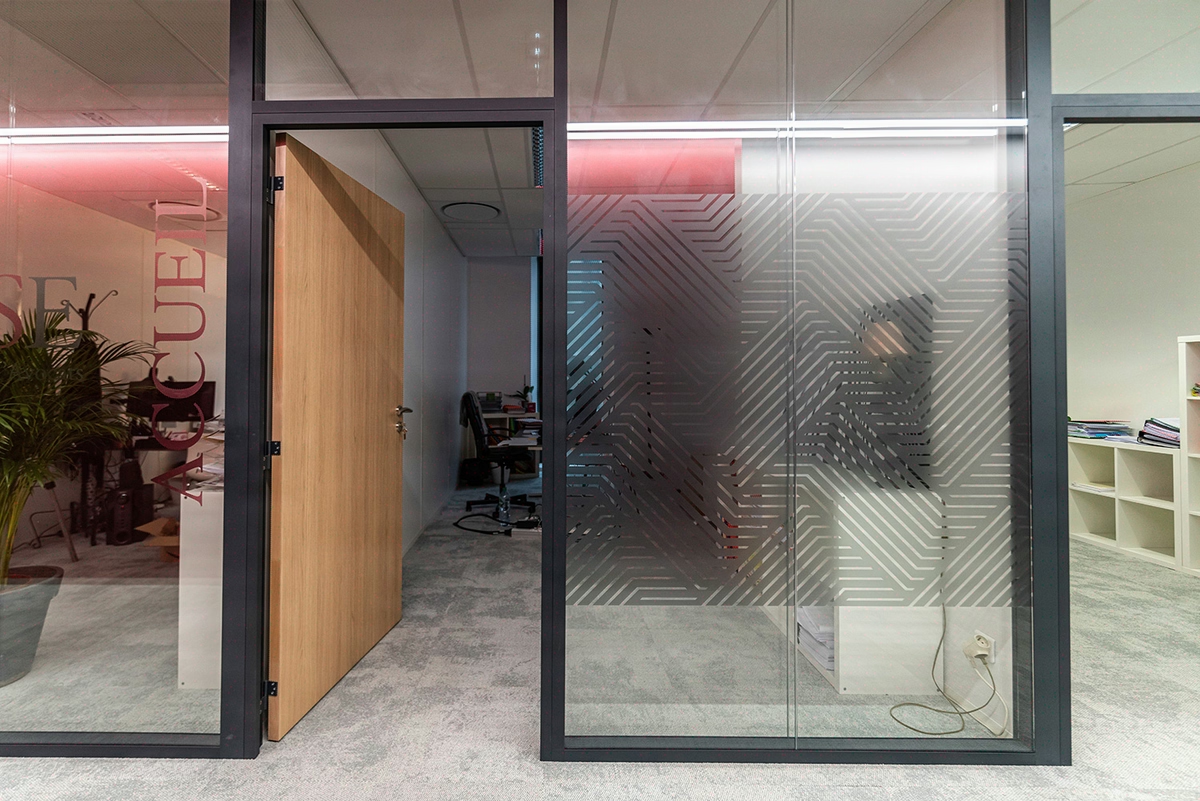
Flush doors: wall integration, wood and glazed
A traditional door frame costs 1500 to 4500 EUR excl. VAT less per door than a flush solution: the question is not aesthetic, it is architectural. A flush door is only relevant if…
-

Sliding doors: wall-mounted track, pocket doors, space saving
The commercial sliding door is not an aesthetic choice: it is a financial trade-off that pays for itself as soon as rent exceeds 400 EUR/sqm/year (geometric calculation pi*R²/4…
-
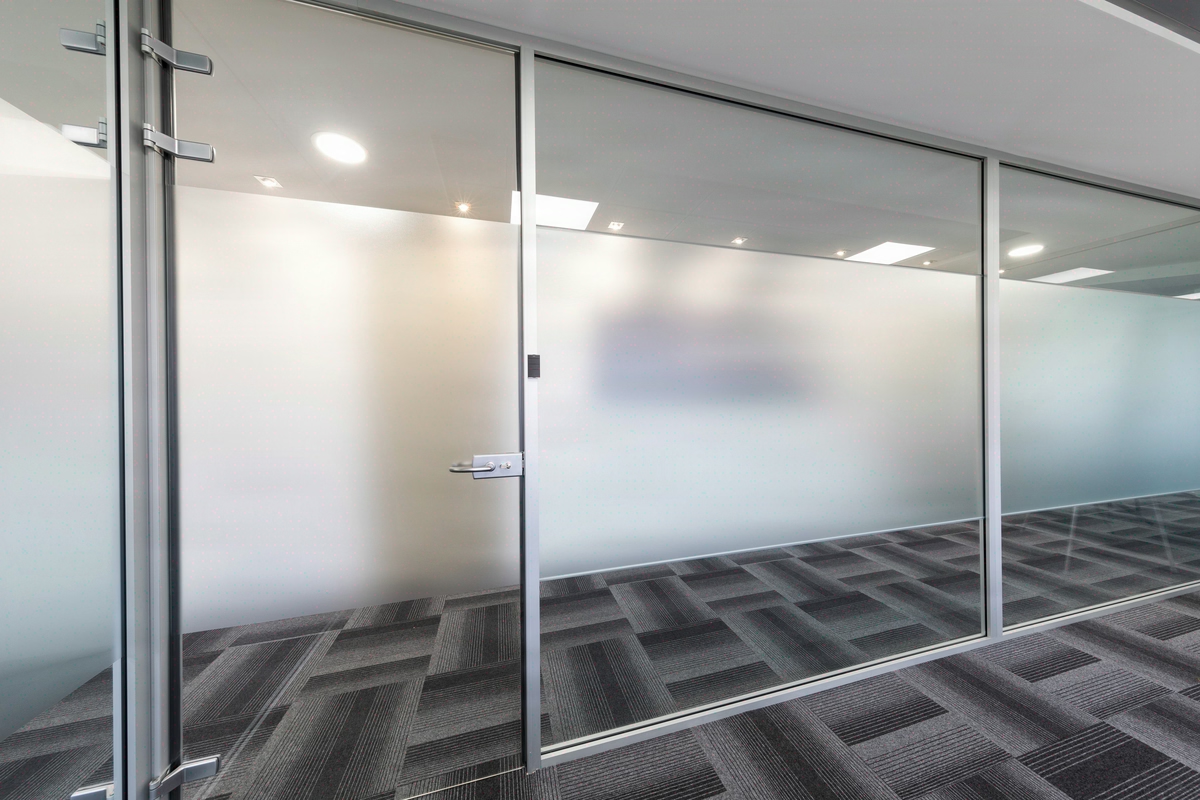
Solid-core wooden doors: premium for office spaces
Rw 32 to 42 dB for 850 to 2,400 euros excl. VAT per door set: the solid-core wooden door is not an aesthetic choice, it is an acoustic trade-off. The difference of 12 to 18 dB…
-
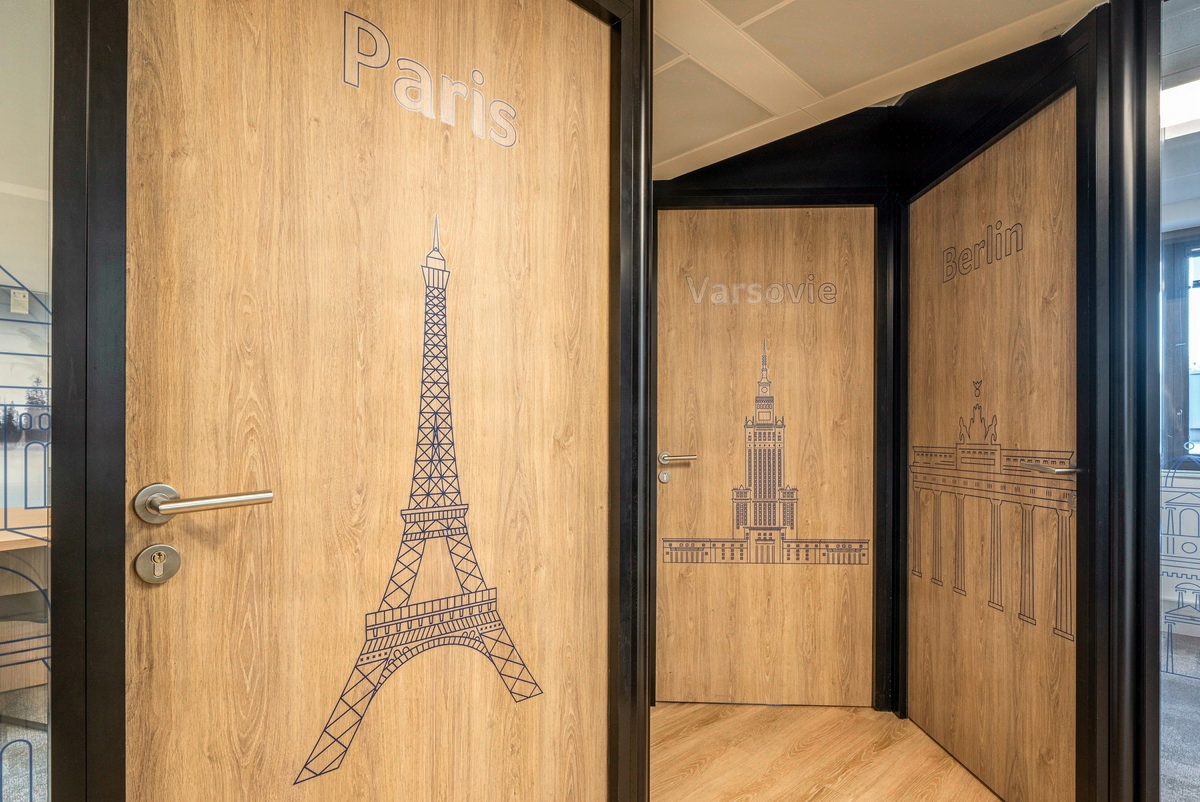
Secure armored doors: RC2 to RC4 levels and access control
Systematic RC4 = a 40 to 60% cost overrun with no measurable reduction in risk. The EN 1627 standard ranks six resistance classes, and our reading of the Kytom portfolio (80…
-
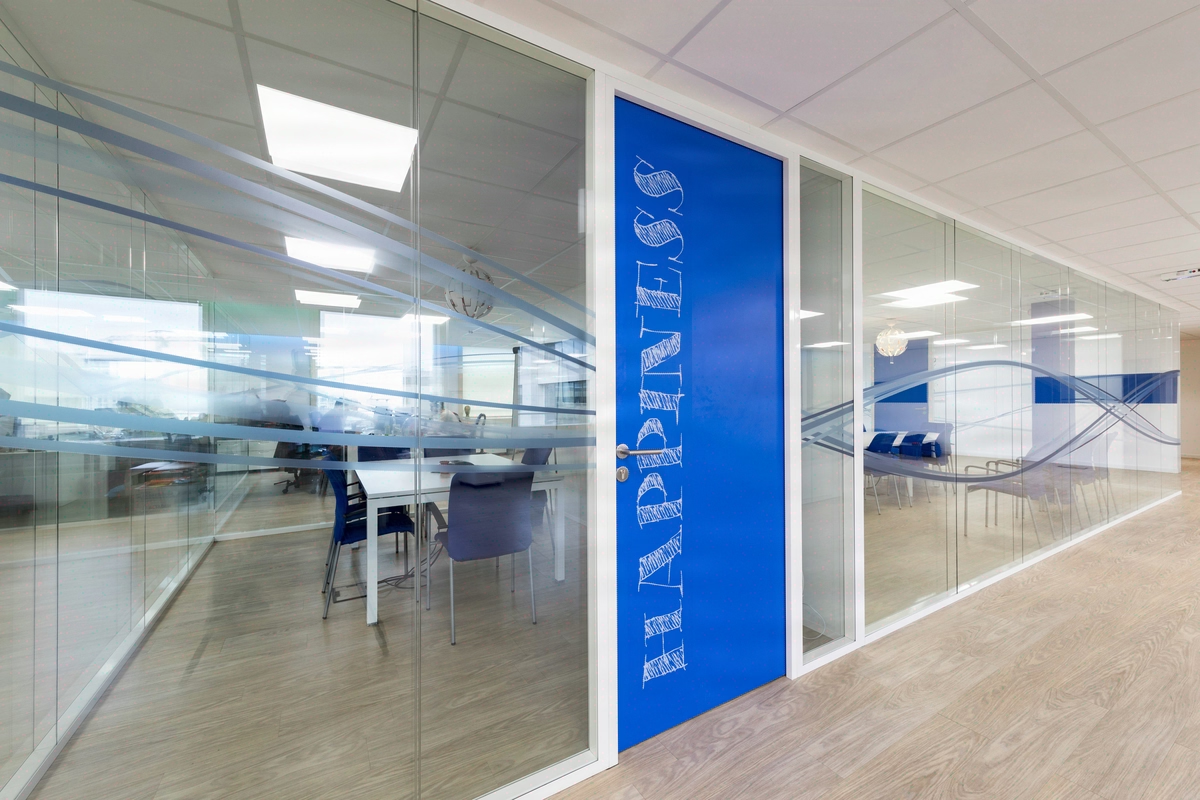
Sound-rated and acoustic doors: Rw insulation 35 to 55 dB
An Rw 45 dB door fitted on an Rw 38 dB partition caps out at 38 dB in handover measurement: EUR 1,800 excl. VAT of door leaf wasted by invalidation of the acoustic chain. The…
-
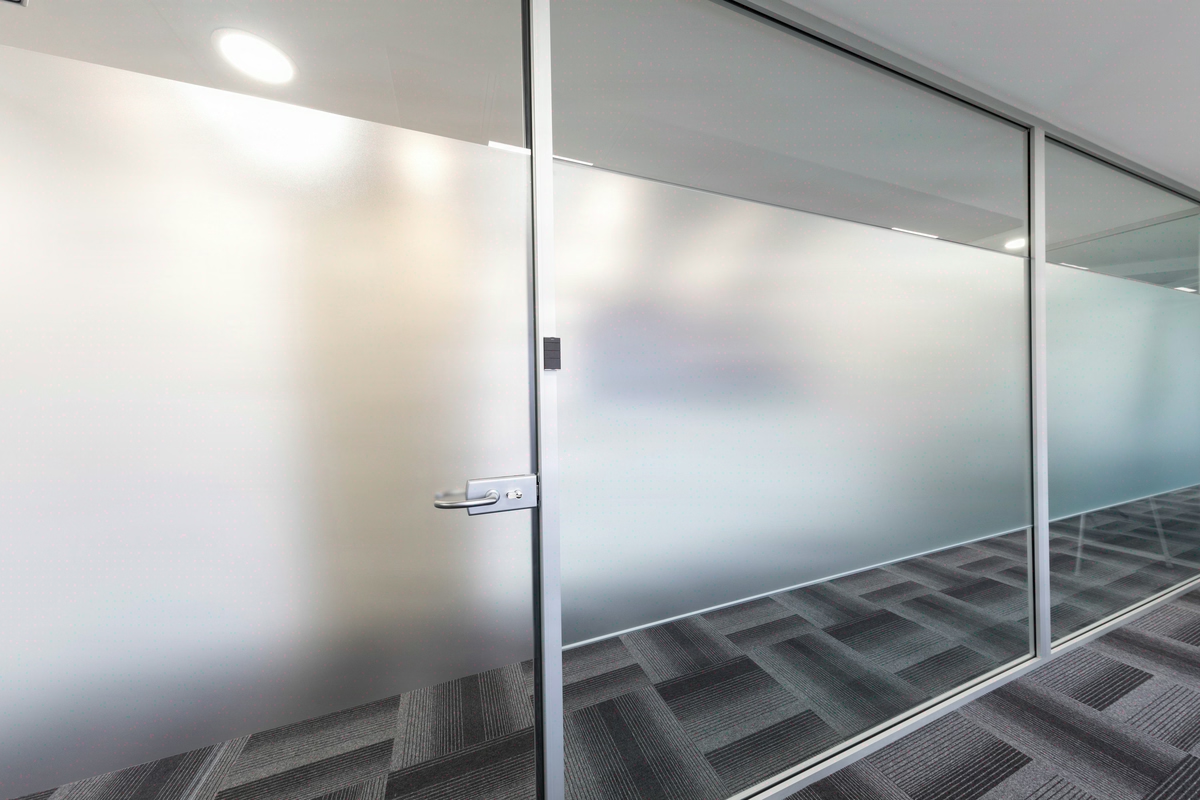
High-performance glazed doors: transparency, thermal, acoustic
Specifying Rw 42 dB across an entire office floor is an architectural misjudgement: reference thresholds distinguish 32, 38 and 45 dB depending on use, and over-specifying costs…


The door as a system, not a component
Kytom cross-references four regulatory frameworks for each specified door. Our reading differs from a widespread practice in project management: the door is not an isolated joinery component, it is a system [assembly + hardware + test report + plate] whose consistency legally determines the classification.
Fire safety and acoustics
- Fire safety: Labour Code Title I (articles R4216 on exits and evacuation). Resistance is measured to NF EN 1634-1, which validates classes EI 30, EI 60, EI 90 and EI 120. In public-access buildings (ERP), IT 247 requires the automatic triggering of fire closures controlled by detection.
- Acoustics: NF S 31-080:2006 sets 32 dB for a shared office, 38 dB for a management office, 45 dB for absolute confidentiality (HR, legal, medical).
- Accessibility: clear passage greater than or equal to 0.83 m and opening force less than or equal to 50 N (order of 8 December 2014, accessibility of existing ERP).
- Security: EN 1627, classes RC2 to RC4 for sensitive premises.
Heat loss and validity of classification
Our thermographic audits show that a notable share of heat loss transits through poorly sealed interior joinery, a finding consistent with the ADEME Commercial renovation guides, though ADEME does not publish a value of this kind. The consistency between the CSTB test report, hardware and identification plate determines the validity of the fire classification: a cylinder outside the master key plan or an EN 3 door closer instead of EN 5 invalidates the EI test report. Contrary to the profession’s received wisdom, which treats hardware as a workmanship detail, Kytom handles it as a specification datum on a par with the test report.
What is the difference between an EI 30, EI 60 and EI 90 door?
The EI ratings (integrity against flames and thermal insulation) to the NF EN 1634-1 standard indicate the fire resistance duration: 30 minutes for EI 30, 60 for EI 60, 90 for EI 90. The requirement depends on the premises and the building category. EI 30 is sufficient in most standard commercial cases. Over-specifying to EI 60 or EI 90 without a regulatory obligation adds 20 to 25% to the cost with no insurance benefit. Kytom verifies the exact requirement before each specification.


