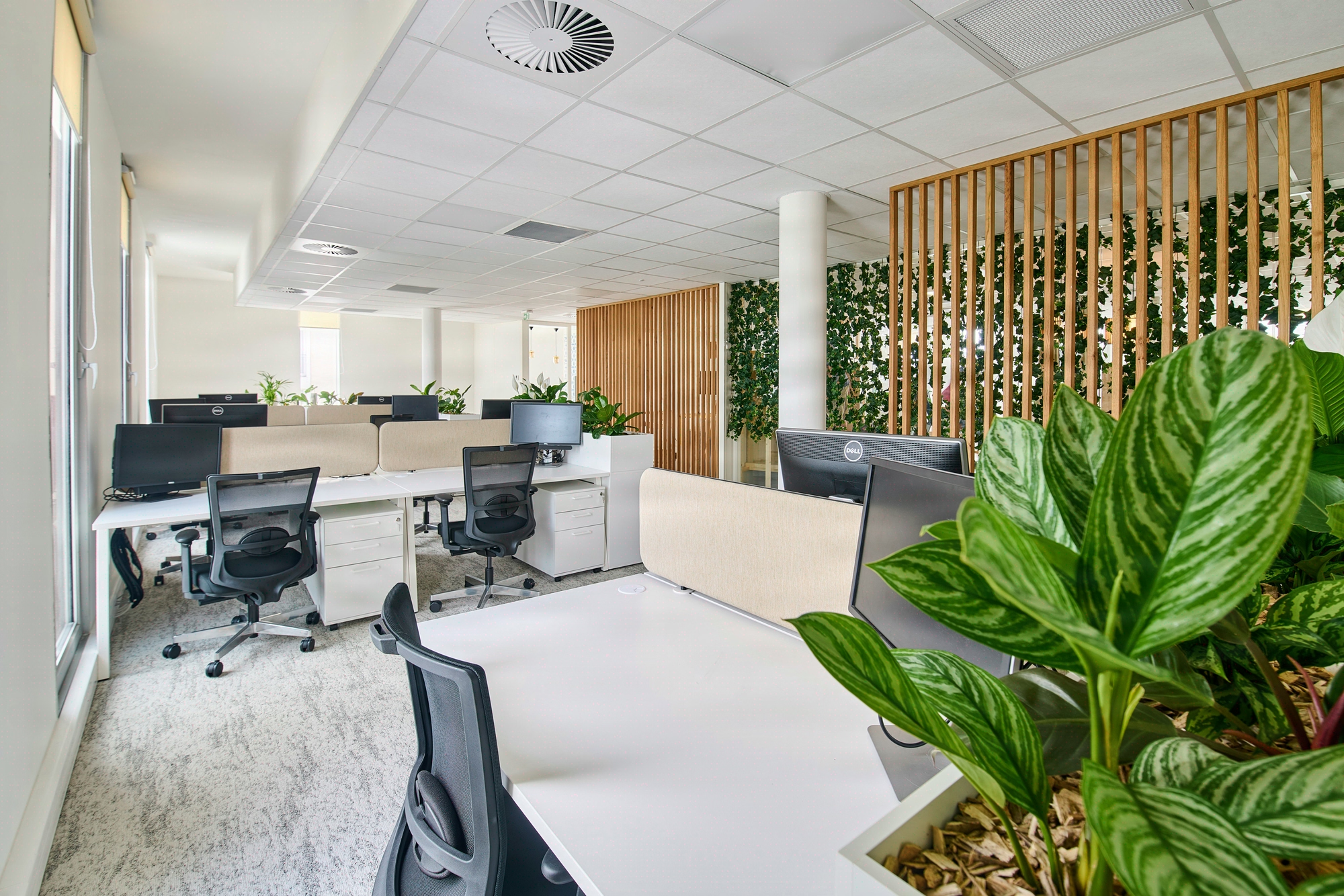
Office energy efficiency: technical management and compliance with the tertiary decree
The tertiary decree fine is capped at 7,500 EUR (article L174-1 of the CCH), while the trajectory requires -40% of final energy consumption as early as 2030. The real penalty lies elsewhere: a floor that is not aligned rents out less easily, and this discount, documented by the barometers of the Observatoire de l’Immobilier Durable (OID), amounts each year to tens of thousands of euros over 850 m².
Tertiary floors in the Ile-de-France region show an electricity bill of around 25 to 35 EUR/m² per year, a recurring finding in our audits. Kytom handles all the technical levers under a single contract (LED lighting, reversible air conditioning, high and low voltage systems, glazed envelope), with Consuel certification and NF C 15-100 inspection systematically carried out at delivery. This combined reading avoids blind trade-offs between lots and holds the 12-week timeframe observed across the 1200+ projects delivered since 2006.
The tertiary decree sets the course, Kytom charts the trajectory of your asset.
Energy efficiency across 5 OPERAT levers
-
40% reduction in electricity consumption: energy audit methodology
Are you aiming for the -40% required by the French tertiary sector decree (decree no. 2019-771) without knowing whether it is the right target for your portfolio? Below 90…
-
EECs: turning your energy works into cash
On a 1500 m² commercial renovation, handling EECs reactively costs 8 to 15% of project profitability, i.e. 80 to 150 k€ that will never return to your cash flow. Across operations…
-
Commercial BMS: energy management under the BACS decree
The BACS decree mandates class B from 70 kW of HVAC power, with a deadline of January 1, 2025 for new buildings and January 1, 2027 for existing ones. On the HVAC item, a properly…
-
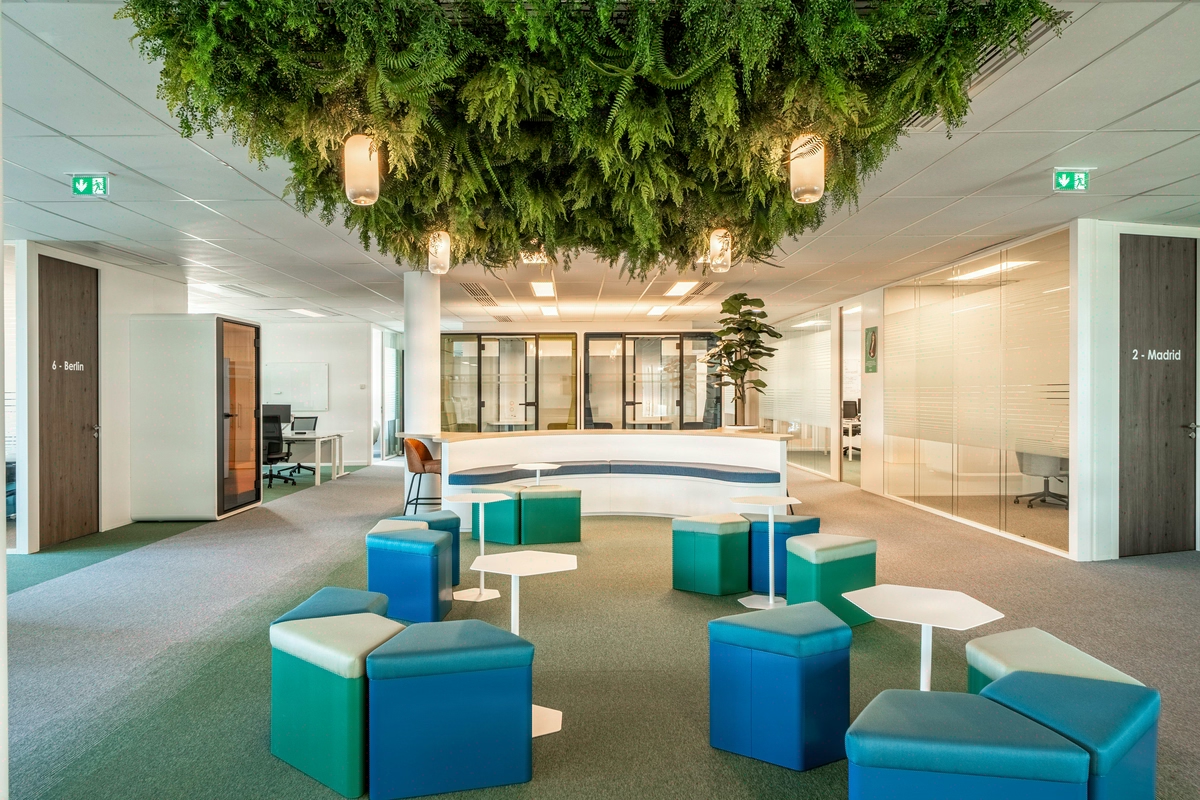
Office BMS: control your HVAC consumption and secure compliance
Your HVAC bills absorb 45% of the floor’s consumption, and you’re discovering the BACS deadline of 1 January 2025 a few months late. On the office floors of more than…
-
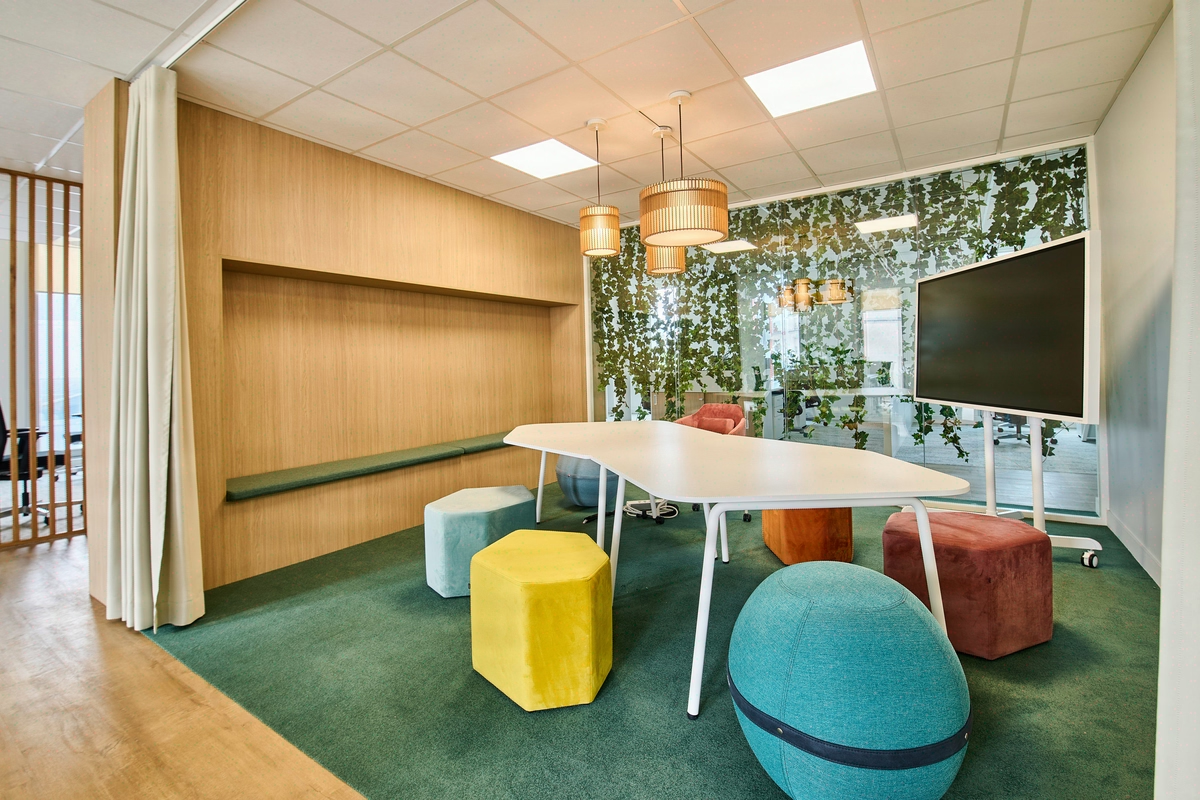
Electric vehicle charging stations: four trade-offs that secure your
Most EV charging operating cost overruns come from the initial under-sizing of the infrastructure, not from the choice of charging stations. Public debate on charging focuses on…


From audit to energy declaration: what a Kytom mission covers
A Kytom mission covers five technical lots usually handled separately (LED lighting, reversible air conditioning, high and low voltage systems, automation, glazed envelope) under a single 12-week contract for an 850 m² floor. You deal with a single point of contact and, at delivery, you receive a complete DOE within 15 days, the Consuel certificate issued by an approved inspection body, the general acceptance report and the initial energy declaration for subject floors over 1000 m².
The illuminance levels targeted at the workstation, 300 to 500 lux, follow the NF EN 12464-1 standard. The ROI of an LED relamping is between 24 and 36 months on our recent projects, and each mission targets an energy cost below 350 EUR per workstation per year, all utilities included. Quote within 5 days after a technical visit.
Prioritisation by decreasing payback, not by energy weight
Four steps aligned with your occupancy, within the methodological framework that the NF EN 16247-1 standard sets for energy audits:
- Audit and sub-metering (4 to 6 weeks): retrieval of the three latest readings and installation of a reference electrical sub-metering, a contradictory basis for measuring the gains.
- Prioritisation of levers by ROI: ranking by decreasing return and not by weight in the overall assessment. LED relamping accounts for less than 20% of total consumption but offers the fastest payback and finances the heavier HVAC actions.
- Works on an occupied site (12 weeks): zoning with protective partitions, interventions outside working hours in sensitive areas, daily cleanliness.
- Acceptance and compliance: Consuel certificate, NF C 15-100 compliance, DOE delivered within 15 days, initial energy declaration for subject floors.
Reversing the order of the levers stretches out the financing debt and weakens your tenant works budget. Kytom has stood by this prioritisation since 2006, even if it means advising you against an investment: the trade-off thresholds below are public.
Measured indicators and a secured trajectory according to the reduction targets set for 2030, 2040 and 2050
Three indicators are monitored over 12 months post-delivery and feed into your annual energy declaration.
- Lighting density: 8 to 10 W/m² after LED relamping, compared with 18 to 22 W/m² in an old fluorescent stock, illuminance maintained between 300 and 500 lux with a colour temperature set according to the NF X 35-103 grid (< 3300 K if illuminance 5300 K beyond 1000 lx).
- HVAC ratio: 100 to 130 W/m² in cooling, regulation by presence sensors and CO2 sensors with triggering at 800 ppm.
- Energy cost per workstation: below 350 EUR per workstation per year, all utilities included.
An asset aligned with the regulatory trajectory rents out better. The discount on non-compliant offices is documented by the barometers of the Observatoire de l’Immobilier Durable (OID), and the stranded asset effect is confirmed on buildings not aligned with the decarbonisation trajectory.
The thresholds that trigger (or not) each lever
A lever that is profitable over 2000 m² can be counterproductive over 300 m². Kytom arbitrates each lever on three criteria: floor area, occupancy rate and regulatory framework.
| Lever | Relevant from | Economic benchmark | Reference framework |
|---|---|---|---|
| LED relamping | 200 m² occupied at 40% and above | ROI of 24 to 36 months | NF EN 12464-1 (300 to 500 lux at the workstation) |
| VRV/VRF air conditioning | 500 m² | below that, inverter splits 30 to 40% cheaper | Consuel certificate, NF C 15-100 |
| BMS (energy management) | 1000 m² or several thermal zones | class B required from 70 kW of HVAC | BACS decree no. 2020-887 (new build 2025, existing 2027) |
| Electrical sub-metering | any subject floor (≥ 1000 m²) | contradictory basis for the gains | tertiary decree no. 2019-771, OPERAT declaration (ADEME) |
These thresholds come from our project feedback, not from a supplier catalogue: when the payback exceeds 5 years, Kytom tells you so and suggests postponing the operation until the lease renewal. Energy savings certificates (CEE) finance part of the eligible works through the obligated parties, and the OPERAT declaration, the ADEME platform for the tertiary decree, values every kWh saved from the first year.
Related pages to frame a full tertiary project
Kytom connects energy efficiency and delivered projects to the other fit-out levers. These pages detail method, ratios and real costs:
- Turnkey Design & Build office fit-out — median 12-week delivery, single counterpart.
- Space planning — density, flows and ratios for 100 employees.
- Tertiary floor renovation — €/m² ranges and Design & Build timelines.
- Flex office — desk-to-headcount ratios — 0.6 to 0.8 desks per employee.
- Open-space acoustics — LAeq, Tr and D2,S targets.
- Fit-out cost Observatory — €/m² HT index, CC BY 4.0 licence.
What is the ROI of an LED relamping on a tertiary floor?
Between 24 and 36 months for an open space occupied at 70%, with an energy gain generally observed of 50 to 70% per lighting point depending on the configurations. Below 200 m² or at an occupancy of less than 40%, the payback exceeds 5 years: we recommend postponing the operation to a lease renewal to pool the operational shutdown costs.
What regulatory obligations to reduce energy consumption apply to a tertiary floor?
The tertiary decree no. 2019-771 of 23 July 2019 applies to buildings used for tertiary purposes with a floor area ≥ 1000 m², with mandatory annual reporting via the OPERAT platform and a trajectory of reducing final energy consumption by 40% in 2030, 50% in 2040 and 60% in 2050 compared with the reference year (ADEME, 2024). Non-compliance exposes you to publication and to a fine of up to 7,500 EUR (article L174-1 CCH). The real risk remains the rental discount on a non-aligned asset, documented by the barometers of the Observatoire de l’Immobilier Durable.
When should you not undertake an energy investment?
Below 200 m² occupied at less than 40%, LED relamping has an ROI of over 5 years: we recommend postponing it to the lease renewal. VRV/VRF air conditioning is counterproductive below 500 m², in which case we steer towards inverter splits (additional cost 30 to 40% lower). BMS is only justified above 1000 m² or where several distinct thermal zones are present.
What deliverables do you provide at acceptance?
Complete DOE within 15 days, Consuel certificate issued by an approved inspection body, general acceptance report, traced NF C 15-100 compliance, and initial energy declaration for subject floors (>1000 m²). The three key indicators (lighting density, HVAC ratio, cost per workstation) are monitored over 12 months and constitute your contradictory basis when dealing with the landlord.


