Digital Workplace
The office designed as a platform 500 m² office fit-out for Itelios in Paris
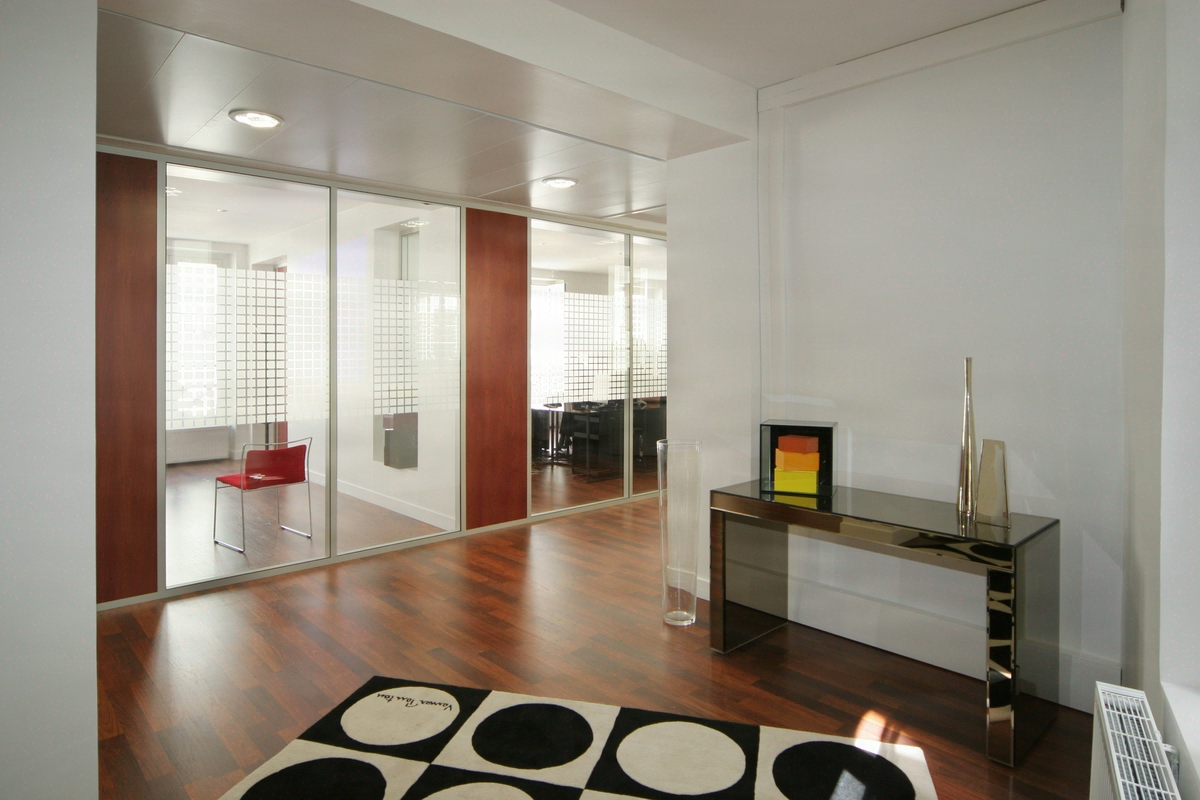
For Itelios, we shaped 500 sq m of scalable space in the heart of Paris: an agile floor plate where 35 e-commerce architects write tomorrow's code.
- 500 m²
- 2 months
- 2014
TECH CAMPUS
Concept
An e-commerce IT services firm that thinks like its product
Itelios was a French IT services company specialising in omnichannel e-commerce platforms (later acquired by Capgemini). The 2014 project delivered a 500 sq m floor plate for 35 workstations in two months.

Situation
Itelios, a Paris-based IT services firm specialising in omnichannel e-commerce platforms (since acquired by Capgemini), commissioned Kytom in 2014 to fit out a 500 sqm floor for 35 employees in Paris. At the time, the company was winning major retail and luxury accounts, and its existing headquarters could no longer keep pace.
The approach was unusual for a growing IT services firm: rejecting bespoke identity-driven design in favour of a standard, reconfigurable floor whose value lies in the speed of reconfiguration between client engagements rather than in a decorative signature. A turnkey, design and build mission, eight weeks from handover to move-in.

500 sqm delivered in eight weeks between two Paris leases
The schedule drove everything: eight weeks to transform a bare floor into a production environment for 35 developers, project managers and technical consultants, with no slippage possible against the end of the previous lease. The fixed budget imposed clear trade-offs: every euro went to the trades that determine daily use (high-density network, partitioning, workstation ergonomics), not finishes.
Customisation was deliberately kept restrained, the client preferring a sober and repeatable architectural vocabulary. Added to this was the coordination within a Paris commercial co-ownership: constrained delivery access, works hours governed by the co-ownership regulations, and inter-trade schedules sequenced to the day to hold the eight weeks.

Two structuring decisions: three-band zoning and demountable partitions calibrated to 6–18 months
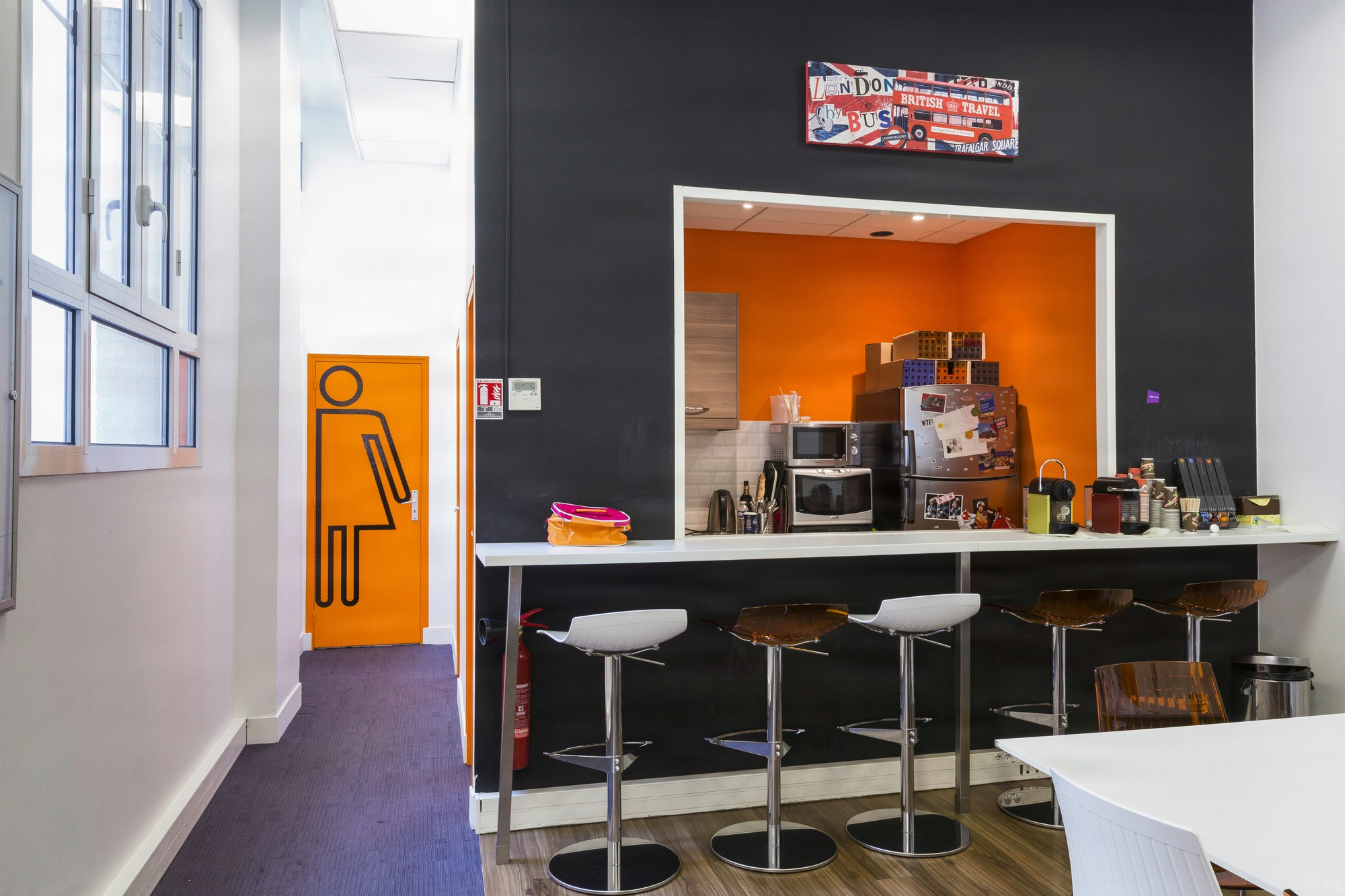
Rather than a standard space planning approach, two decisions shaped the project. First decision, the zoning into three parallel bands: production in open space (clusters of six to eight workstations), collaboration (meeting rooms and war rooms), service (shared kitchen, restrooms, technical rooms). This physical separation prevents war room noise from disturbing developers, a strong constraint over eight-to-ten-hour days at the screen.
Second decision, the choice of demountable partitions on the collaboration band and drywall on the production band: modularity is concentrated where rotation is real (six-to-eighteen-month project cycles), not spread across the whole floor where it would have cost without serving. The technical infrastructure (electricity, high-density data cabling, dedicated racks) was deployed in direct coordination with Itelios IT, a condition for network go-live at D+0.
Ergonomic furniture, videoconferencing in the meeting rooms and sober paint finishes were handled in a design and build sequence, absorbing last-minute adjustments without overall replanning.

35 workstations operational at D+0, floor used for six years until the Capgemini acquisition
Delivery held to eight weeks, with no postponement. The 35 workstations were operational from day one: high-density network in service, equipped meeting rooms, furniture in place.
The deliberate upstream reversal (a reconfigurable standard rather than bespoke identity-driven design) paid off over time: the three-band layout absorbed headcount growth and project-team rotation without heavy intervention, the demountable partitions reconfiguring spaces across client engagements without any further call to Kytom.
The floor supported Itelios throughout its entire trajectory as an independent IT services firm, up to the tie-up with Capgemini, amounting to roughly six years of continuous use within the same architectural envelope.
On the CSR side, the project dates from 2014, predating the structuring of reuse and recyclability indicators at Kytom; material trade-offs favoured durability in use and reconfigurability, which in fact avoided an interim renovation over the period.
500
sq m transformed
2
months of work
35
workstations
Discover
More photos of the project


1 / 12
Implementation
REFERENCES
Related projects
Visualisations and diagrams are the property of KYTOM SAS; reproduction prohibited without written authorisation.