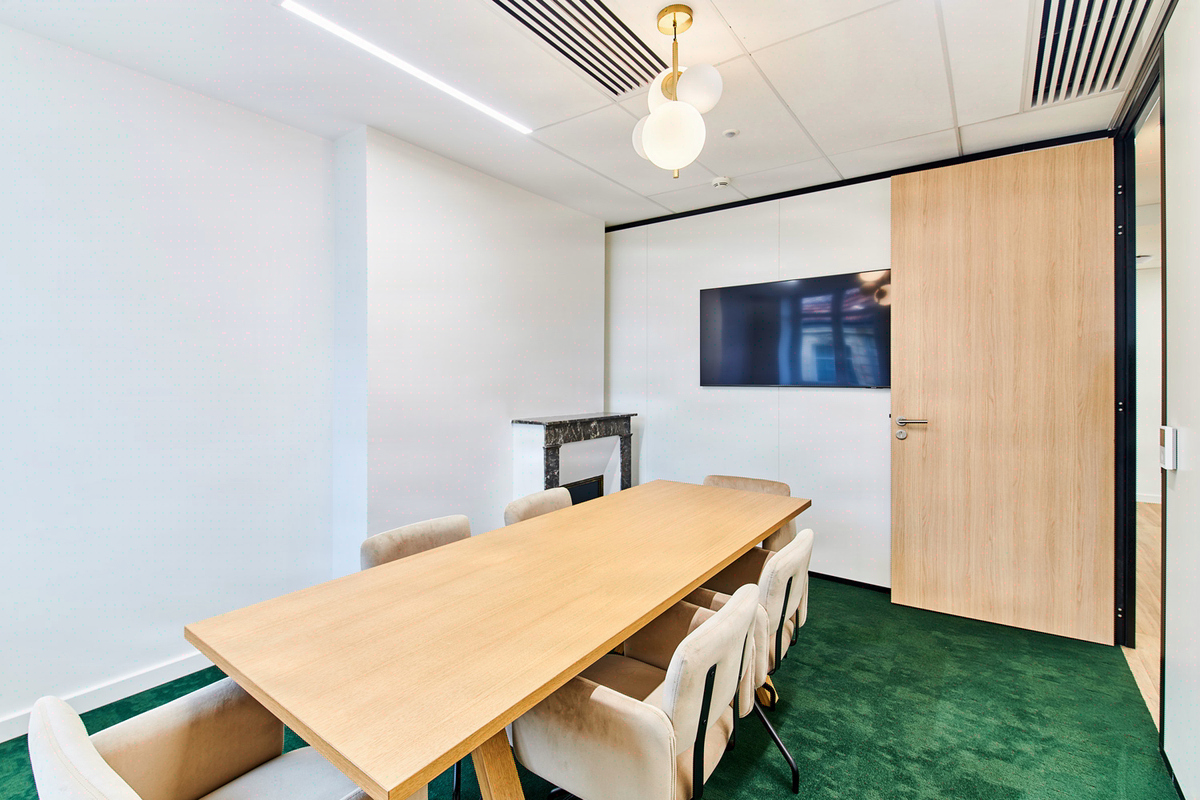
Commercial floor coverings: 4 trade-offs that protect your asset
Most commercial flooring failures do not stem from the product itself, but from a UPEC trade-off poorly calibrated during the design phase. Flooring is not a finishing matter but an asset matter: a U4 installed where a U3 would suffice represents 30 to 40% in sunk additional cost, while a U3 installed where a U4 was required triggers a refurbishment within 5 years. This page details the Kytom arbitration method across 4 technical criteria, the CSTB UPEC framework, the 3 recurring installation errors, and coordination with the raised access floor, drawing on feedback from the network of 10 agencies in France and Spain.
7 areas of expertise under "Commercial floor coverings: 4 trade-offs that protect your asset"
-
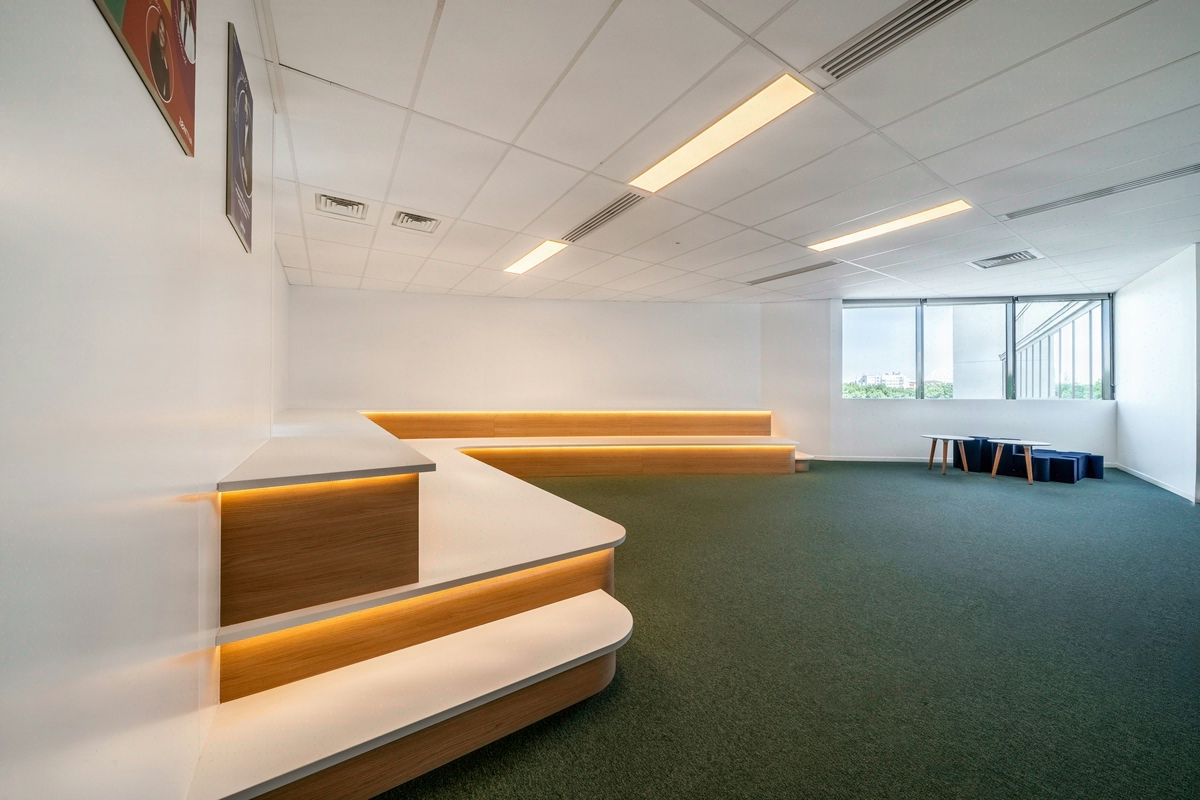
Bolon: eco-responsible woven flooring
Bolon costs 2 to 3 times more than standard PVC to purchase, but its TCO becomes advantageous from the 6th year onwards: 2.80 €/m²/year for maintenance versus 6.50 €/m² for nylon…
-
Polished concrete in offices: polished and mineral finishes
Polished concrete is less durable than LVT vinyl under heavy traffic (8-12 years versus 15-20 years before renovation), and its discounted cost over 15 years exceeds it beyond 200…
-
Concrete screed for commercial buildings: leveling, insulation, flatness
The resilient underlay bonded beneath LVT vinyl flooring captures most of the acoustic gain for a fraction of the cost of a full screed redo: redoing a screed for a marginal gain…
-
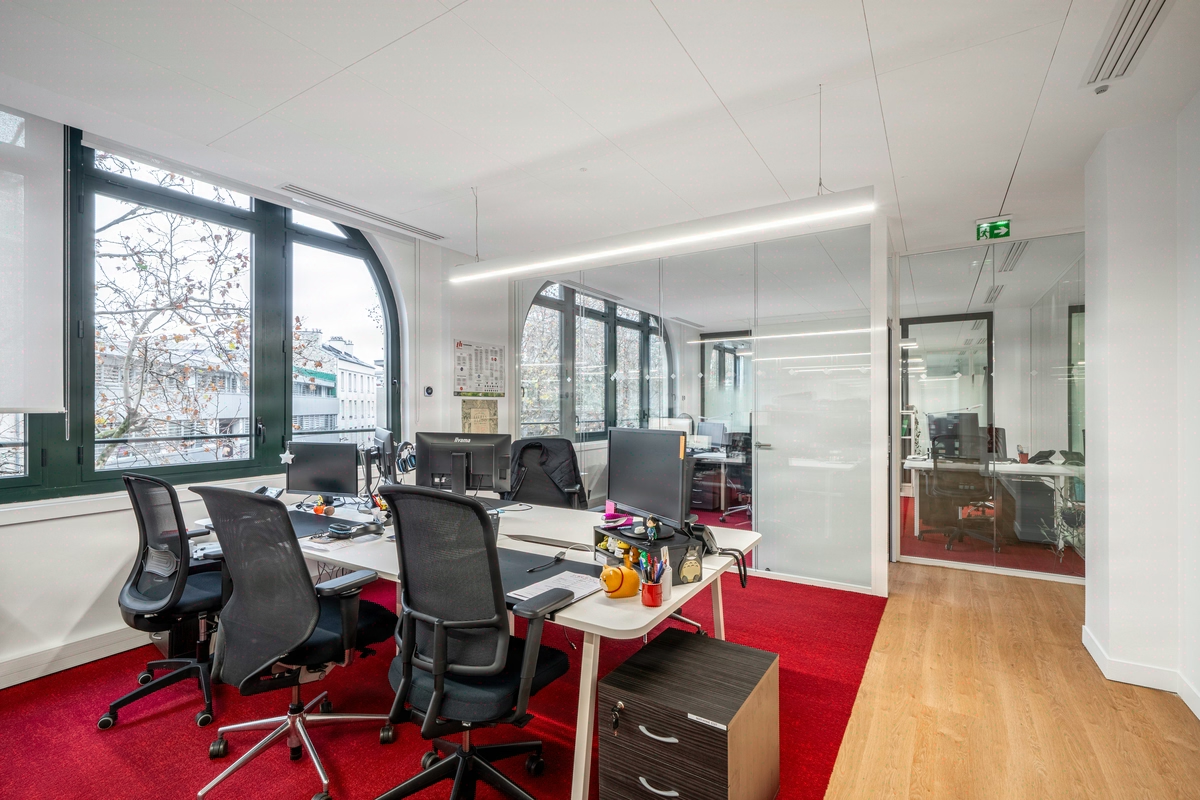
U3P3 Carpet for Offices
Over the long term, U3P3 carpet generally offers a lower operating cost than LVT vinyl, provided that floor plate reconfigurations are kept to a minimum over time. The U3…
-
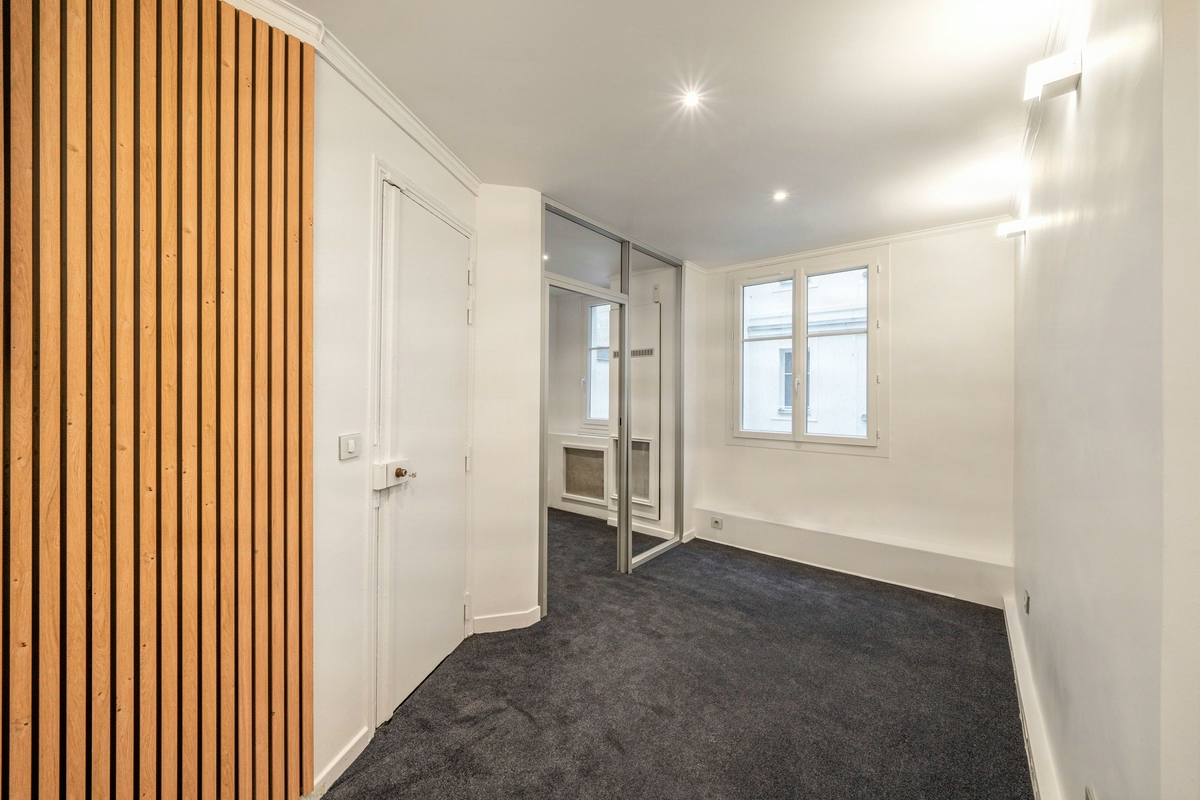
Wood-look PVC plank flooring
Starting at EUR 25/m² supplied and installed for entry-level ranges, wood-look PVC plank flooring is one of the commercial floor coverings that pays back its installation the…
-
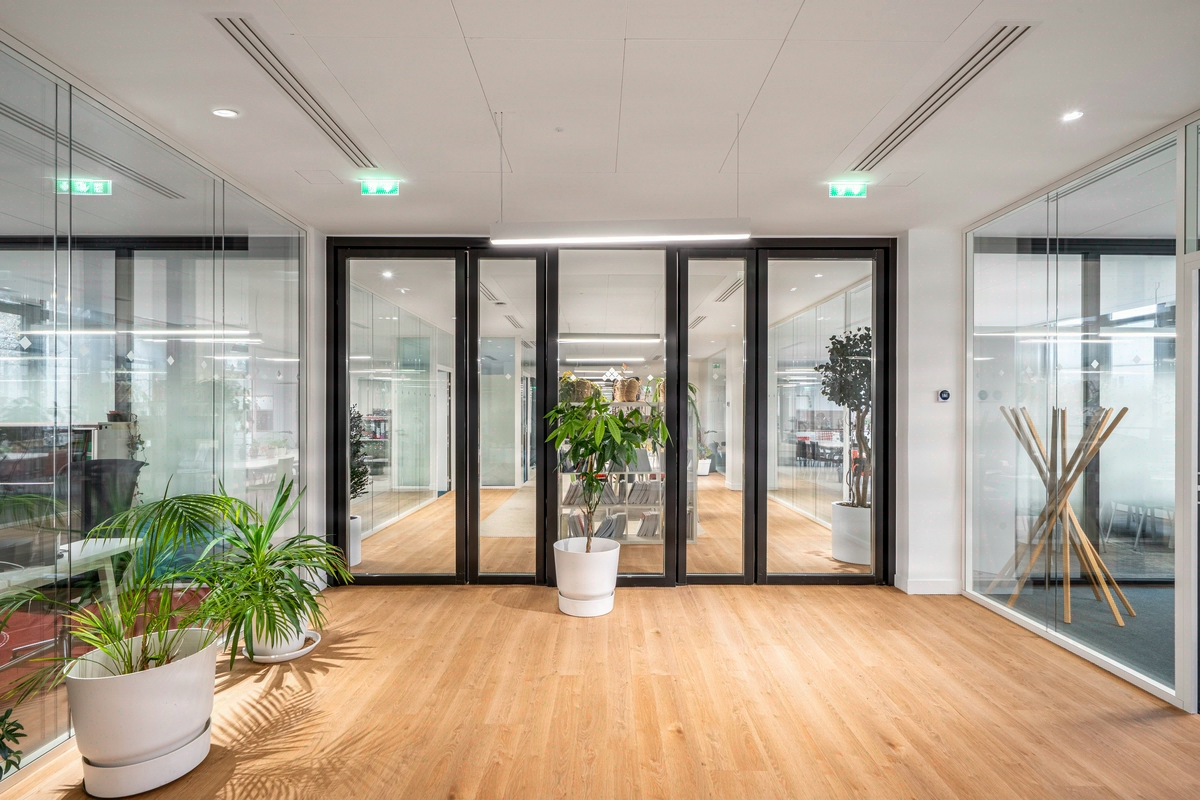
Poured resin flooring
Poured resin is only cost-effective above 200 sqm and 8 years of occupancy: below that, LVT PVC remains significantly cheaper on a total cost basis. This threshold, confirmed by…
-
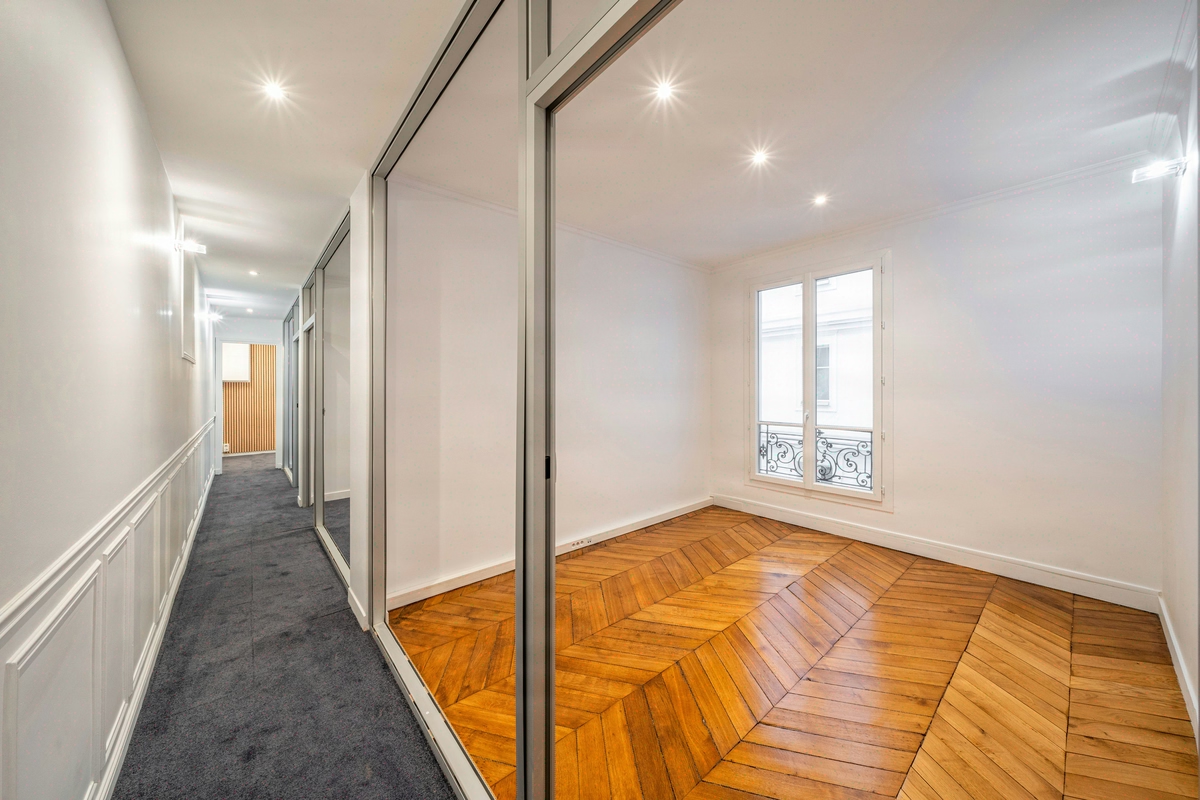
Which flooring to choose for your offices: complete comparative guide
Over 850 sqm of office space, the right flooring is not the cheapest per sqm: it is the one whose total cost over 10 years (installation + maintenance + partial replacement) stays…


The four criteria for choosing a floor covering
The choice of a floor covering rests on 4 technical criteria that are often poorly prioritised: traffic intensity, mechanical constraints (static and dynamic indentation), hygiene requirements, and ease of maintenance. A common mistake is to make the trade-off on aesthetics or budget without modelling the actual traffic measured in a behavioural audit.
Calibration by space type and amortisation matrix
A few calibration benchmarks recorded in French commercial offices:
- High-traffic reception hall: more than 500 daily passages, U4P3 classification minimum.
- Standard office floor: 50 to 100 daily passages, U3P2 classification sufficient.
- Main floor circulation: 200 to 300 daily passages, U3P3 classification.
- Wet technical room or sanitary facility: E2 or E3 requirement depending on exposure.
The Kytom matrix cross-references these 3 variables (usage intensity, soiling typology, maintenance frequency) with the amortisation period targeted by the client, generally 8, 10 or 15 years. This approach simultaneously avoids oversizing, whose additional cost remains sunk without any real use, and undersizing, which generates premature refurbishments as early as the fifth year of operation.
Oversizing and the limits of the method
Our reading differs from common practice on this specific point. The prevailing wisdom in the profession recommends oversizing “as a precaution” when usage is uncertain. In practice, across our recent portfolio, oversizing ties up significantly more budget than undersizing costs in refurbishments: a U4 on an office floor costs 18 to 22 EUR/m² more than a suitable U3, i.e. 20,000 EUR over 1,000 m², for an additional lifespan that is never consumed (commercial spaces are reconfigured every 7 to 9 years, well before the technical end of life of the U3).
When the matrix does not apply. For surfaces below 150 m² or for spaces with event-based occupancy (a board room used fewer than 50 days a year), fine UPEC arbitration loses its value: a standard U3P2 classification covers actual usage and the cost gap with a U2 does not exceed 3 EUR/m². Traffic instrumentation is only cost-effective from 800 m² treated or more than 3 distinct space typologies.


