Commercial lighting: design, control, save
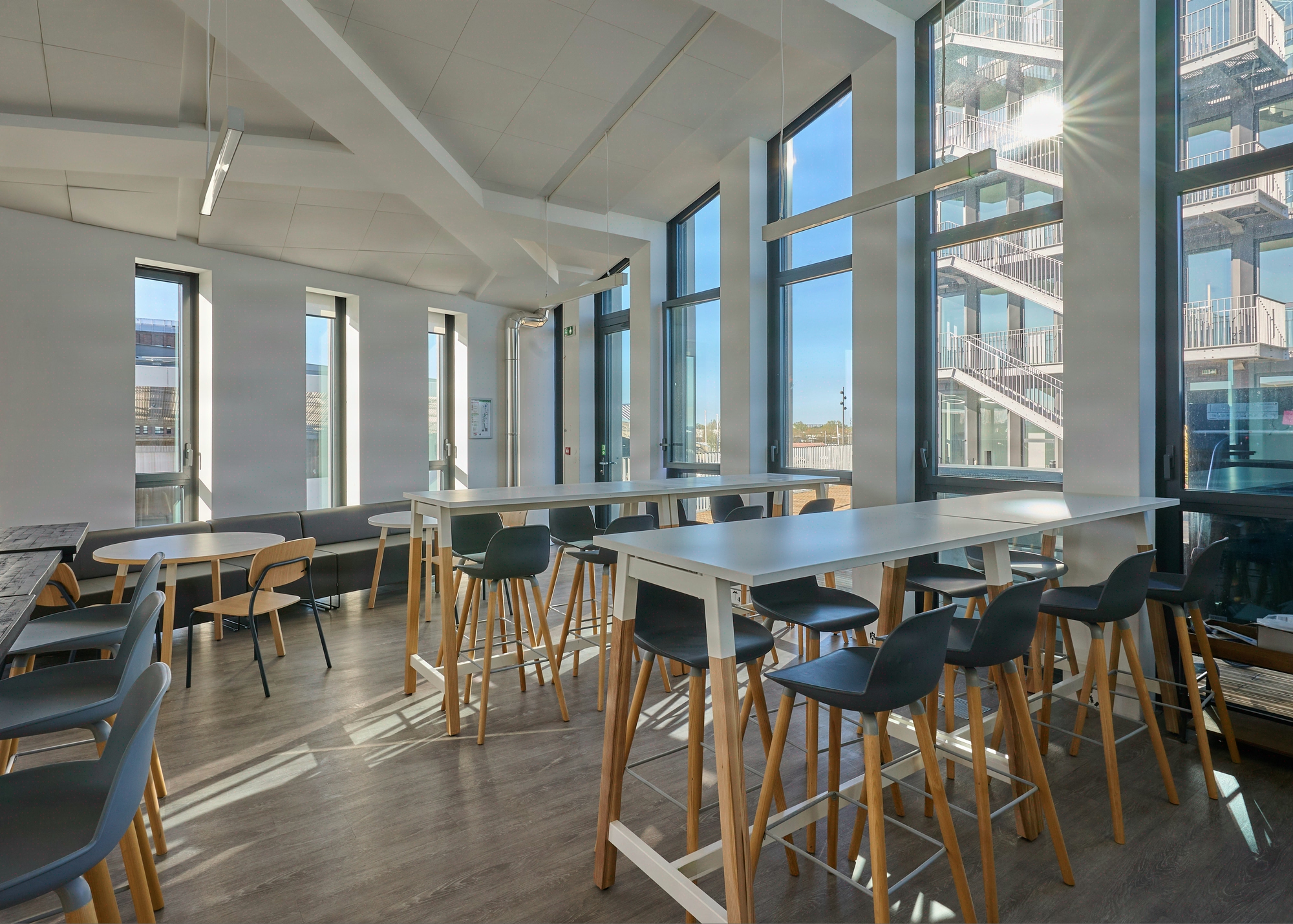
500 lux at the workstation, not 750: over-lighting an open space costs 12 to 18 EUR/m²/year for zero visual gain. NF EN 12464-1 (2021 edition) sets 500 lux for standard office tasks, with the 750 lux threshold reserved for precision tasks (CAD, reading technical drawings, quality control). Confusing the two inflates installed power by 25 to 35 %, even though the OPERAT tertiary decree mandates -40 % consumption by 2030 and lighting accounts for 12 to 15 % of a building’s bill (ADEME, Chiffres cles tertiaire 2023). Kytom has integrated lighting design, scenography, circadian rhythm and DALI-2 control across all its projects since 2006, with a strict reading of thresholds by functional zone.
12 areas of expertise under "Commercial lighting: design, control, save"
-
Predictive lighting maintenance: optimising cycles and consumption
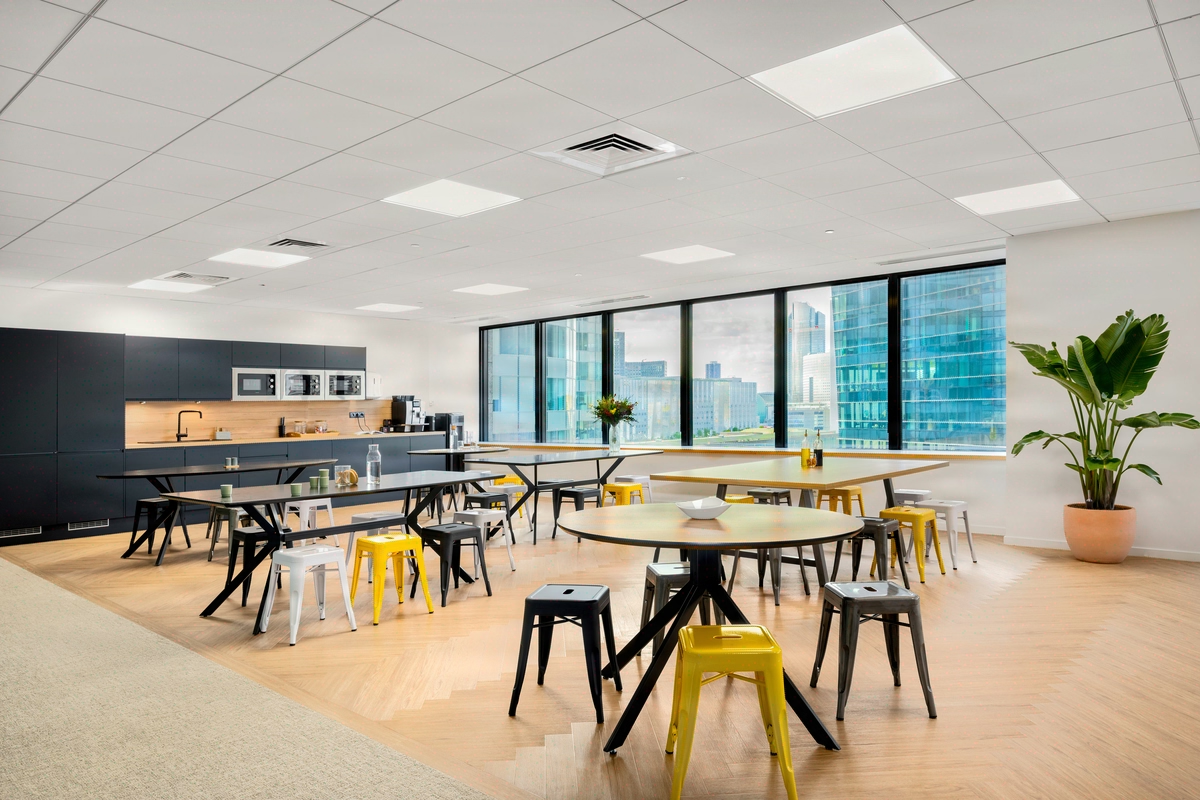
Below 200 luminaires, predictive lighting maintenance destroys value: ROI > 6 years, compared with 2.5 to 3.5 years beyond 500 measurement points. Our reading here diverges from…
-
Downlight spot: balancing energy performance and visual comfort
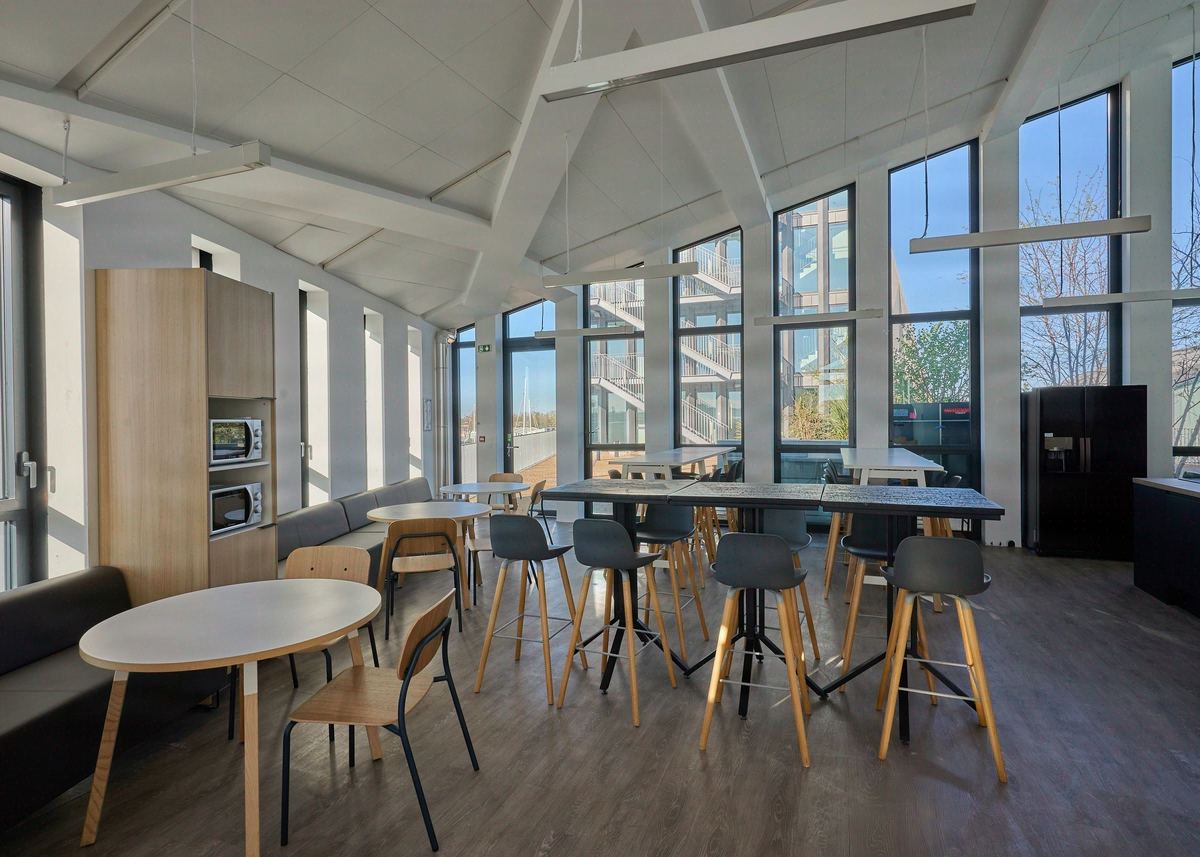
On office floors fitted with LED downlights, observed consumption frequently exceeds 20 W/m², a sign of uniform calibration inherited from fluorescent lighting. Yet the standard…
-
Lighting management: calibrating efficiency and user comfort
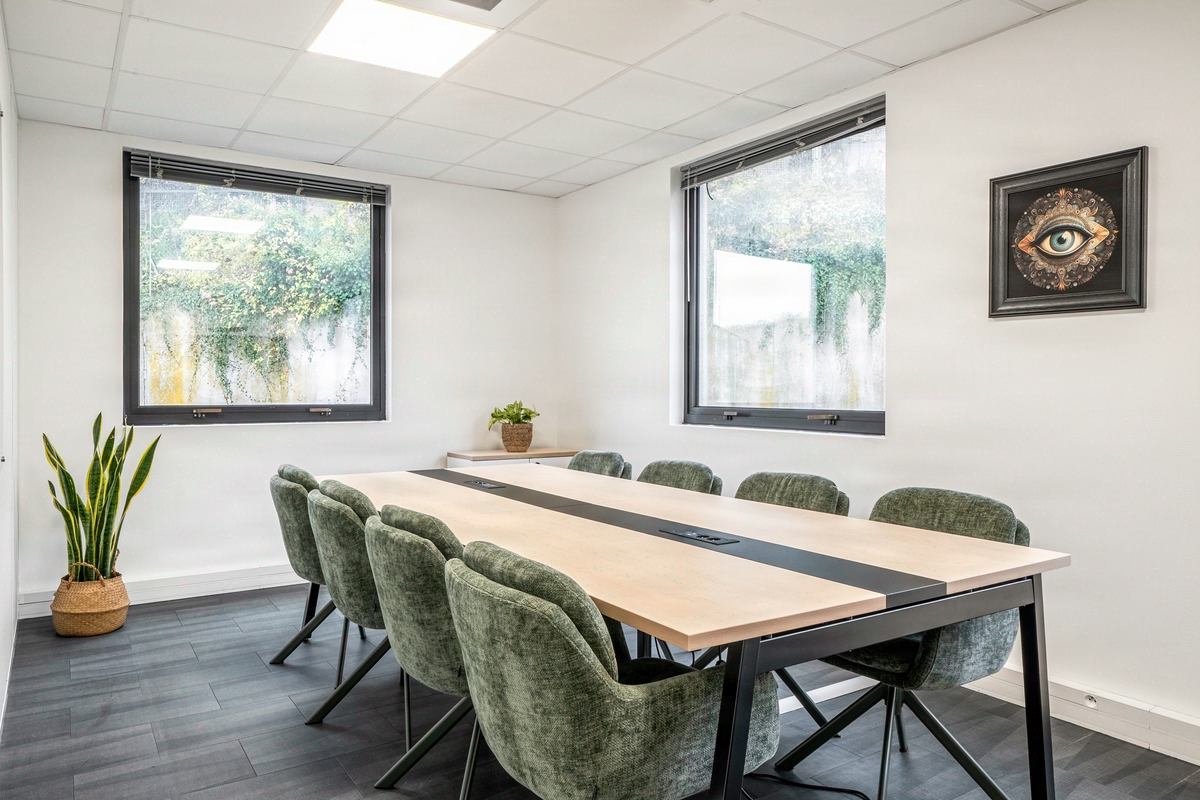
500 lux everywhere means 25 to 30% of unjustified energy overspend: indoor lighting standards prescribe 300 lux in circulation areas, 500 at workstations and 750 in meeting rooms…
-
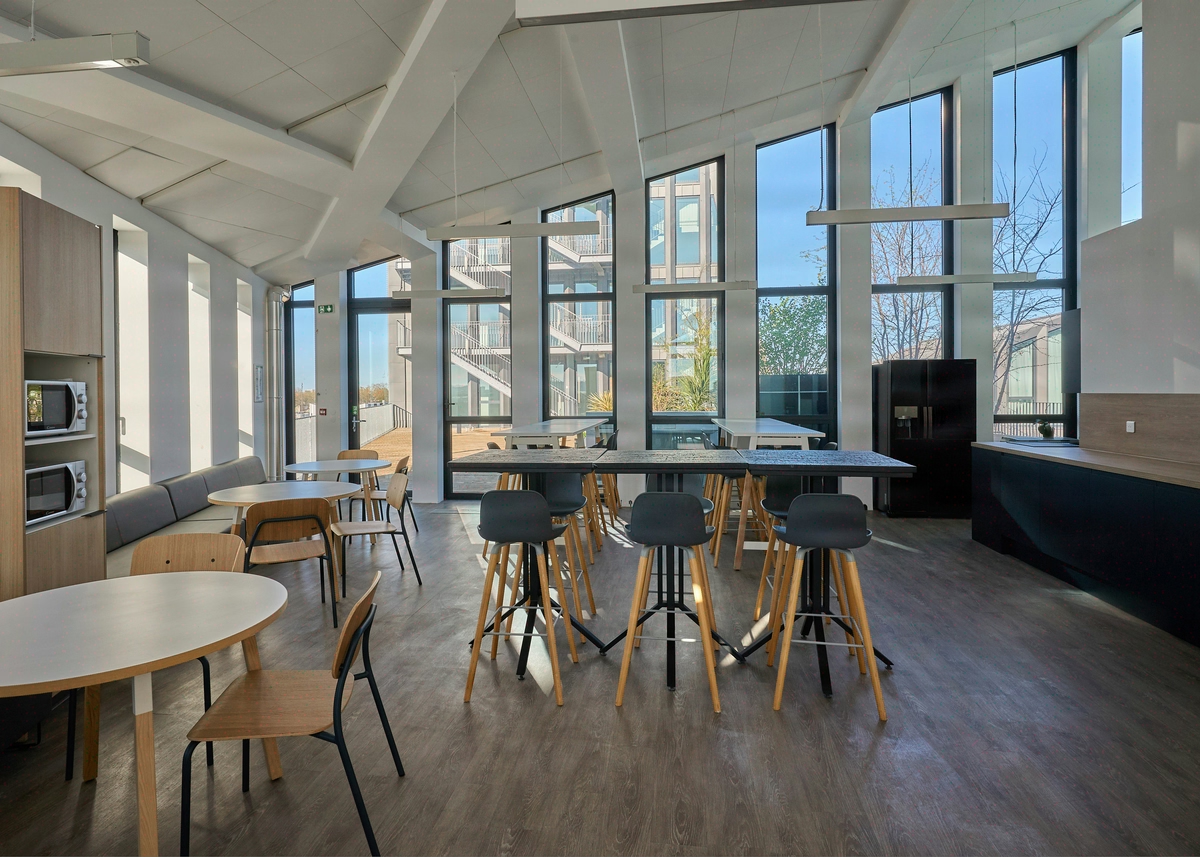
Suspended linear lighting: technical trade-offs and spatial integration
At a suspension height of 2.35 m, suspended linear lighting maintains the 500 lux required by NF EN 12464-1:2021 (AFNOR, table 6.2) with a UGR below 19; at 2.50 m, energy…
-
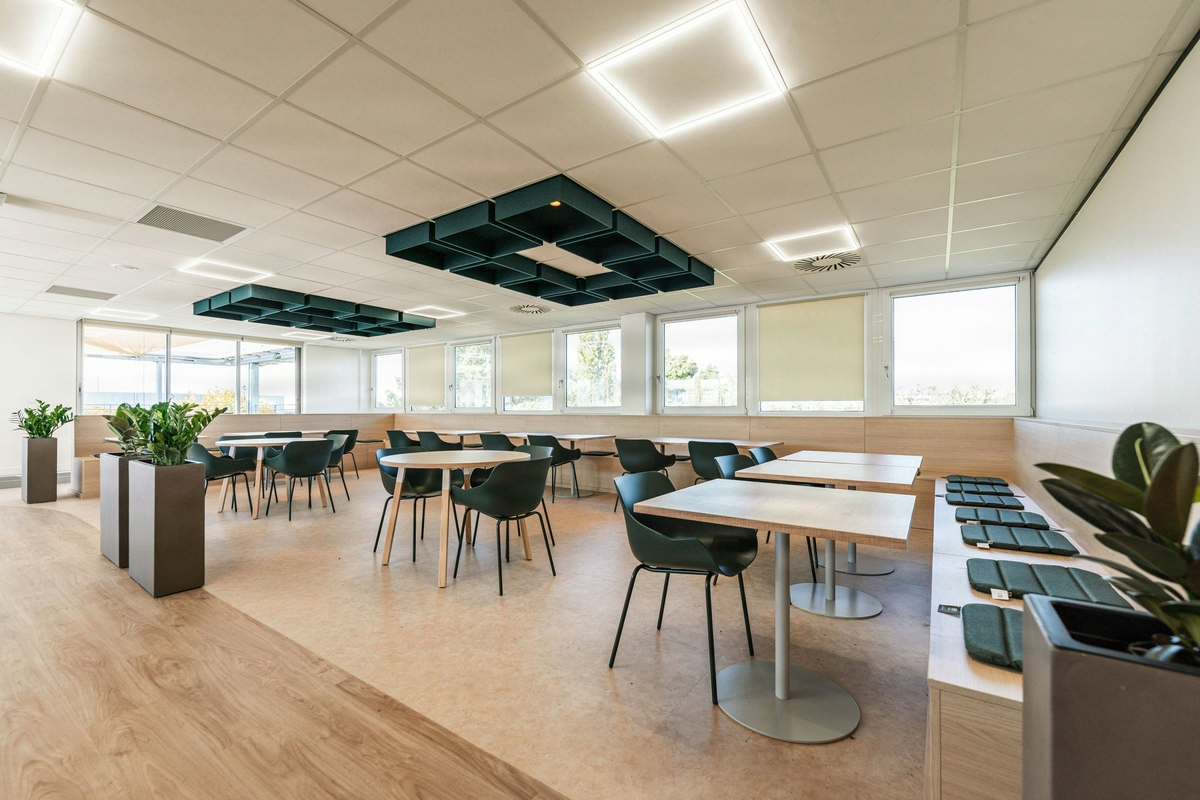
Indirect lighting: calibrating ambiance and energy performance
Below a 2.80 m ceiling height, indirect lighting is a technical contradiction: NF EN 12464-1 requires 300 useful lux at the workstation, and reaching this target with indirect…
-
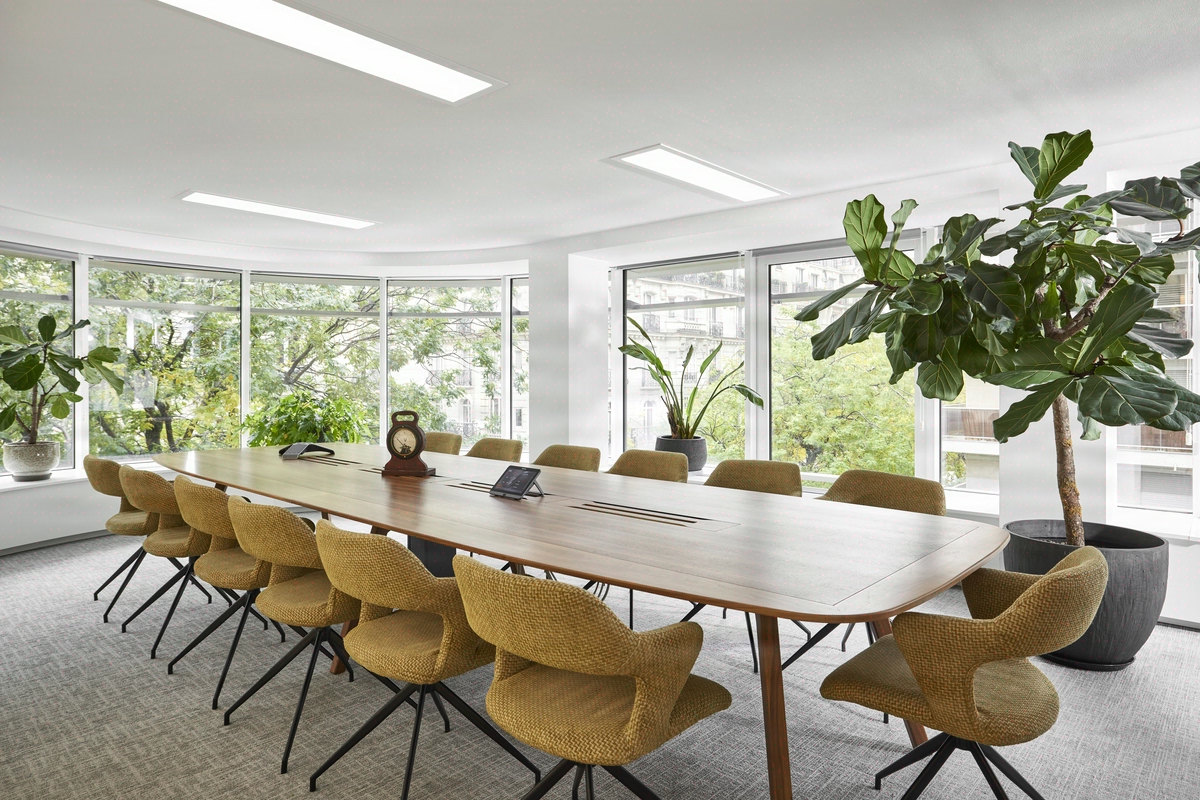
Dimmable lighting: balancing visual comfort and energy performance
Dimmable lighting is particularly relevant in spaces benefiting from a significant amount of natural light, where energy savings offset the additional installation cost over the…
-
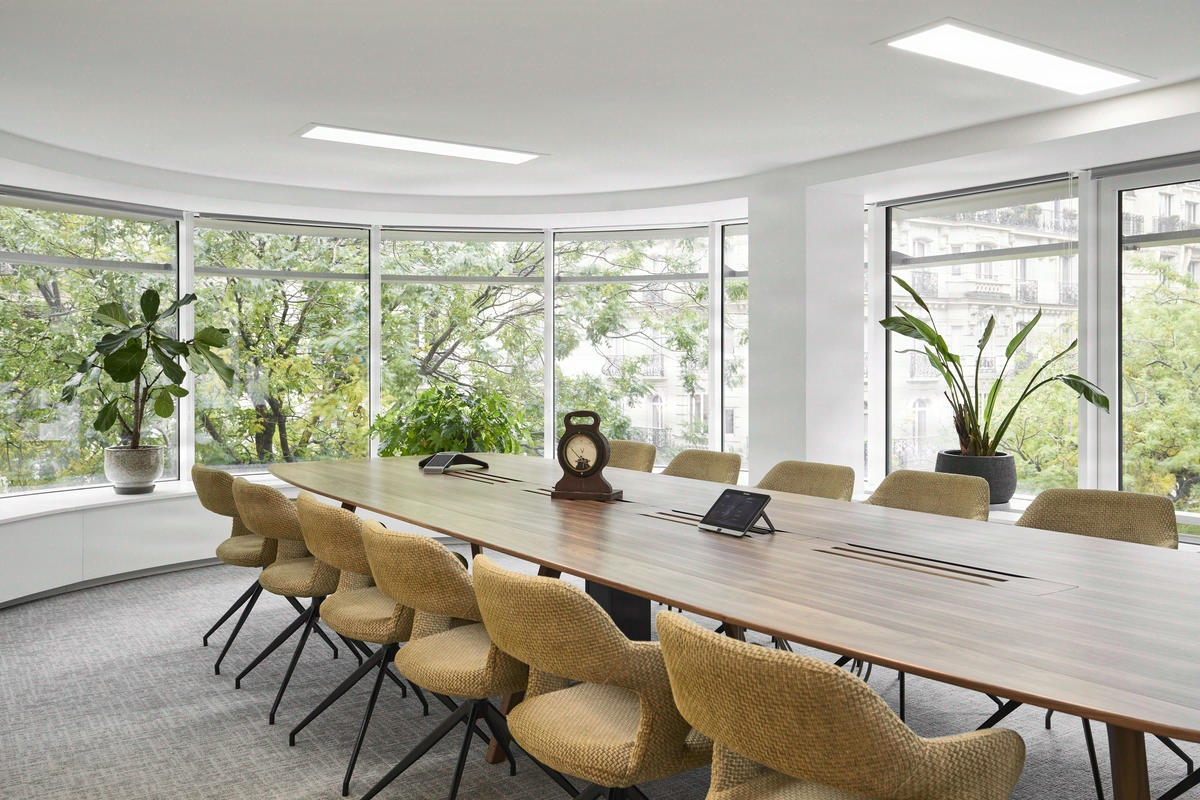
Recessed LED panel: calibrating energy performance and user comfort
500 lux is enough: aiming for 600 lux costs 25% more energy for an imperceptible visual gain. NF EN 12464-1 sets 500 lux at the work plane, UGR < 19, CRI > 80. No more, no less…
-
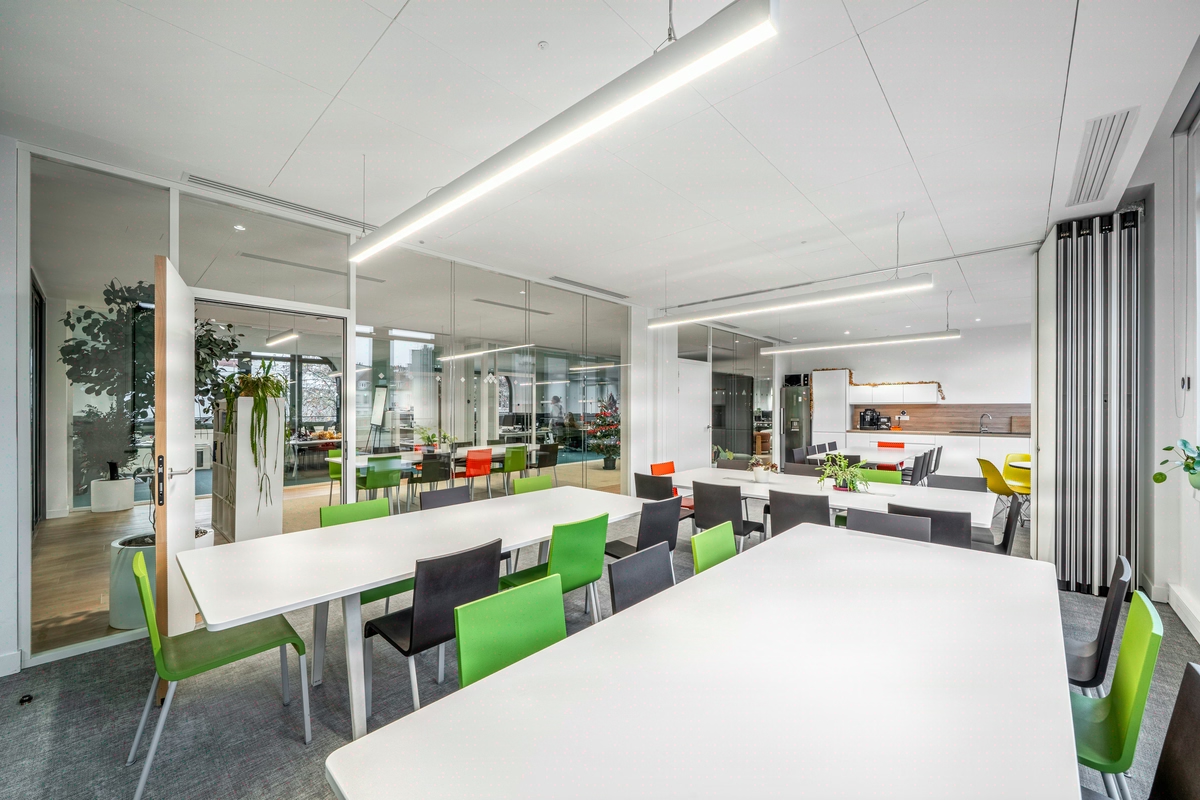
Presence detectors: sensitivity-autonomy calibration by use case
A poorly calibrated detector generates significant overconsumption: NF EN 12464-1 sets illuminance levels, not time delays, and this is precisely where the most common energy…
-
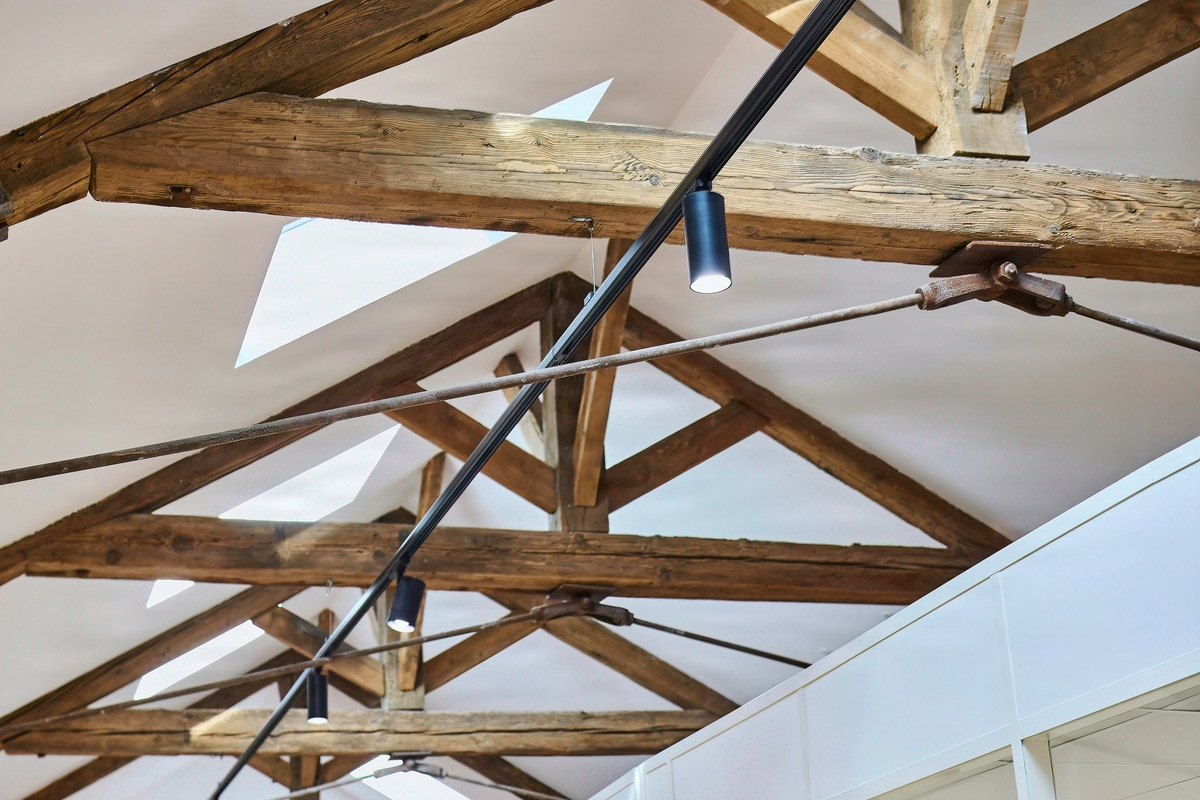
Circadian lighting: calibrating intensity and spectrum by use case
Below 200 m² or 15 full-time workstations, dynamic circadian lighting is not cost-effective: the ROI exceeds 8 years, and a quality static 4000 K LED meets functional needs in…
-
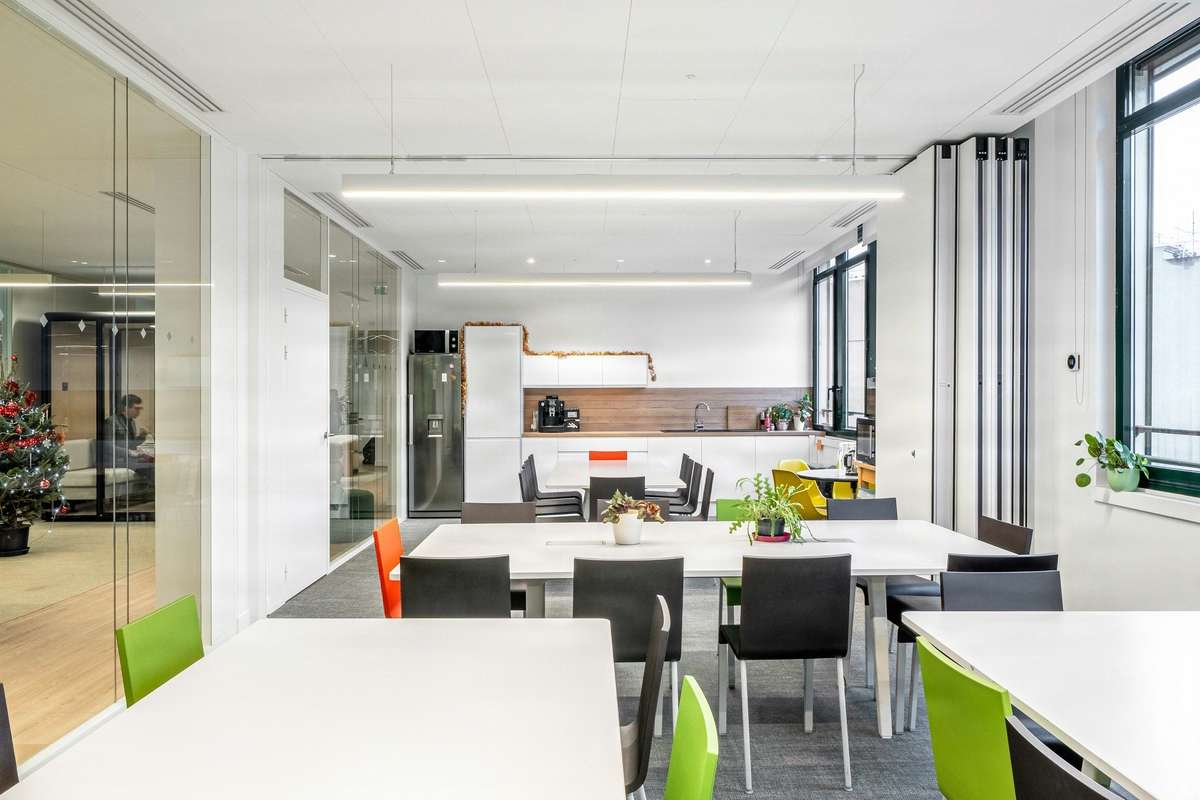
Which lighting should you choose for your offices? Complete 2025 guide
500 lux is the benchmark value for average illuminance on the working plane in a tertiary open space, not 750: over-lighting generates extra luminaire costs with no gain in…
-
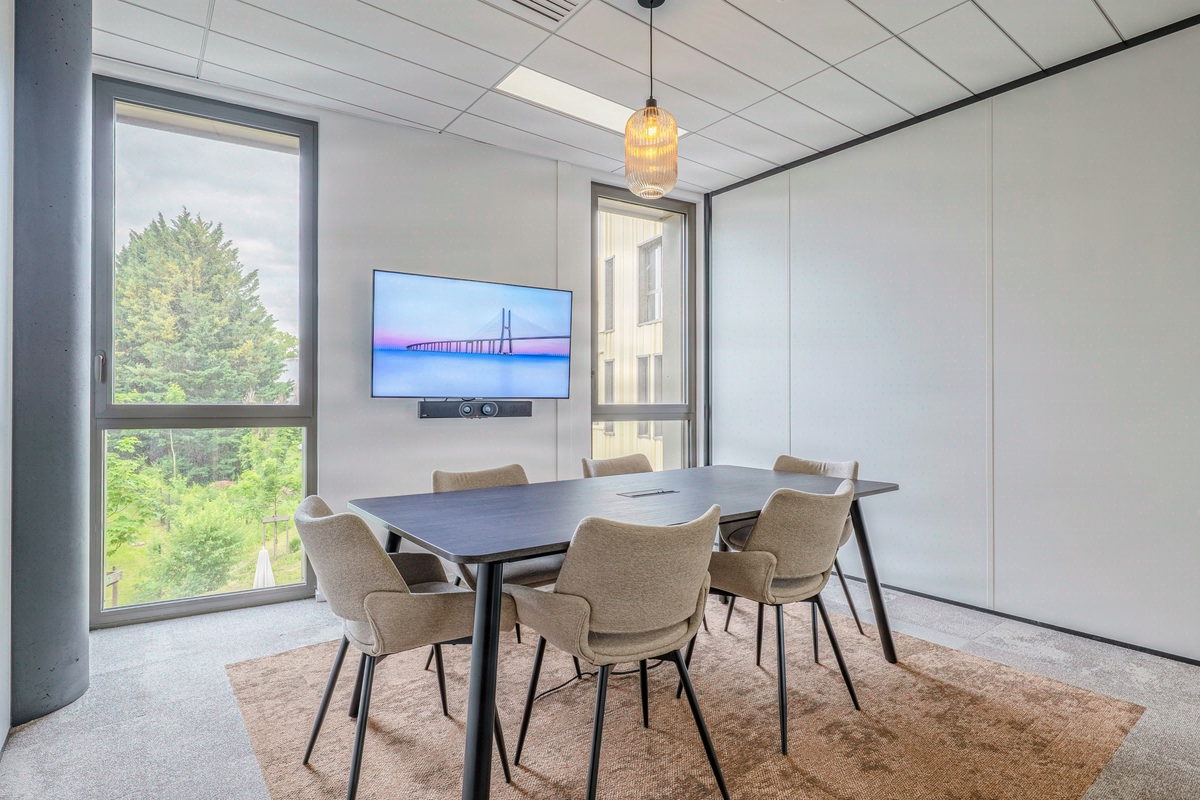
Functional lighting: optimising performance and user comfort
Uniform 500-lux lighting is a design fault, not a safety measure. The applicable regulatory thresholds set 300-400 lux in offices and 150-200 lux in circulation areas: oversizing…
-
Emergency safety lighting (BAES): coordinating 4 critical interfaces
BAES is not an electrical sub-package, it is a coordination deliverable spanning 4 interfaces: a significant share of on-site rework stems from this work-package confusion. Safety…


The regulatory framework for tertiary lighting rests on three technical pillars that Kytom applies with a differentiated reading by zone.
- NF EN 12464-1 (2021 edition): 500 lux at computer workstations, 750 lux for precision tasks, 300 lux in circulation areas, CRI > 80 and UGR < 19.
- Labour Code (article R4223-4): sufficient lighting to protect visual health, complemented by NF X35-103 on lighting ergonomics.
- BACS decree (order of 7 April 2023): building management system mandatory above 290 kW of installed power, with presence detection and daylight harvesting.
On the energy side, ADEME estimates the average lighting consumption in the tertiary sector at 25 kWh/m²/year (ADEME, Chiffres cles tertiaire 2023), reducible to under 10 kWh/m²/year with controlled LEDs, a level we achieve on our recent operations. The OPERAT tertiary decree requires a trajectory documented annually on the ADEME OPERAT platform. The BREEAM (BRE), HQE (Certivea) and WELL (IWBI) certifications value daylight autonomy across 75 % of usable floor area as well as flicker control below 5 %, requirements that Kytom integrates from the programme phase.
Our reading differs from the profession’s received wisdom on one precise point. The widespread practice is to apply 500 lux uniformly, as a precaution. In practice, NF EN 12464-1 allows modulation by task: 300 lux is enough in informal meeting areas, 200 lux in circulation areas, 750 lux only at technical drawing or inspection workstations. Our photometric audits show that a large share of floor plates are over-illuminated and draw installed power that usage does not justify. The standard is a functional ceiling, not a uniform floor.
What illuminance level should be adopted in a tertiary open space?
500 lux at the work plane in line with NF EN 12464-1 2021 edition, with UGR 80. The 750 lux threshold is reserved for precision tasks (CAD, quality control). In meeting areas, 300 lux is enough; in circulation areas, 200 lux. Applying 500 lux uniformly across an entire floor plate leads to oversizing the installed power in zones that have no use for it.
Does the BACS decree apply to all tertiary buildings?
The BACS decree (order of 7 April 2023) requires a building management system for tertiary buildings whose installed power exceeds 290 kW, with presence detection, daylight harvesting and energy monitoring. Below the threshold, the obligation does not apply, but the approach remains relevant: the tertiary decree mandates -40% consumption by 2030 and lighting accounts for 12 to 15% of the energy bill.


